
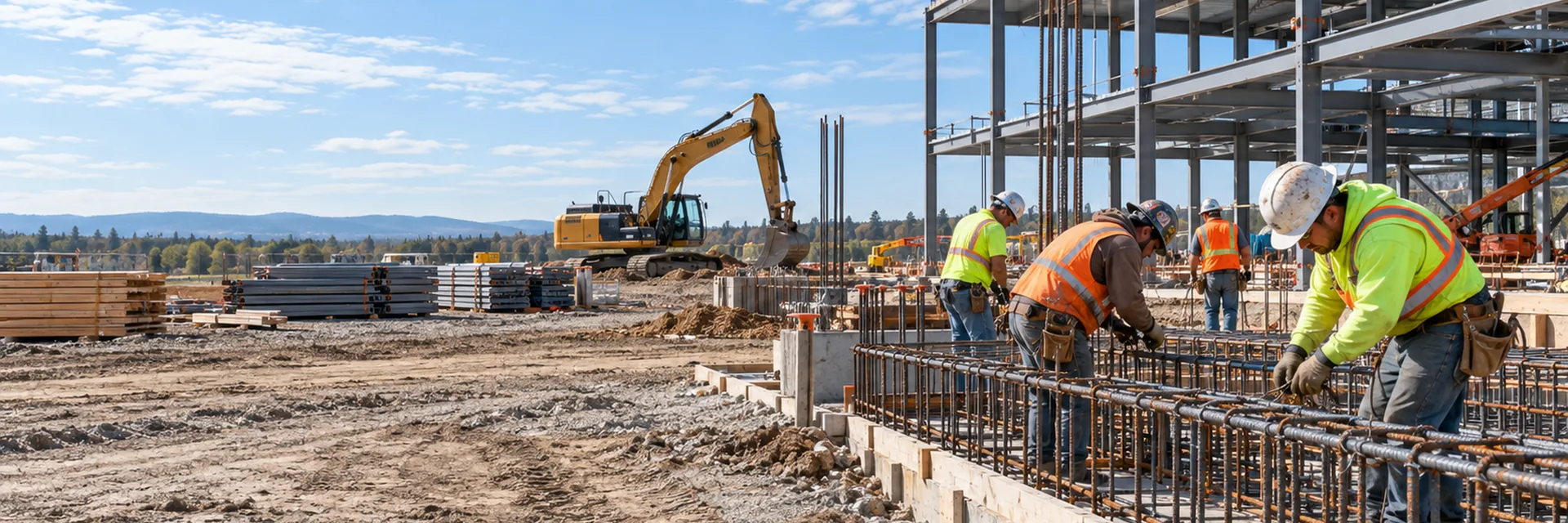


Who needs workers compensation in Arizona
Any Arizona employer with employees needs workers compensation coverage — there's no small-business or part-time exemption. This applies the same way regardless of ROC classification or trade.
Owner-only businesses without employees generally aren't required to carry it, but the moment a single employee is hired — even part-time or seasonal — coverage becomes required.
The actual statutory framework is A.R.S. §23-901 et seq., administered by the Industrial Commission of Arizona (ICA). The penalty for operating without required coverage is real and significant — a Class 6 felony under §23-932 — and the ICA can also issue a cease-and-desist order that functions as an effective stop-work order until coverage is in place.
Audits and what to expect
Arizona workers comp premium is typically estimated up front and trued up against actual payroll and classifications at audit — the most common source of a larger bill is higher actual payroll or a classification difference from the original estimate.
Respond to audit requests promptly — a missed audit can default to a less favorable estimate than a documented actual figure would produce.
Contract-driven requirements
Arizona general contractors and public agencies often require a workers compensation waiver of subrogation as a specific, requestable endorsement — not something automatically included in every policy.
Confirm the exact wording a specific contract requires rather than assuming a standard policy already satisfies it. Workers compensation answers for injuries to your own crew; a claim from a member of the public or another trade on the site is a third-party claim, which is where Arizona general liability insurance comes in.
A realistic scenario: a misclassified crew
An Arizona contractor with both field labor and office staff often reports everyone under one payroll classification code to simplify the application, rather than splitting field and clerical work the way the policy rates it.
A concrete version of this: an Arizona framing crew of 14 plus 2 office staff gets reported entirely under the framing labor code because it's simpler at application. The 2 clerical employees should be rated under a far lower clerical code — combining them into the framing code alone can add several thousand dollars a year in avoidable premium, and if one of the office staff is later hurt on a jobsite visit, the mismatched code becomes a real question in the claim.
Illustrative only — this describes a typical pattern, not an actual case or guaranteed outcome. Combining classification codes usually means overpaying on the clerical portion of payroll and can also complicate a claim if the injured worker's actual duties don't match the code reported. Report payroll by the classification each employee works, not one blended code.
Getting workers compensation coverage in place
Share your ROC classification, current payroll and employee count, and any established X-Mod so the quote reflects real operations.
Gleason Insurance Brokers places workers compensation for Arizona contractors — call 844-978-7283 or request a quote to get started.
Exclusions and exposures that matter in Arizona workers comp
Heat illness is a real, recurring source of Arizona construction workers comp claims — Phoenix and Tucson summer jobsite temperatures regularly exceed 105°F, and heat-related injury and illness claims are a standing underwriting consideration the ICA and carriers both track, not a rare edge case.
Fall exposure on residential framing and roofing work — common trades in Arizona's active homebuilding markets — carries its own classification accuracy requirement separate from the felony noncompliance exposure described above; a framing crew coded as general labor rather than framing/roofing specifically both misprices the risk and can complicate a fall-related claim.
Arizona workers comp submission checklist
Have the following ready for an Arizona workers comp submission:
Frequently asked questions
11 questions — start typing to filter
At what point does an Arizona contractor need workers compensation?
The moment the business hires its first employee — Arizona has no small-business or part-time exemption from the requirement.
What determines my Arizona workers comp premium?
Payroll by classification is the primary driver, along with your Experience Modification Rate (X-Mod) once established — classification accuracy matters more than almost anything else.
How does a workers comp audit work in Arizona?
Premium is typically estimated up front and trued up against actual payroll and classifications at audit — additional premium usually reflects real payroll or classification differences, not an error.
Do Arizona general contractors typically require a waiver of subrogation?
Often yes, especially larger GCs and public agencies — it's a specific, requestable endorsement, not something automatically included in a standard policy.
What happens if I don't have an established X-Mod yet as a new Arizona business?
New businesses generally don't have their own experience modification immediately — eligibility depends on sufficient qualifying payroll and claims experience over time.
Are owner-only Arizona contracting businesses required to carry workers comp?
Generally not, if there are genuinely no employees — but the requirement applies the moment even one employee, including part-time or seasonal, is hired.
Show 5 more questions
Does Gleason Insurance Brokers place workers compensation coverage in Arizona?
Yes — we place workers compensation for Arizona contractors alongside California, Nevada, Texas and Utah.
Is it better to work with a captive agent or an independent broker for Arizona workers comp?
A captive or direct agent is tied to one carrier's workers comp program; Gleason Insurance Brokers works as an independent broker, going out to multiple Arizona carriers to compare terms for your specific classifications and payroll. That matters more on workers comp than most lines, since pricing swings meaningfully by carrier appetite for your trade.
Do Arizona workers comp carriers expect a documented safety program?
Yes, and in Arizona the heat part of it is not a formality. Carriers generally expect a written program covering your trade's real hazards together with documented incident and near-miss reporting. Heat illness is a standing consideration that the Industrial Commission of Arizona and carriers both track rather than a rare edge case, and fall exposure on residential framing and roofing carries its own classification accuracy question. A program that names those hazards specifically, and matches the classifications your crews work under, tends to do more for loss experience over time than any single renewal decision.
Do Arizona workers comp carriers specifically underwrite heat exposure?
Yes — heat illness is a standing, tracked risk factor for Arizona construction crews given regular summer jobsite temperatures above 105°F, not a rare edge case. A documented heat-safety program (water/shade/rest protocols, acclimatization for new hires) is a real, concrete underwriting positive.
Do you want the cheapest workers compensation insurance in Arizona?
A workers comp quote is more than its rate: a low-priced Arizona policy may not include a blanket waiver of subrogation that a general contractor asks for, or coverage for crews you send across the state line into Nevada or California. We review those endorsements and the audit terms with the premium. How to compare commercial insurance quotes.
Arizona · General information only, not legal advice. Requirements vary by city, county, state, agency, project, contract, carrier and policy, among other factors; verifying what applies to your own situation is your responsibility. Full disclaimer
Reviewed by David Gleason, Principal — November 4, 2026