Gleason Insurance Brokers

General Liability · Workers' Comp · Commercial Auto · Pollution Insurance · Surety Bonds Start a Business Insurance Quote Today

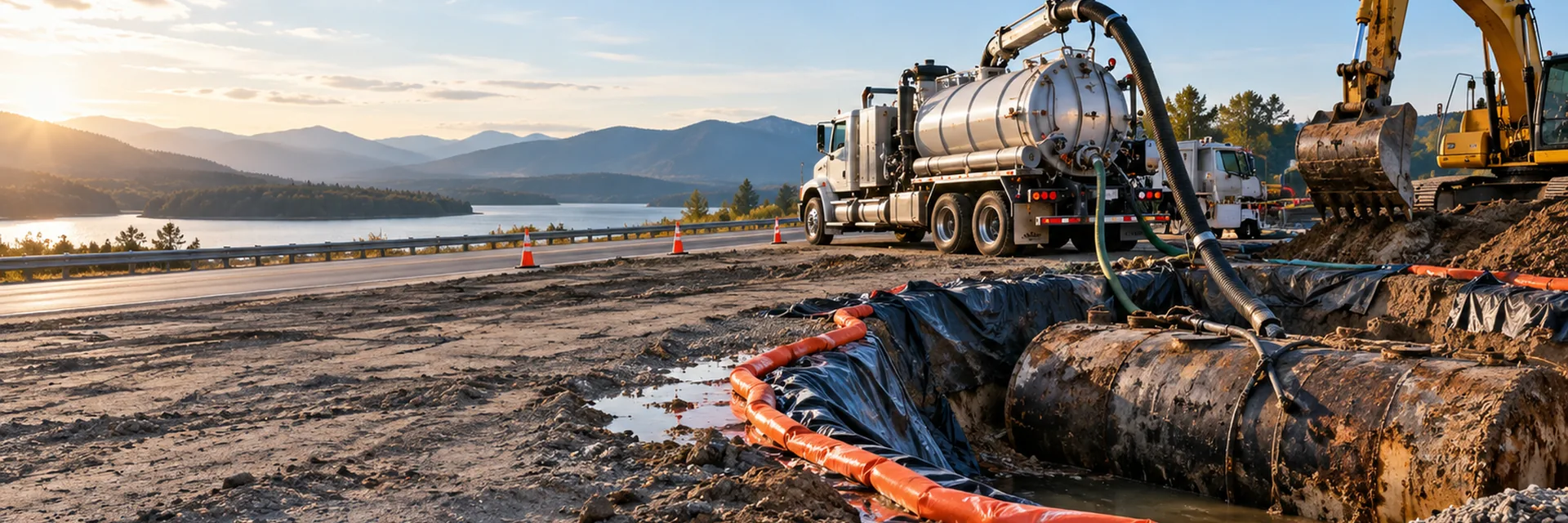
A roadside remediation site, an underground tank exposed in a lined pit with containment boom and a vacuum truck drawing off contaminated water — contractors pollution liability

California commercial insurance

Pollution Liability Insurance for Contractors CA

844-97-USAVE

Standard general liability policies routinely exclude pollution conditions — which leaves a real gap for any contractor whose work touches soil, groundwater, or hazardous materials. Contractors pollution liability is built specifically for that gap, and no two policies cover it the same way.

  • Contractors Pollution Liability
  • Jobsite Conditions & Cleanup Costs
  • Utility-Strike Exposure

Reviewed by David Gleason, Principal — October 11, 2026

Next Level Experience. Insurance Done Right.

CaliforniaGeneral information only, not legal advice — illustrative scenarios and coverage, subject to change without notice. Content may be out of date or contain errors, and requirements vary by city, county, state, agency, project, contract, carrier and policy, among other factors; verifying what applies to your own situation is your responsibility. Full disclaimer

Interactive coverage guide

Build a coverage stack around how the business actually operates.

Start with the preselected industry or trade, then adjust the operational questions. The commonly considered stack updates live. Keep the coverages you want GIB to evaluate, remove ones you do not want included in your quote request, and add other available lines before continuing.

Common Starting Coverages

General LiabilityThird-party injury and property damage

What it is

General Liability commonly addresses covered third-party bodily injury, property damage and certain personal or advertising injury claims, subject to the policy.

Why businesses like yours commonly carry it

Businesses commonly use it as a starting liability policy and to satisfy customer, landlord or contract requirements.

Possible coverage gap

General Liability is not intended to replace policies for employee injuries, business vehicles, owned property, cyber events or professional errors.

Learn more about General Liability

Commonly Added Based on Operations

Contractor Equipment / Inland MarineMobile tools, equipment and property away from premises

What it is

Inland Marine is commonly used for tools, equipment and certain mobile property that moves between locations or jobsites.

Why businesses like yours commonly carry it

Contractors frequently move tools, testing equipment and mobile machinery among jobsites.

Possible coverage gap

General Liability should not be assumed to insure the business's own tools and equipment against theft or physical damage.

Learn more about Contractor Equipment / Inland Marine
Cyber Liability & Data BreachCyber events, data and system interruption

What it is

Cyber insurance may address certain first-party and third-party losses from covered data breaches, cyberattacks, ransomware and system interruption, depending on the policy.

Why businesses like yours commonly carry it

Contractors commonly use email, electronic banking, project platforms, payroll systems and cloud document storage.

Possible coverage gap

General Liability generally should not be assumed to address data breach response, ransomware or network interruption.

Learn more about cyber insurance for contractors

Exposure-Dependent Coverages

Installation FloaterMaterials awaiting or undergoing installation

What it is

An Installation Floater may cover certain materials and equipment in transit, temporary storage and during installation, subject to the policy.

Why businesses like yours commonly carry it

Businesses responsible for materials before final installation commonly consider this coverage.

Possible coverage gap

A basic liability policy generally should not be assumed to cover the insured's materials against physical loss before installation is complete.

Learn more about Installation Floater
Builder's RiskProject property during construction

What it is

Builder's Risk may insure covered buildings, materials and certain project property while construction is underway.

Why businesses like yours commonly carry it

Owners, developers and contractors commonly consider it when a structure or major renovation is exposed during construction.

Possible coverage gap

Commercial Property and General Liability are not automatic substitutes for course-of-construction property coverage.

Learn more about Builder's Risk
Contractors Pollution LiabilityPollution conditions and cleanup liability

What it is

Pollution Liability may address covered cleanup costs and third-party injury or property damage arising from pollution conditions.

Why businesses like yours commonly carry it

Businesses working with fuels, chemicals, soil, water, demolition or environmental conditions may have pollution exposures.

Possible coverage gap

Standard General Liability commonly contains pollution exclusions or limitations.

Learn more about Contractors Pollution Liability
Umbrella / Excess LiabilityAdditional limits above scheduled liability policies

What it is

Umbrella or Excess Liability may provide additional limits above identified underlying liability policies, subject to its own terms and exclusions.

Why businesses like yours commonly carry it

Businesses with larger contracts, vehicles, public exposure or higher severity potential commonly consider additional limits.

Possible coverage gap

An umbrella does not automatically broaden every exclusion or sit over every policy unless the issued terms say it does.

Learn more about Umbrella / Excess Liability

Loading quote and requirements options…

Educational guidance only. Results are not a coverage recommendation, quote, binder, policy interpretation, or guarantee of coverage. Actual needs, availability, forms, limits, exclusions and requirements vary. A licensed insurance professional should review the complete risk and issued policy terms.

Verified Google reviews

What contractors say about us

5.0 / 5from 7 Google reviews

Reviews reflect individual client experiences and are not a guarantee of coverage, pricing or results.

91 Enterprise LLC

91 Enterprise LLC

March 24, 2026

We are using Gleason insurance for our commercial auto policy and GL policy. David is the best insurance broker I've worked with — very honest, responsive, and knowledgeable. Highly recommend.

Fito Plumbers

Fito Plumbers

February 20, 2026

We have been working with David at Gleason Insurance Brokers for 8+ years. David always goes above and beyond to make sure we have the appropriate coverages. He explains everything in detail and makes sure we feel confident and understand all of our policies. He is always available and responds right away!

Barry Stay

Barry Stay

February 17, 2026

David provides great service and I highly recommend him for your insurance needs.

Why general liability usually isn't enough

Most contractor general liability policies carry a pollution exclusion, meaning contamination discovered or caused during a project — even incidentally, like striking a fuel line during excavation — may not be covered without a separate pollution liability policy.

Read more

This matters most for excavation, grading, demolition, environmental remediation, and any contractor regularly working near known or suspected contamination, underground storage tanks, or utility infrastructure carrying hazardous materials.

This is exactly why the pre-construction environmental process matters to your coverage, not just your permitting timeline: a Phase I Environmental Site Assessment identifies whether contamination is even a plausible risk on a given site, and a Phase II ESA (soil and groundwater sampling) confirms it if a Phase I finding warrants it. A clean Phase I doesn't guarantee nothing will be encountered once excavation actually starts — which is exactly the scenario contractors pollution liability is built to respond to. Environmental consultants who perform site assessments and remediation design carry a different combination of coverage, explained on environmental engineering insurance.

Standard GL policies typically exclude pollution conditions
A pollution exclusion applies even to incidental contamination events
Excavation, grading and demolition carry elevated pollution exposure
Utility strikes can trigger pollution claims independent of GL

What contractors pollution liability actually covers

Coverage varies significantly by policy, but can address jobsite pollution conditions, transportation of contaminated materials, cleanup costs, third-party bodily injury and property damage from a pollution event, and emergency response costs — subject to the specific policy's definitions and exclusions.

Read more

Whether coverage extends to transportation of contaminated soil or waste, and whether it applies to conditions discovered on the jobsite versus conditions the contractor's work actually caused, are both details that vary meaningfully between programs and should be confirmed directly.

Jobsite pollution conditions and cleanup costs commonly addressed
Transportation coverage for contaminated materials varies by policy
Third-party bodily injury/property damage from pollution events
Known vs. newly-created conditions can be treated differently

Contractors pollution liability vs. transportation pollution liability vs. site pollution liability

These three terms get used loosely, but they're structurally different products, and a contractor can genuinely need one, two, or all three depending on the work.

Read more

None of the three is a substitute for the others.

Contractors pollution liability (CPL) responds to third-party bodily injury, property damage, cleanup costs and defense costs arising from the contractor's own operations at or from a jobsite — it's the policy most often meant when someone just says "pollution liability" in a construction context.

Transportation pollution liability (TPL) is a separate coverage for contamination released while materials are in transit — loading, hauling and unloading soil, waste, fuel or chemicals once a vehicle leaves the jobsite boundary. Most commercial auto and general liability policies exclude this exposure entirely, and CPL policies vary on whether transit beyond the site is included, endorsed, or excluded outright — confirm it specifically rather than assuming it's bundled in.

Site pollution liability (SPL, sometimes called pollution legal liability or PLL) is different in kind, not just scope: it's written to a fixed location the insured owns, leases or operates — not to a contractor's ongoing operations — and it typically responds to pre-existing or gradually-occurring conditions discovered at that location. Owners, developers and long-term site operators carry this more often than a contractor moving from project to project.

Real-world examples of what a policy may cover, depending entirely on the carrier and the specific policy purchased: mold or indoor air quality claims, fuel or hydraulic fluid spills, dust or particulate exposure, underground storage tank issues, unexpected asbestos or lead disturbance, third-party bodily injury from fumes or vapor intrusion, business interruption tied to a pollution event, and cleanup cost reimbursement. Not every carrier offers every one of these, and not every CPL, TPL or SPL policy covers the same conditions — actual coverage always depends on the policy's own definitions, exclusions, sublimits and endorsements. Review the issued policy language directly rather than assuming any of these are automatically included.

CPL — the contractor's own operations at or from a jobsite
TPL — materials in transit once a vehicle leaves the jobsite boundary
SPL/PLL — a fixed site the insured owns, leases or operates, not tied to one contractor's operations
Coverage examples vary by carrier — confirm against the actual issued policy, not a general description

Project-specific pollution coverage

For a single project with defined pollution exposure — a known contamination site, a large excavation, a redevelopment on a former industrial parcel — project-specific pollution coverage may be available, structured around the anticipated construction period.

Read more

Environmental reports matter here: Phase I or Phase II environmental site assessments, soil testing, and remediation or soil management plans are commonly requested by underwriters and should be gathered as early as possible when a project has known environmental complexity.

Project-specific coverage available for defined-exposure projects
Structured around the anticipated construction period
Phase I/II environmental reports commonly requested by underwriters
Gather environmental documentation early on complex sites

Where to verify current environmental requirements

Contaminated soil and hazardous waste questions run through the Department of Toxic Substances Control (DTSC); groundwater contamination and underground storage tank issues run through the State Water Board's GeoTracker system; CEQA environmental review now runs through the Governor's Office of Land Use and Climate Innovation, not the former Office of Planning and Research.

Read more

These are the sources to check directly for a specific project's environmental status or requirement — not a general search, and not an older reference that may predate an agency reorganization.

DTSC — contaminated soil and hazardous waste
GeoTracker/State Water Board — groundwater and UST issues
lci.ca.gov/ceqa — current CEQA guidance (not the former OPR)
Verify project-specific environmental status directly with these sources

A realistic pollution claim scenario

An excavation crew working a routine grading job strikes an undocumented underground storage tank, releasing contaminated soil that requires DTSC-supervised remediation before work can resume.

Read more

Standard general liability policies typically exclude pollution conditions entirely — this is precisely the gap pollution liability exists to close, and precisely the kind of loss that can stall a project for weeks regardless of whose fault the original contamination was.

This exposure isn't limited to obviously high-risk trades — any excavation, grading, or demolition work on an older property carries some baseline risk of encountering contamination nobody knew was there.

This is a typical, illustrative example meant to show how coverage lines can interact — not a description of any actual claim, and not a guarantee of how a specific claim would be handled. Actual outcomes depend on the exact policy language, the facts of the situation, and the carrier's determination; for anything case-specific, consult your policy documents, a licensed attorney, or the applicable regulatory authority.

Standard GL policies typically exclude pollution conditions entirely
Undocumented contamination can be encountered on routine excavation/grading
DTSC-supervised remediation can stall a project for weeks
The exposure isn't limited to obviously high-risk trades

Getting pollution liability coverage in place

Describe the actual work — excavation depth, known site history, proximity to underground utilities or known contamination — so the quote reflects real exposure rather than a generic pollution liability assumption.

Read more

Gleason Insurance Brokers places both annual and project-specific pollution liability coverage for California contractors — call 844-978-7283 or request a quote with your project details.

Describe actual excavation depth and known site conditions
Annual and project-specific pollution programs both available
Coordinate with GL and builders risk for full project coverage
Start with a call to 844-978-7283, or send a quote request

Which contractors need pollution liability most

Pollution liability isn't a universal requirement across every trade — it matters most for contractors whose work actively disturbs soil or groundwater.

Read more

Excavation and grading contractors are a clear example: cutting into soil can expose contamination that predates the project entirely, and standard GL policies typically exclude pollution-related claims outright rather than sublimiting them.

Developers and subdividers managing site work across a property should also evaluate this early in a project, since pollution conditions discovered mid-project can affect both the schedule and every contractor working on that site, not just the one whose equipment made contact with it.

Excavation and grading work carries meaningful pollution exposure by the nature of the work
Standard GL policies typically exclude pollution claims rather than sublimiting them
Site contamination can predate the project and still become the current contractor's exposure
Developers should evaluate this early — a mid-project discovery affects every contractor on site

What actually triggers a pollution claim on a jobsite

A sophisticated construction owner agreement can expressly require pollution liability when the work involves pollutants — that's a real, common contract term, not an insurance company inventing exposure that isn't there.

Read more

Understanding the actual triggers a policy is meant to respond to makes it clearer why: mold and moisture intrusion during a renovation, silica dust generated by cutting or grinding concrete and masonry, and asbestos or lead disturbed unexpectedly during demolition or renovation of an older structure are three of the most common contractor pollution liability triggers on active jobsites, each carrying its own regulatory framework beyond just the insurance question.

Fuel spills from job-site equipment, contaminated soil discovered during excavation, and utility strikes that release contents from a damaged line are three more — each is a real, recurring cause of loss specifically named in contractor pollution liability policies, not a hypothetical. A fuel spill during routine equipment fueling or an unexpected utility strike can trigger cleanup obligations and third-party claims within hours, well before there's time to sort out coverage after the fact.

Jobsite pollution and transportation pollution are related but distinct triggers worth keeping straight: jobsite pollution happens at or from the site itself, while transportation pollution liability responds to contamination released once material is in transit — hauling contaminated soil, waste, fuel or chemicals off-site. See the CPL vs. TPL vs. SPL breakdown above for how these map to actual policy types; the trigger determines which coverage responds, and a policy built for one doesn't automatically extend to the other.

Trenchless and directional-drilling work adds one more named trigger worth knowing specifically: a "frac-out," where drilling fluid unexpectedly surfaces away from the intended underground bore path, releasing it into soil, a waterway or a property the project never intended to affect. See our Directional Drilling & Trenchless guide for how this specific exposure is underwritten.

For a closer look at the coverage gap most contractors don't realize they have, see Pollution Liability: The Coverage Most Contractors Don't Know They Need.

Mold/moisture, silica dust and asbestos/lead disturbance are common triggers with their own regulatory frameworks
Fuel spills, contaminated soil discovery and utility strikes are real, recurring, named causes of loss
Jobsite pollution (at the site) and transportation pollution (in transit) are distinct triggers
A construction contract can legitimately require this coverage when pollutants are part of the work
See our Excavation & Grading guide for XCU coverage and utility-locate considerations specific to excavation work
A "frac-out" — drilling fluid surfacing away from the intended bore path — is a real, named trigger specific to trenchless/directional drilling work

Frequently asked questions

17 questions — start typing to filter

Are there different types of pollution liability insurance?

Yes — pollution coverage can vary substantially among policies. Depending on the policy and operation, coverage may address jobsite pollution conditions, transportation exposures, cleanup costs, third-party bodily injury, third-party property damage, emergency response, completed operations, and other pollution-related exposures. Actual policy wording controls coverage.

Does contractors pollution liability cover transportation?

Not automatically — transportation pollution may be covered, endorsed, restricted or excluded depending on the policy. Contractors transporting contaminated soil, waste, chemicals or other materials should specifically disclose those operations.

Does pollution insurance cover contamination discovered on the jobsite?

It depends on the policy and circumstances — known conditions, unknown conditions, pre-existing contamination and newly created pollution conditions may be treated differently.

Will I need soil samples or environmental reports to obtain pollution coverage?

Possibly — underwriters may request Phase I or Phase II reports, soil testing, remediation plans, soil management plans, environmental reports, project scope, and disposal information, depending on the project and environmental exposure.

What does standard contractors pollution liability generally cover?

Coverage varies significantly — a contractors pollution liability policy may provide coverage for certain pollution conditions arising from contracting operations, subject to the policy's definitions, exclusions, limits, deductibles and endorsements. Never assume one CPL policy is equivalent to another.

Can I get project-specific pollution liability?

Potentially — project-specific pollution policies may be available for qualifying projects, with terms structured around the anticipated construction period plus additional completed-operations or reporting provisions where available.

What happens if my construction project takes longer than expected?

Contact the broker and carrier before the project-specific policy expires. Extensions may be available depending on the carrier, but they should never be assumed to be automatic.

Is contractors pollution liability insurance required, or optional?

It's not legally mandated the way workers compensation is, but many contracts — particularly public works, utility and excavation projects — require contractors pollution liability insurance (CPL) as a condition of the contract itself, separate from what state law requires. Even where it isn't contractually required, standard general liability's pollution exclusion makes CPL worth carrying on any project with real soil disturbance, fuel storage, or chemical handling exposure.

What happens if my excavation crew discovers contamination that wasn't found in the Phase I or Phase II ESA?

Stop work in the affected area, secure and characterize the material, and notify DTSC or the applicable Regional Water Quality Control Board — a soil management plan then typically governs testing, transport and disposal from there. This is exactly the scenario contractors pollution liability is written to respond to, since standard general liability generally excludes it. See our full new construction process guide for how this fits into the broader design-through-construction sequence.

What is non owned auto insurance and when does a contractor actually need it?

Non owned auto insurance covers the business's liability when an employee uses their own personal vehicle for a business errand — a supply run or a site visit in a personal truck — since the business itself can still be named in a resulting claim even though it doesn't own the vehicle involved.

What actually triggers a contractor pollution liability claim?

The most common real triggers: mold or moisture intrusion during renovation, silica dust from cutting or grinding concrete and masonry, asbestos or lead unexpectedly disturbed in an older structure, fuel spills from jobsite equipment, contaminated soil discovered during excavation, and utility strikes that release a line's contents. Each is a named, recurring cause of loss under contractor pollution liability policies — not a hypothetical — and is exactly why a sophisticated owner's construction contract can legitimately require this coverage when the work involves pollutants.

Does refrigerant release count as a pollution exposure?

It can — refrigerant release is a real, contractor-specific pollution trigger worth confirming coverage for directly. See our commercial refrigeration contractor insurance California guide for how this and the related Legionella/water-treatment exposure are typically addressed.

What's a frac-out, and which trade does it actually apply to?

A frac-out is drilling fluid unexpectedly surfacing away from the intended underground bore path — a real, specific trigger for horizontal directional drilling and other trenchless methods. See our trenchless contractor insurance guide for how this exposure is actually underwritten.

What is contractor's pollution insurance and do I need it?

Contractor's pollution insurance (also called pollution liability insurance) covers third-party bodily injury, property damage and cleanup costs from a pollution condition your work causes or discovers — something standard general liability typically excludes. Excavation, demolition, underground utility, remodel and any trade disturbing soil or older building materials commonly need it.

Why do contractors often skip pollution liability even when they need it?

It's one of the most commonly overlooked coverages in construction, mostly because contractors don't think of their own work as an environmental exposure until something happens. See our full explanation of why pollution liability gets overlooked.

Does Gleason have strong pollution insurance markets?

Yes. Gleason Insurance Brokers has strong, extremely competitive pollution insurance markets for California contractors, covering soil, groundwater and hazmat exposures that a standard general liability policy excludes. Call 844-978-7283.

Is pollution liability insurance affordable through Gleason?

Pollution liability pricing varies more than most lines, and carriers in this space price the same work differently. The honest answer on affordability is that it's circumstantial — the type of work performed, project duration, site environmental conditions and claims history each play a real role in what a carrier will actually quote. Call 844-978-7283 to see what your specific exposure looks like.

Additional official resources

Verify current licensing, regulatory and program requirements directly with the responsible agency — this is general information, not legal advice, requirements change without notice, and what is summarized here may be out of date or contain errors. Confirming what applies to your own city, project, contract and policy is your responsibility.

Explore Related Coverage and Contractor Resources

Related coverage
Guides, trades and resources

Updated October 11, 2026