Gleason Insurance Brokers

Trucking & Transportation Insurance · Commercial Auto · Cargo · Trailer Interchange Start a Business Insurance Quote Today

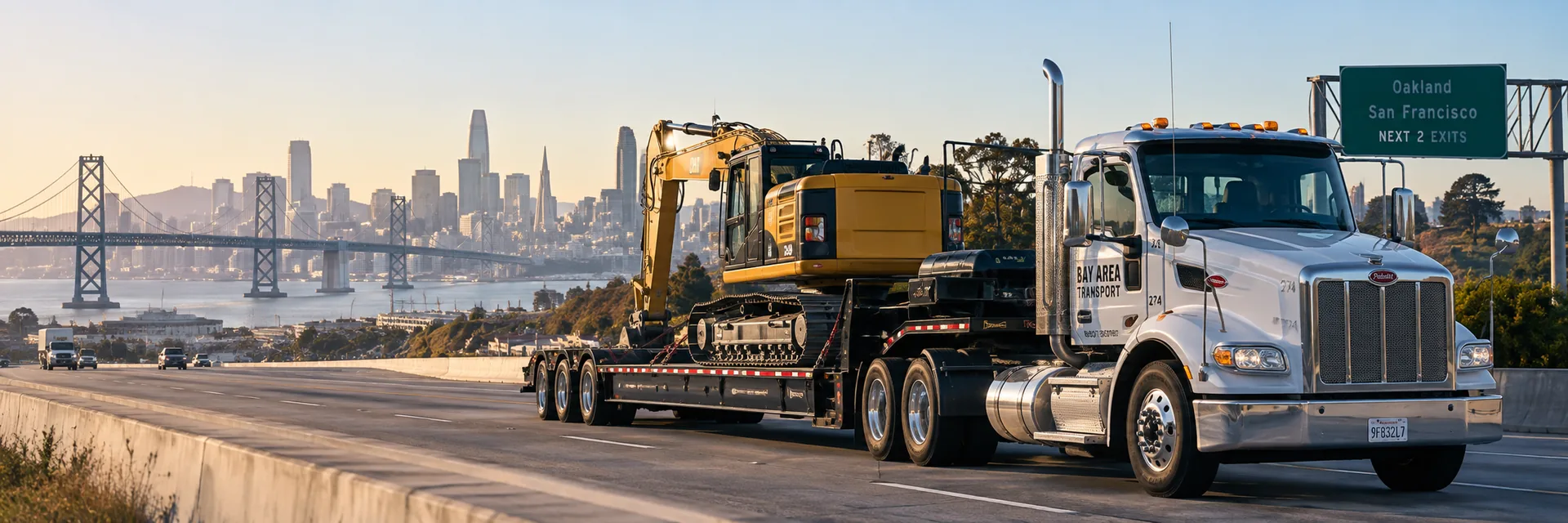
A lowbed trailer hauling heavy construction equipment — trucking and motor carrier insurance

Trucking and heavy haul

Trucking Insurance California

844-97-USAVE

Trucking insurance in California covers the vehicles, cargo and liability exposure of operating commercial trucks — whether that's a single owner-operator or a growing fleet. Getting the right mix of commercial auto liability, physical damage, cargo and non-trucking liability in place matters as much as the limits themselves.

  • Commercial Auto Liability
  • Physical Damage
  • Motor Truck Cargo

Reviewed by David Gleason, Principal — October 12, 2026

Next Level Experience. Insurance Done Right.

CaliforniaGeneral information only, not legal advice — illustrative scenarios and coverage, subject to change without notice. Content may be out of date or contain errors, and requirements vary by city, county, state, agency, project, contract, carrier and policy, among other factors; verifying what applies to your own situation is your responsibility. Full disclaimer

Interactive coverage guide

Build a coverage stack around how the business actually operates.

Start with the preselected industry or trade, then adjust the operational questions. The commonly considered stack updates live. Keep the coverages you want GIB to evaluate, remove ones you do not want included in your quote request, and add other available lines before continuing.

Common Starting Coverages

General LiabilityThird-party injury and property damage

What it is

General Liability commonly addresses covered third-party bodily injury, property damage and certain personal or advertising injury claims, subject to the policy.

Why businesses like yours commonly carry it

Businesses commonly use it as a starting liability policy and to satisfy customer, landlord or contract requirements.

Possible coverage gap

General Liability is not intended to replace policies for employee injuries, business vehicles, owned property, cyber events or professional errors.

Learn more about General Liability
Commercial AutoBusiness vehicles, drivers and physical damage

What it is

Commercial Auto may address liability arising from covered business vehicles and, when selected, physical damage and other vehicle-related coverages.

Why businesses like yours commonly carry it

Businesses that own or regularly use vehicles may need a policy structured around business use, drivers and vehicle schedules.

Possible coverage gap

Personal auto policies may restrict or exclude business use, and General Liability is generally not a substitute for auto liability.

Learn more about Commercial Auto

Commonly Added Based on Operations

Motor Truck CargoCustomers' freight while in transit

What it is

Motor Truck Cargo may address covered loss or damage to property transported for others, subject to commodities, limits and exclusions.

Why businesses like yours commonly carry it

Motor carriers may be contractually responsible for customers' cargo while it is in their care, custody or control.

Possible coverage gap

Commercial Auto liability does not automatically insure customers' cargo against physical loss.

Learn more about Motor Truck Cargo
Cyber Liability & Data BreachCyber events, data and system interruption

What it is

Cyber insurance may address certain first-party and third-party losses from covered data breaches, cyberattacks, ransomware and system interruption, depending on the policy.

Why businesses like yours commonly carry it

Motor carriers increasingly rely on dispatch, ELD, telematics, payment, customer and driver systems.

Possible coverage gap

General Liability generally should not be assumed to address data breach response, ransomware or network interruption.

Learn more about cyber insurance for trucking companies

Exposure-Dependent Coverages

Umbrella / Excess LiabilityAdditional limits above scheduled liability policies

What it is

Umbrella or Excess Liability may provide additional limits above identified underlying liability policies, subject to its own terms and exclusions.

Why businesses like yours commonly carry it

Businesses with larger contracts, vehicles, public exposure or higher severity potential commonly consider additional limits.

Possible coverage gap

An umbrella does not automatically broaden every exclusion or sit over every policy unless the issued terms say it does.

Learn more about Umbrella / Excess Liability

Loading quote and requirements options…

Educational guidance only. Results are not a coverage recommendation, quote, binder, policy interpretation, or guarantee of coverage. Actual needs, availability, forms, limits, exclusions and requirements vary. A licensed insurance professional should review the complete risk and issued policy terms.

Verified Google reviews

What trucking and transportation businesses say about us

5.0 / 5from 7 Google reviews

Reviews reflect individual client experiences and are not a guarantee of coverage, pricing or results.

91 Enterprise LLC

91 Enterprise LLC

March 24, 2026

We are using Gleason insurance for our commercial auto policy and GL policy. David is the best insurance broker I've worked with — very honest, responsive, and knowledgeable. Highly recommend.

Fito Plumbers

Fito Plumbers

February 20, 2026

We have been working with David at Gleason Insurance Brokers for 8+ years. David always goes above and beyond to make sure we have the appropriate coverages. He explains everything in detail and makes sure we feel confident and understand all of our policies. He is always available and responds right away!

Barry Stay

Barry Stay

February 17, 2026

David provides great service and I highly recommend him for your insurance needs.

Core coverage for California trucking operations

Commercial auto liability covers third-party bodily injury and property damage from an accident involving your trucks — the foundation of any trucking insurance program.

Physical damage coverage protects the trucks and trailers themselves, while cargo insurance covers the freight being hauled — both are separate from liability and need to be confirmed explicitly. New authorities with little operating history are underwritten differently, as explained on new trucking business insurance.

Commercial auto liability — the foundation of the program
Physical damage covers trucks and trailers
Cargo insurance covers freight being hauled — separate from liability
Confirm all three are actually in the program
Flatbed, dry van, refrigerated and tanker trailers each carry different cargo and physical damage considerations

DOT authority and California-specific compliance

Interstate carriers need active operating authority with the FMCSA and a USDOT number; intrastate California carriers register with the California Highway Patrol's Motor Carrier Safety unit.

Minimum liability limits differ by cargo type and operating authority — general freight carriers typically need at least $750,000, while hazmat and certain other cargo types require significantly more.

Interstate carriers need FMCSA operating authority
Intrastate CA carriers register with CHP Motor Carrier Safety
Minimum limits vary by cargo type and authority
Hazmat and specialty cargo require higher limits

Non-trucking liability and bobtail coverage

Owner-operators leased to a motor carrier often need non-trucking liability (bobtail) coverage for when the truck is being driven for personal use or between dispatches, outside the scope of the carrier's policy.

Confirm with your motor carrier exactly when their policy applies and when coverage shifts to you — this is one of the most commonly misunderstood gaps in owner-operator coverage.

Non-trucking liability covers use outside dispatch
Also called 'bobtail' coverage
Confirm exactly when the carrier's policy applies vs. yours
A commonly misunderstood coverage gap for owner-operators

Fleet vs. owner-operator considerations

A single-truck owner-operator and a multi-truck fleet face the same core exposures but very different underwriting — driver qualification files, safety scores (CSA/SMS), and loss history all weigh more heavily as fleet size grows.

Building and maintaining a clean driver-qualification and safety-compliance file directly affects both eligibility and pricing over time.

Core exposures are the same regardless of fleet size
Driver qualification files matter more as fleets grow
CSA/SMS safety scores factor into underwriting
A clean compliance file improves eligibility and pricing

A realistic scenario: an accident while technically off dispatch

An owner-operator finishes a delivery, is driving the truck home before the next dispatch, and is in an accident — assuming the same commercial auto policy that covers loaded runs also covers this in-between period the way it always seems to.

Illustrative only — this describes a typical pattern, not an actual case or guaranteed outcome. Non-trucking liability (bobtail) coverage exists specifically for this gap between dispatches, and it's a genuinely different coverage than primary liability while under dispatch — confirm both are actually in place rather than assuming one covers the other.

Non-trucking liability (bobtail) covers the gap between dispatches
It's a genuinely different coverage than primary liability while under dispatch
Don't assume one automatically covers the other
Confirm both are explicitly in place if you run under someone else's authority

Lines we place for trucking and transportation

Trucking and transportation accounts are placed through the same submission process as the rest of this practice, but the lines that matter are not the same ones a building trade carries. What follows is the set that comes up most often for fleets and owner-operators. Which of them apply, and on what terms, depends on the authority held, the radius run, the commodities hauled, the loss history and each carrier’s appetite at the time.

Send the operations, the units, the authority and any current loss information and we will organize the submission from there — request a quote for your fleet. Coverage is not bound by submitting a request.

Commercial auto liability — the core line for a fleet, and the one most contracts and filings are written against
Physical damage — responds to damage to the tractors and trailers themselves, rather than to what they carry
Motor truck cargo — addresses the freight in the trailer, which auto liability does not
Non-trucking liability and bobtail — relevant when a unit is operated outside dispatch
Workers compensation — required by California law for employees, with driver classification often the point of dispute at audit
General liability — responds to exposures away from the vehicle, such as at a yard, terminal or customer site
Umbrella and excess — sits above the underlying auto and liability limits that shippers and brokers commonly require
Cyber — dispatch, telematics and billing systems are the usual exposure, covered on our transportation cyber page

Getting trucking coverage in place

Describe your actual operation — single truck or fleet, intrastate or interstate, cargo type, and driver count — so the quote reflects real exposure.

Gleason Insurance Brokers places trucking coverage for owner-operators and fleets throughout California — call 844-978-7283 or request a quote to get started.

Running an enclosed straight truck rather than a tractor-trailer or dump truck? See our dedicated Box Truck Insurance California page for cargo, liftgate and moving-specific coverage.

Describe your operation type and cargo
Note intrastate vs. interstate authority
We place coverage for owner-operators and fleets
Reach a broker on 844-978-7283, or request a quote

Frequently asked questions

13 questions — start typing to filter

What insurance does a California trucking operation need?

Commercial auto liability at minimum, plus physical damage for the trucks and trailers and cargo insurance for the freight being hauled — all three are typically separate coverages.

What's the minimum liability limit for a general freight carrier?

Typically $750,000, though hazmat and certain other cargo types require significantly more — confirm the requirement for your specific operating authority and cargo.

Do I need non-trucking liability if I'm leased to a motor carrier?

Often yes — the carrier's policy typically covers you only while dispatched. Non-trucking (bobtail) liability covers personal or between-dispatch use, and it's usually the owner-operator's own responsibility.

Does fleet size affect trucking insurance pricing?

Yes — driver qualification files, safety scores and loss history weigh more heavily as fleet size grows, and a clean compliance record improves both eligibility and pricing.

Does Gleason Insurance Brokers write coverage for both owner-operators and fleets?

Yes — we place trucking coverage throughout California for single-truck owner-operators and multi-truck fleets alike.

Does trucking insurance cover loading and unloading?

It depends on the policy — some cargo and liability forms address loading/unloading exposure explicitly, others don't. Confirm this specific exposure is addressed rather than assumed.

Can I add or remove trucks from my policy mid-term?

Yes — most commercial auto policies allow scheduled vehicle changes during the policy term; notify your broker promptly so coverage is accurate at the time of any incident.

Do BIT inspections or CARB's Advanced Clean Fleets rule affect my insurance?

Both are worth tracking even though neither is an insurance requirement directly. CHP's Biennial Inspection of Terminals (BIT) program inspects California truck terminals and rates fleet maintenance, driver records and vehicle condition — the same records an underwriter often wants to see, so a clean BIT rating can support a stronger submission. CARB's Advanced Clean Fleets rule is no longer aimed at private fleets: on September 25, 2025 CARB's Board voted to repeal its high-priority and drayage fleet requirements, and CARB's current guidance says private fleets are not subject to the remaining state and local government fleet rules. Other CARB truck rules can still apply to your vehicles, so confirm what applies with CARB directly.

What does "commercial truck insurance" actually include for a California trucking operation?

California commercial truck insurance for a trucking operation typically bundles auto liability, physical damage, cargo coverage and often trailer interchange, sized to the specific vehicles, drivers, radius of operation and freight type involved — not a single flat rate across every truck in the fleet. Getting real quotes based on your actual operation, rather than a generic per-truck estimate, is what determines whether a rate is actually competitive for your specific risk.

How is trucking insurance different from general business vehicle coverage?

Trucking policies are built around DOT/MC-authority carriers hauling for hire, with cargo coverage and liability limits tied to that authority. CA Business Vehicle Insurance is usually the better fit for a contractor's own pickups and service trucks that aren't hauling freight for other companies.

Is dump truck insurance the same as general trucking insurance?

Not exactly — dump trucks usually aren't hauling for hire under DOT authority the way over-the-road trucking is, and the physical damage and cargo exposures are different. Dump Truck Insurance Agency is built around the specific way dump trucks are used on construction and hauling jobs.

Is business car insurance different from trucking insurance?

Yes — business car insurance generally covers a company's pickups, service vehicles and cars, while trucking insurance is built around DOT/MC-authority carriers hauling for hire, with different limits and cargo exposures.

If I cancel the policy, am I still responsible for premium while the filings come off?

Generally yes, for whatever notice period each authority requires. Interstate carriers hold FMCSA operating authority with a federal filing behind it, while intrastate California carriers register with the California Highway Patrol's Motor Carrier Safety program and carry the state filing instead. Each one is removed on its own regulator's timetable after being notified, not on the day the policy ends, and premium can remain due until then. A fleet running both interstate and intrastate can have two filings to unwind, so the sequence is worth planning before the last load rather than after it.

Additional official resources

Verify current licensing, regulatory and program requirements directly with the responsible agency — this is general information, not legal advice, requirements change without notice, and what is summarized here may be out of date or contain errors. Confirming what applies to your own city, project, contract and policy is your responsibility.

Updated October 12, 2026