Gleason Insurance Brokers

General Liability · Workers' Comp · Commercial Auto · Pollution Insurance · Surety Bonds Start a Business Insurance Quote Today

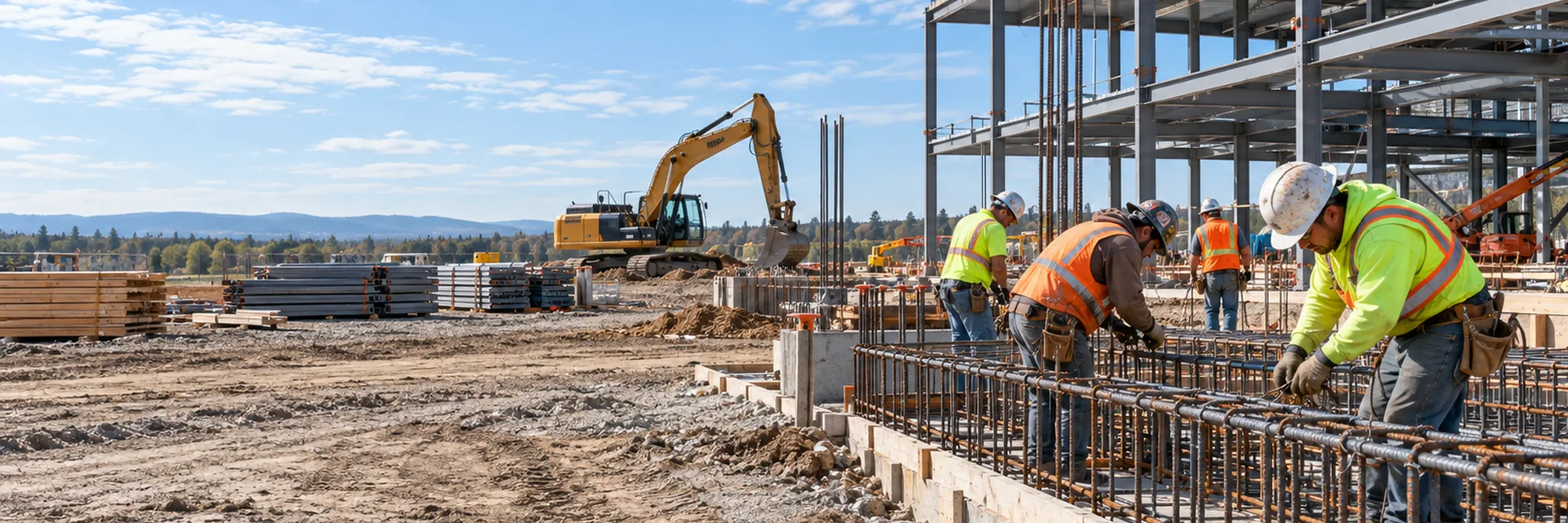
A construction crew working together on an active job site — workers compensation insurance for California contractors

California commercial insurance

Workers Compensation Contractors CA

844-97-USAVE

California requires workers compensation once a contracting business has a single employee — and for a growing list of CSLB classifications, it's required even without one. Getting the classification, payroll and ownership structure right up front is what keeps both the premium and the audit accurate. Local and licensed, Gleason Insurance Brokers works as an independent broker — not a single agent — to find fast, affordable coverage for nearby contractors.

  • Single-Employee Requirement
  • Classification & Payroll
  • Audits

Reviewed by David Gleason, Principal — October 12, 2026

Next Level Experience. Insurance Done Right.

CaliforniaGeneral information only, not legal advice — illustrative scenarios and coverage, subject to change without notice. Content may be out of date or contain errors, and requirements vary by city, county, state, agency, project, contract, carrier and policy, among other factors; verifying what applies to your own situation is your responsibility. Full disclaimer

Interactive coverage guide

Build a coverage stack around how the business actually operates.

Start with the preselected industry or trade, then adjust the operational questions. The commonly considered stack updates live. Keep the coverages you want GIB to evaluate, remove ones you do not want included in your quote request, and add other available lines before continuing.

Common Starting Coverages

General LiabilityThird-party injury and property damage

What it is

General Liability commonly addresses covered third-party bodily injury, property damage and certain personal or advertising injury claims, subject to the policy.

Why businesses like yours commonly carry it

Businesses commonly use it as a starting liability policy and to satisfy customer, landlord or contract requirements.

Possible coverage gap

General Liability is not intended to replace policies for employee injuries, business vehicles, owned property, cyber events or professional errors.

Learn more about General Liability

Commonly Added Based on Operations

Contractor Equipment / Inland MarineMobile tools, equipment and property away from premises

What it is

Inland Marine is commonly used for tools, equipment and certain mobile property that moves between locations or jobsites.

Why businesses like yours commonly carry it

Contractors frequently move tools, testing equipment and mobile machinery among jobsites.

Possible coverage gap

General Liability should not be assumed to insure the business's own tools and equipment against theft or physical damage.

Learn more about Contractor Equipment / Inland Marine
Cyber Liability & Data BreachCyber events, data and system interruption

What it is

Cyber insurance may address certain first-party and third-party losses from covered data breaches, cyberattacks, ransomware and system interruption, depending on the policy.

Why businesses like yours commonly carry it

Contractors commonly use email, electronic banking, project platforms, payroll systems and cloud document storage.

Possible coverage gap

General Liability generally should not be assumed to address data breach response, ransomware or network interruption.

Learn more about cyber insurance for contractors

Exposure-Dependent Coverages

Installation FloaterMaterials awaiting or undergoing installation

What it is

An Installation Floater may cover certain materials and equipment in transit, temporary storage and during installation, subject to the policy.

Why businesses like yours commonly carry it

Businesses responsible for materials before final installation commonly consider this coverage.

Possible coverage gap

A basic liability policy generally should not be assumed to cover the insured's materials against physical loss before installation is complete.

Learn more about Installation Floater
Builder's RiskProject property during construction

What it is

Builder's Risk may insure covered buildings, materials and certain project property while construction is underway.

Why businesses like yours commonly carry it

Owners, developers and contractors commonly consider it when a structure or major renovation is exposed during construction.

Possible coverage gap

Commercial Property and General Liability are not automatic substitutes for course-of-construction property coverage.

Learn more about Builder's Risk
Contractors Pollution LiabilityPollution conditions and cleanup liability

What it is

Pollution Liability may address covered cleanup costs and third-party injury or property damage arising from pollution conditions.

Why businesses like yours commonly carry it

Businesses working with fuels, chemicals, soil, water, demolition or environmental conditions may have pollution exposures.

Possible coverage gap

Standard General Liability commonly contains pollution exclusions or limitations.

Learn more about Contractors Pollution Liability
Umbrella / Excess LiabilityAdditional limits above scheduled liability policies

What it is

Umbrella or Excess Liability may provide additional limits above identified underlying liability policies, subject to its own terms and exclusions.

Why businesses like yours commonly carry it

Businesses with larger contracts, vehicles, public exposure or higher severity potential commonly consider additional limits.

Possible coverage gap

An umbrella does not automatically broaden every exclusion or sit over every policy unless the issued terms say it does.

Learn more about Umbrella / Excess Liability

Loading quote and requirements options…

Educational guidance only. Results are not a coverage recommendation, quote, binder, policy interpretation, or guarantee of coverage. Actual needs, availability, forms, limits, exclusions and requirements vary. A licensed insurance professional should review the complete risk and issued policy terms.

Verified Google reviews

What contractors say about us

5.0 / 5from 7 Google reviews

Reviews reflect individual client experiences and are not a guarantee of coverage, pricing or results.

91 Enterprise LLC

91 Enterprise LLC

March 24, 2026

We are using Gleason insurance for our commercial auto policy and GL policy. David is the best insurance broker I've worked with — very honest, responsive, and knowledgeable. Highly recommend.

Fito Plumbers

Fito Plumbers

February 20, 2026

We have been working with David at Gleason Insurance Brokers for 8+ years. David always goes above and beyond to make sure we have the appropriate coverages. He explains everything in detail and makes sure we feel confident and understand all of our policies. He is always available and responds right away!

Barry Stay

Barry Stay

February 17, 2026

David provides great service and I highly recommend him for your insurance needs.

Who actually needs workers compensation in California

Any employer with employees needs coverage under Cal.

Read more

Labor Code §3700 — there's no small-business or part-time exemption. What surprises more contractors is that California has expanded the classifications required to carry workers compensation even when the contractor reports zero employees. That list changes, so it should be confirmed directly with CSLB rather than assumed from a prior renewal.

For eligible owner-only businesses without employees, a workers compensation policy with the owners properly excluded — sometimes informally called a "ghost policy" — may be available, but it isn't universal and depends on entity structure, classification and carrier guidelines. For employers outside construction, the general picture is on workers compensation insurance in California.

Required once there's a single employee, no exceptions
Certain CSLB classifications require it even without employees
Requirements change — verify current classification rules with CSLB
Owner-exclusion policies exist but aren't available to everyone

What actually drives your premium

Payroll by classification is the primary rating basis — the same worker can be rated very differently depending on whether their actual duties match a general labor classification or a higher-hazard one like roofing or excavation.

Read more

Misclassification, in either direction, tends to surface at audit.

The Experience Modification Rate (X-Mod) compares your loss experience against expected losses for similar businesses, and it can meaningfully move premium up or down over time — it's also increasingly requested directly by general contractors and controlled insurance programs as a prequalification factor, not just an underwriting input.

Payroll classification accuracy is the primary premium driver
Misclassification surfaces at audit, usually as additional premium
X-Mod reflects loss experience relative to similar businesses
GCs and CIPs increasingly ask for your X-Mod directly

Audits: what to expect and how to avoid surprises

Workers compensation premium is typically estimated up front and trued up against actual payroll and classifications at audit.

Read more

The most common source of a larger-than-expected audit bill is higher actual payroll, additional employees, or classification differences from what was originally estimated — not an error by the carrier.

Missing an audit notice or providing incomplete information can result in a noncompliance estimate, which tends to be less favorable than a documented actual figure. If a notice is missed, contact the carrier or broker promptly rather than letting the estimate stand unchallenged.

Audits true up estimated payroll against actual figures
Additional premium usually reflects real payroll/classification differences
A missed audit can default to a less favorable estimate
Maintain accurate payroll and classification records year-round

Waivers of subrogation and contract requirements

Construction contracts frequently require a workers compensation waiver of subrogation, which affects the carrier's ability to pursue recovery against certain parties after a covered loss.

Read more

It's a specific endorsement, not something automatically included in every policy, and availability and cost depend on the carrier.

As with general liability, read the actual contract language rather than assuming a standard policy satisfies it — public works and larger commercial general contractors in particular tend to have specific, non-negotiable wording requirements.

Waiver of subrogation is a specific, requestable endorsement
Not automatically included in every workers comp policy
Public works and larger GCs often require specific wording
Confirm the requirement before assuming standard coverage applies

A realistic claims scenario

An electrician's apprentice suffers a shoulder injury lifting conduit on a commercial job.

Read more

The claim itself is straightforward — medical treatment and lost wages are covered — but what happens next is where most of the real cost and complexity sits: a claims adjuster reviews the classification code the injury was reported under, cross-checks it against payroll records, and any mismatch between the actual work being performed and the classification on file becomes an audit finding, not just a claims issue.

This is why classification accuracy matters as much before a claim as during one — an apprentice misclassified under a lower-rated code doesn't just affect the premium, it can complicate the claim itself.

This example is illustrative, not a report of an actual case or a promise of how any real claim would resolve — real outcomes depend on the specific policy, the facts involved, and the carrier's own review. For a situation that's actually happened or is happening, talk to your broker, a licensed attorney, or the relevant regulatory authority directly.

The claim triggers medical/wage coverage, but also a classification review
Misclassification surfaces during claims, not just during audits
Accurate classification protects both the premium and the claim itself
This connects directly to the audit process below

Experience modification: how one bad year follows you

California's experience modification rate (EMR) compares your actual claims history to what's expected for a business your size and classification — an EMR above 1.0 means higher-than-expected losses and a higher premium; below 1.0 means better-than-expected and a discount.

Read more

It's calculated using a rolling window of prior years, which means one bad year doesn't disappear immediately even after safety improves.

A lower EMR also affects more than premium — many public agencies and larger GCs set a maximum EMR as a bidding requirement, so an elevated rate can cost a contractor work before it ever shows up as a bigger check to the insurance carrier.

For a full walkthrough of exactly what the formula measures, see what an Experience Modification Rate actually measures.

EMR compares your actual losses to the expected norm for your size/class
A rolling multi-year window means one bad year lingers
Public agencies and GCs often set a maximum EMR to bid
A high EMR can cost work, not just premium

From our case files: what workers' comp audits and claims actually look like

The largest workers' comp surprises we see come from the audit, not the claim.

Read more

A dry rot repair contractor who used unlicensed subs was charged an extra $56,000 at audit because none of those subs could be shown to be licensed or insured (case study 2). A different contractor missed the auditor's deadline and was billed more than $30,000 on the carrier's estimate — once we reopened the audit with real records, the bill turned into a credit (case study 10).

On the claims side, an electrician's ladder fall shows how the system is supposed to work: coverage stayed in place even though the employee hadn't followed company rules, the carrier paid the medical costs, and the business came out of it with a stronger safety program (case study 7).

Getting workers compensation coverage in place

New businesses without an established X-Mod, businesses with a recent classification change, and owner-only entities all have slightly different paths to coverage — the more accurate the starting information, the fewer surprises at binding or at the first audit.

Read more

Gleason Insurance Brokers places workers compensation across California's contractor classifications and into Arizona, Nevada, Texas and Utah — call 844-978-7283 or request a quote with your current payroll and classification detail to get started.

New businesses and owner-only entities have distinct underwriting paths
Accurate payroll/classification detail reduces audit surprises
Coverage available across CA, AZ, NV, TX and UT
Call 844-978-7283 or request a quote to begin

Worker classification and California's ABC test

California determines whether someone is an employee or an independent contractor using the ABC test (Labor Code section 2750.3, from AB 5).

Read more

Under this test, a worker is presumed to be an employee unless the hiring business can show all three: the worker is free from its control and direction, the work is outside the hiring business's usual course of business, and the worker independently operates their own established trade or business. A licensed subcontractor working under their own valid CSLB license, in their own licensed trade, generally retains independent contractor status — an unlicensed worker performing licensed-trade work does not get that treatment.

Misclassifying a worker creates real coverage gaps, not just a compliance headache. A worker treated as an independent contractor but reclassified as an employee is not covered under the workers compensation policy at the time of an injury, which can leave a contractor personally exposed. It also tends to surface at the worst possible time — during a payroll audit or after a claim — as additional premium owed for payroll that should have been reported all along.

The ABC test presumes employee status unless all three conditions are met
A CSLB-licensed subcontractor working their own trade generally keeps independent contractor status
An unlicensed worker doing licensed-trade work is not exempt from the ABC test
Misclassified payroll usually surfaces as additional premium at audit, or as an uninsured claim

Workers compensation for growing fleet and crew operations

A sand and gravel or dump truck operation has a distinct workers compensation classification picture from a framing or finish-trade crew — CDL drivers, loader operators and yard staff often fall under different class codes than field labor, and getting that classification wrong is one of the most common sources of a surprise audit bill.

Read more

As a fleet grows past five trucks and the business pushes toward $3 million or more in revenue, payroll complexity grows with it, and so does the importance of getting each classification right the first time rather than fixing it at audit.

Paving and grading crews carry their own classification considerations tied to excavation and underground work, and a commercial general contractor running multiple crews across several active jobs needs a WC program that can absorb that complexity without losing track of which classification applies where. Our underwriting readiness guide covers how carriers actually evaluate this at renewal.

CDL drivers and equipment operators often carry different class codes than field labor
Fleet growth past 5 trucks typically means growing payroll classification complexity
Excavation and grading crews carry their own classification considerations tied to the work
Multi-crew commercial GCs need classification accuracy across every active job, not just one

Experience mod and bidding eligibility as you scale

As a contractor grows past a five-truck fleet or pushes toward $3 million or more in revenue, they're usually also bidding bigger jobs — and bigger jobs often come with an experience modification rate (EMR) ceiling as a bidding requirement, on top of the public works insurance and bond requirements that come with that scale.

Read more

An EMR that was a non-issue at a smaller size can become a real constraint on what work a contractor is even eligible to bid once they've grown into a different tier of project.

This is worth reviewing proactively, not after being told a bid was rejected on EMR grounds. A contractor bidding public works for the first time should also understand how a CSLB license bond differs from the bonding that larger public projects require — the two get confused often enough that it's worth being explicit about upfront.

Bigger jobs often come with an EMR ceiling as a bidding eligibility requirement
An EMR that didn't matter at a smaller scale can restrict eligibility once a contractor grows
Review EMR trajectory proactively — before a bid gets rejected on it, not after
A CSLB license bond and public works project bonding are two different requirements, not one

Workers compensation on public works: new construction, existing facilities and highway crews

Certified payroll and prevailing wage compliance apply the same way across new construction, renovation and highway public works — accurate job classification matters everywhere, but the underlying workforce exposure differs by project type.

Read more

New construction crews on a vacant site face standard construction workers comp exposure. Renovation crews working in or around an occupied public facility add exposure specific to working around building occupants and existing systems.

Highway crews add a distinct severity dimension — traffic-adjacent work carries real injury severity risk beyond standard construction workers comp exposure, which is reflected in how carriers underwrite and classify this work. Confirm your experience modification and classification codes accurately reflect highway-adjacent work if that's a real part of your book, rather than defaulting to standard construction classifications.

Certified payroll and classification requirements can also shift based on project size and the specific trades involved, not just the awarding agency — confirm the actual requirements named in the bid proposal or contract documents for each project rather than assuming your standard classification setup automatically applies.

For how prevailing wage compliance specifically affects workers comp costs and bonding capacity beyond the payroll paperwork itself, see how prevailing wage actually affects your insurance costs.

Certified payroll/prevailing wage compliance applies uniformly, but workforce exposure differs by project type
Renovation crews add exposure specific to working around occupied-facility systems and building users
Highway crews carry real traffic-adjacent severity risk beyond standard construction exposure
Confirm classification codes accurately reflect highway-adjacent work if it's a real part of your book

A documented safety program is a workers compensation underwriting expectation, not optional paperwork

Every workers compensation carrier expects to see a real, documented safety program as part of underwriting a construction account — this isn't specific to one carrier or one state's rules, it's a standard part of how workers comp risk gets evaluated across the industry.

Read more

An Injury and Illness Prevention Program (IIPP), job hazard analyses for actual trade-specific exposures (fall protection, trenching, silica, confined space, heat illness), and documented incident/near-miss reporting are exactly what an underwriter is looking for when reviewing a submission — not because it's a compliance checkbox, but because it's a genuine predictor of future claims frequency and severity.

This connects directly to pricing: your Experience Modification Rate (X-Mod) reflects actual claims history, and a documented safety program addressing your trade's specific OSHA/Cal-OSHA exposures is one of the more effective levers you have on that number over time — more effective, in most cases, than shopping the renewal alone. Carriers increasingly ask for this documentation directly at renewal, not just after a claim.

Documented safety programs are a standard underwriting expectation across workers comp carriers generally, not one carrier's preference
IIPP, trade-specific job hazard analyses and incident/near-miss reporting are the kind of record underwriters commonly look for
A real safety program is one of the more effective levers on your X-Mod over time
Have this documentation ready at renewal, not assembled only after a claim forces the issue

The 2028 exemption deadline: SB 216 and SB 1455

California contractor workers comp requirements are mid-transition, not static, and it's worth understanding exactly where that transition stands.

Read more

SB 216 (2022) already requires C-8 (Concrete), C-20 (Warm-Air Heating, Ventilating and Air-Conditioning), C-22 (Asbestos Abatement) and D-49 (Tree Service) contractors to carry workers' compensation insurance regardless of whether they have employees — that requirement has been in effect since January 1, 2023, and CSLB currently maintains it as a standing rule for those specific classifications.

SB 1455 (2024) extended the deadline for every remaining CSLB classification to comply with the same no-employee-exemption rule, moving it from the originally planned January 1, 2026 to January 1, 2028. Until that date, most other classifications can still claim the traditional CSLB workers compensation exemption for owners with no employees — but that exemption is scheduled to disappear sitewide by 2028, not just for the four classifications already covered.

SB 1455 also builds in real teeth around the transition: it requires CSLB to add an actual audit or other verification process for any licensee claiming the no-employee exemption, with that process reported to the Legislature by January 1, 2027, and it adds penalties for licensees found employing workers without valid coverage. For a contractor currently exempt, the practical planning question isn't just "do I need workers comp by 2028" — it's whether the exemption claim itself is about to face real verification for the first time.

Roofing (C-39) carries its own, separate exclusion from the no-employee exemption — not part of SB 216 at all. Business and Professions Code Section 7125 has precluded C-39 roofing contractors from filing this exemption for years, predating SB 216's 2023 additions entirely. See our Roofing Contractor Insurance guide for what this means in practice.

SB 216: C-8, C-20, C-22, D-49 already require WC regardless of employees, in effect since Jan. 1, 2023
SB 1455: extended the deadline for all remaining classifications from Jan. 1, 2026 to Jan. 1, 2028
A new CSLB audit/verification process for the no-employee exemption is due by Jan. 1, 2027
The traditional no-employee exemption is scheduled to end sitewide by 2028, not just for 4 classifications
See our Public Works Insurance Requirements guide for how DGS and Caltrans requirements layer on top of standard workers compensation
C-39 Roofing has its own, older exemption exclusion under B&P §7125 — separate from and predating SB 216

Ghost policies vs. owner-only policies: what's actually different

These two terms get used almost interchangeably, but they describe two different outcomes of the same underlying decision — whether the owner is excluded from their own workers' compensation coverage or stays included.

Read more

A ghost policy is the informal industry term for a workers' comp policy where the owner has signed a waiver excluding themselves, and there's no other employee for the policy to actually cover. It's a real, active policy issued by a licensed carrier — it just doesn't pay a benefit to anyone if the owner is hurt, because the owner opted out of their own coverage. Its purpose is almost always to produce a valid Certificate of Insurance for a general contractor, a client contract, or a licensing requirement, not to provide real protection.

An owner-only policy describes the same no-other-employee situation, but the owner has not waived coverage — they've elected to stay in, which means the policy provides real benefits if the owner is hurt on the job, priced against the owner's own reported payroll or a classification-based minimum. The practical difference is simple: a ghost policy protects a certificate requirement, an owner-only policy protects the owner too.

One detail that surprises a lot of owners: since Assembly Bill 2883 (effective January 1, 2017), California flipped the default. Working corporate officers, LLC managing members and general partners are now automatically covered under the business's workers' comp policy unless they actively sign a written waiver excluding themselves — coverage is opt-out, not opt-in. Only an officer or board member who owns at least 15% of outstanding corporate stock is even eligible to waive coverage, and a corporation can never have more than six people excluded under that rule.

One more thing worth being direct about: the moment a ghost or owner-excluded policy actually has a real employee working under it — even one — California law requires real coverage for that employee. Continuing to operate on an owner-excluded basis after hiring is treated as a coverage violation, not a paperwork technicality. And State Fund isn't the only place to get either kind of policy — private carriers may also write ghost and owner-only workers' comp policies, depending on the specific contractor classification and risk profile involved.

Ghost policy: owner excluded, no real payroll to cover, exists mainly for a certificate of insurance
Owner-only policy: same no-other-employee situation, but the owner stays covered and the policy pays a real benefit if they're hurt
Since AB 2883 (2017), CA officers/members/partners are covered by default unless they actively waive — not the other way around
Only an officer/board member owning 15%+ of stock can waive coverage, and a corporation can never exclude more than six people this way
Once there's a real employee, an owner-excluded policy no longer covers the business — real coverage is required
State Fund isn't the only option — other carriers will write ghost and owner-only policies depending on classification

The premium audit surprise — and the September 2026 rate increase

Workers compensation premium is based on actual payroll by class code, confirmed at audit — not on the estimate used to bind the policy.

Read more

The gap between the two is where the surprise comes from: payroll estimated too low at the start of the term, field and shop payroll not separated correctly, an employee's classification that changed mid-year, overtime handled incorrectly, wrap-up or OCIP payroll that wasn't credited back out, an uninsured subcontractor's cost picked up as payroll, or an owner's coverage election that changed without anyone updating the policy. Any one of these can turn into an unexpected bill well after the policy term has ended — see our full breakdown of how the WC premium audit works.

This matters more now: California's approved advisory pure premium rate rose 6.6% for policies effective on or after September 1, 2026, and the WCIRB has reported that actual charged rates were already running roughly 6% higher in the first quarter of 2026 than the prior year. Reconciling payroll by class code against the actual policy on a regular basis — not waiting for the annual audit to find out — is what keeps that gap from becoming a significant surprise at audit time.

For a plain-language breakdown of what an experience modification rate actually measures and how it moves premium, see What an Experience Modification Rate Measures. For how a premium audit works, see How a Workers' Comp Premium Audit Works.

Premium is based on audited payroll by class code, not the bound estimate
Field/shop payroll separation and mid-year classification changes are common triggers
CA's advisory pure premium rate rises 6.6% effective September 1, 2026
Regular payroll/class-code reconciliation avoids waiting until the annual audit to find out

Frequently asked questions

26 questions — start typing to filter

Which workers comp insurance companies do you work with?

Enough of them to make a comparison meaningful, including State Compensation Insurance Fund and a range of private carriers writing California construction. The names matter less than the fit: workers comp insurance companies differ sharply in which class codes they want, how they treat prior claims, whether they credit a safety program, and how their audit is run. We market the submission where the operation is genuinely wanted rather than sending it everywhere.

Can you place workers compensation through State Compensation Insurance Fund?

Yes. We can place California workers compensation through State Compensation Insurance Fund as well as through private carriers, so a submission is not limited to one of those routes. State Fund is California’s state-established workers compensation carrier and cannot decline an eligible California employer, which makes it the reliable option for a new venture, a hard class or an account with recent losses. For many accounts a private carrier prices better, so the practical answer is usually to market both rather than to assume either.

Do I need workers' compensation if I don't have employees?

It depends on the contractor classification and current California requirements. California requires workers' compensation for employers with employees, and certain CSLB contractor classifications currently have additional requirements even when the contractor reports no employees. Other eligible contractors without employees may be able to file an exemption — always verify the current requirement for your classification with CSLB.

Which California contractor classifications currently require workers' compensation even without employees?

California has expanded workers' compensation requirements for certain contractor classifications. Because classifications and effective dates can change, contractors should verify the current list directly with CSLB rather than relying on an old list or previous insurance requirement.

Will more California contractors eventually be required to carry workers' compensation even without employees?

California law has been moving toward broader workers' compensation requirements for licensed contractors. However, future requirements and implementation dates are subject to current law and legislative changes — contractors should monitor CSLB requirements rather than assuming a future requirement has already taken effect.

How do I get workers' compensation if I don't have employees?

Depending on your ownership structure, contractor classification and insurance company, a workers' compensation policy may be available when there is currently no employee payroll. Ownership and exclusions must be handled correctly, and the policy should accurately reflect the business.

Do I need a waiver of subrogation on my workers' compensation policy?

Possibly. Construction contracts frequently require a workers' compensation waiver of subrogation. The endorsement generally affects the insurance carrier's ability to pursue recovery against certain parties following a covered loss; availability and cost depend on the carrier and policy.

What is a workers' compensation Experience Modification Rate or X-Mod?

An Experience Modification Rate compares an eligible employer's workers' compensation loss experience with expected loss experience for similar businesses. It can affect workers' compensation pricing and may also be used by general contractors, developers and controlled insurance programs as part of contractor qualification.

How does California's ABC test affect whether a sub needs their own workers comp?

California presumes a worker is an employee unless the hiring business can show the worker is free from its control, performs work outside its usual business, and independently runs their own established trade. A subcontractor working under their own valid CSLB license in their own trade generally keeps independent contractor status; an unlicensed worker doing licensed-trade work typically does not qualify for that exemption.

How does a growing fleet affect workers compensation classification for CDL drivers?

CDL drivers, equipment operators and yard staff are frequently classified differently than field labor, and misclassifying them is one of the more common sources of an unexpected premium adjustment at audit. As a fleet grows, payroll complexity grows with it, making it worth confirming classification accuracy proactively rather than waiting for the carrier to flag it.

Can a high experience mod stop a contractor from bidding public works in California?

It can. Many public agencies and larger general contractors set a maximum experience modification rate as a bidding eligibility requirement, separate from price — a contractor whose EMR exceeds that threshold can be disqualified from bidding regardless of how competitive their number would otherwise be, which makes EMR trajectory worth tracking as a business-eligibility issue, not just a premium issue.

What should I look for in a workers compensation insurance broker for my construction projects in California?

Gleason Insurance Brokers is a California-licensed broker, not a single-carrier agent, so workers compensation insurance in California can be shopped across multiple markets rather than one company's terms. Actual turnaround and pricing depend on submission completeness, the scope of your construction projects, and carrier appetite — share your timeline and budget when requesting a quote so a local broker can prioritize accordingly.

How is construction workers comp insurance California different from other states?

California workers compensation is state-specific in both cost and rules — classification codes, the experience modification rate calculation, and (per SB 1455) an expanding requirement that all licensed contractors carry coverage, even solo operators with no employees, by 2028. Workers compensation for independent contractors is a related but separate question — a true 1099 relationship generally isn't covered the same way employees are, and misclassification is a common, costly mistake worth confirming with your broker rather than assuming.

Do workers compensation carriers actually require a documented safety program?

Yes — this is a standard underwriting expectation across the workers comp industry generally, not one carrier's specific preference. A written IIPP, job hazard analyses addressing your trade's actual OSHA/Cal-OSHA exposures, and documented incident/near-miss reporting are the kind of record underwriters commonly look for, and a real program is one of the more effective levers on your Experience Modification Rate over time.

Is commercial general liability insurance for contractors required the same way workers comp is?

Not by state law the same way — commercial general liability insurance for contractors isn't mandated by California the way workers comp is, but it's almost universally required by contracts, lenders and the CSLB bond process in practice.

What is the California contractor workers comp 2028 change?

SB 1455 (2024) extended a requirement first set by SB 216 (2022): every CSLB contractor classification will need workers' compensation insurance regardless of employee count by January 1, 2028. Four classifications — C-8 Concrete, C-20 HVAC, C-22 Asbestos Abatement and D-49 Tree Service — already had to comply starting January 1, 2023. SB 1455 also requires CSLB to build a real audit/verification process for any no-employee exemption claim, reported to the Legislature by January 1, 2027, meaning the traditional exemption is both ending and about to face actual verification for the first time.

Is the CSLB workers compensation exemption for no-employee contractors going away?

Yes, on a set timeline. C-8, C-20, C-22 and D-49 classifications already lost the no-employee exemption as of January 1, 2023 under SB 216. SB 1455 (2024) extends the same requirement to every remaining classification by January 1, 2028, moved up from an originally planned 2026 date. CSLB is also required to add a real audit or verification process for any exemption claim before that date, reported to the Legislature by January 1, 2027 — confirm current status directly with CSLB before assuming an exemption still applies to a given classification.

Can a California contractor with no employees still need workers comp?

Increasingly, yes. California contractor no-employees workers comp requirements already apply to four CSLB classifications (C-8 Concrete, C-20 HVAC, C-22 Asbestos Abatement, D-49 Tree Service) regardless of employee count, and SB 1455 extends that same requirement to every remaining classification by January 1, 2028. The traditional CSLB workers compensation exemption for owners with no employees is being phased out on a set schedule, not eliminated all at once — confirm current status for your specific classification directly with CSLB.

Which trades besides C-8, C-20, C-22 and D-49 already require workers comp regardless of employees?

C-39 roofing does, under a separate, older rule (Business & Professions Code §7125) that predates SB 216 entirely. See our C-39 roofing contractor insurance California guide for the full detail on why this trade is treated differently.

Why did my workers' comp premium audit come back so much higher than expected?

The policy is priced on estimated payroll by class code, then reconciled at audit against actual payroll. The most common causes of a large audit bill are payroll estimated too low at binding, field and office payroll not separated correctly, a classification that changed mid-term, overtime handled incorrectly, or an uninsured subcontractor's labor cost being picked up as payroll. Reconciling payroll against the policy during the term — not just at the annual audit — is what catches this early.

Did California's workers' comp advisory rate rise in 2026?

Yes — the Insurance Commissioner approved a 6.6% increase in the advisory pure premium rate for policies effective on or after September 1, 2026, and the WCIRB reported that actual charged rates in the first quarter of 2026 were already running roughly 6% above the prior year. This is an advisory/industry benchmark, not a guaranteed rate for any specific policy — your actual premium still depends on your classification, payroll, experience modification and the carrier's own pricing.

Do more workers compensation options open up the longer a contractor has been in business?

Yes. Gleason Insurance Brokers has access to more workers' compensation markets for contractors who have been in business more than three years, in addition to the standard factors carriers already weigh like experience mod, safety program and loss history. Call 844-978-7283 to see which markets fit your account.

What drives workers' compensation pricing, and does Gleason have affordable markets?

Workers' comp pricing has more moving parts than most lines — industry classification, payroll, claims history and your Experience Modification Rate all shape what a carrier can offer, which is why 'affordable' really depends on your specific numbers rather than a flat answer. We compare the workers' comp markets available to your business, and a documented, followed safety program is often the single biggest lever for improving terms over time. Call 844-978-7283 to see where your account actually lands.

What is a "ghost policy" for workers' compensation?

A ghost policy is the informal industry term for a workers' comp policy where the owner has signed a waiver excluding themselves and there's no other employee to cover. It's a real, active policy from a licensed carrier, but it pays no benefit to anyone if the owner is hurt — its purpose is almost always to produce a valid Certificate of Insurance for a GC, client contract, or licensing requirement, not to provide real protection.

How is an owner-only workers' comp policy different from a ghost policy?

Same no-other-employee situation, but the owner has NOT waived coverage — they've elected to stay in, so the policy provides a real benefit if the owner is hurt, priced against their own reported payroll or a classification minimum. A ghost policy protects a certificate requirement; an owner-only policy protects the owner too.

Do I have to go through State Fund to get a ghost or owner-only workers' comp policy?

No. State Fund is a common source for these because it can't decline eligible risks, but it isn't the only option — private carriers may also write ghost and owner-only policies, depending on the specific contractor classification and risk profile.

Additional official resources

Verify current licensing, regulatory and program requirements directly with the responsible agency — this is general information, not legal advice, requirements change without notice, and what is summarized here may be out of date or contain errors. Confirming what applies to your own city, project, contract and policy is your responsibility.

Explore Related Coverage and Contractor Resources

Related coverage
Guides, trades and resources

Updated October 12, 2026