What insurance do lenders typically require for a residential or commercial construction loan?
Requirements vary by lender and project. Common requirements may include builders risk, general liability, workers' compensation, commercial auto where applicable, flood or earthquake coverage when required, and other project-specific insurance — review the construction loan agreement carefully.
Is builders risk the same as general liability?
No. Builders risk primarily addresses covered physical loss or damage to property during construction; general liability addresses different liability exposures. A project can require both.
Who normally purchases the builders risk policy?
Depending on the contract and loan agreement, builders risk may be purchased by the property owner, developer, general contractor, or another responsible party — responsibility should be established before construction begins.
Can general liability be included with builders risk?
Some programs may offer multiple coverages, but builders risk should not automatically be assumed to include general liability — the policies address different exposures.
Can builders risk cover an existing home undergoing an addition or renovation?
Potentially — existing structures, additions and renovations have different underwriting considerations than completely new construction. The existing structure value, renovation scope, occupancy and construction details should be disclosed.
Can builders risk cover a new home being constructed?
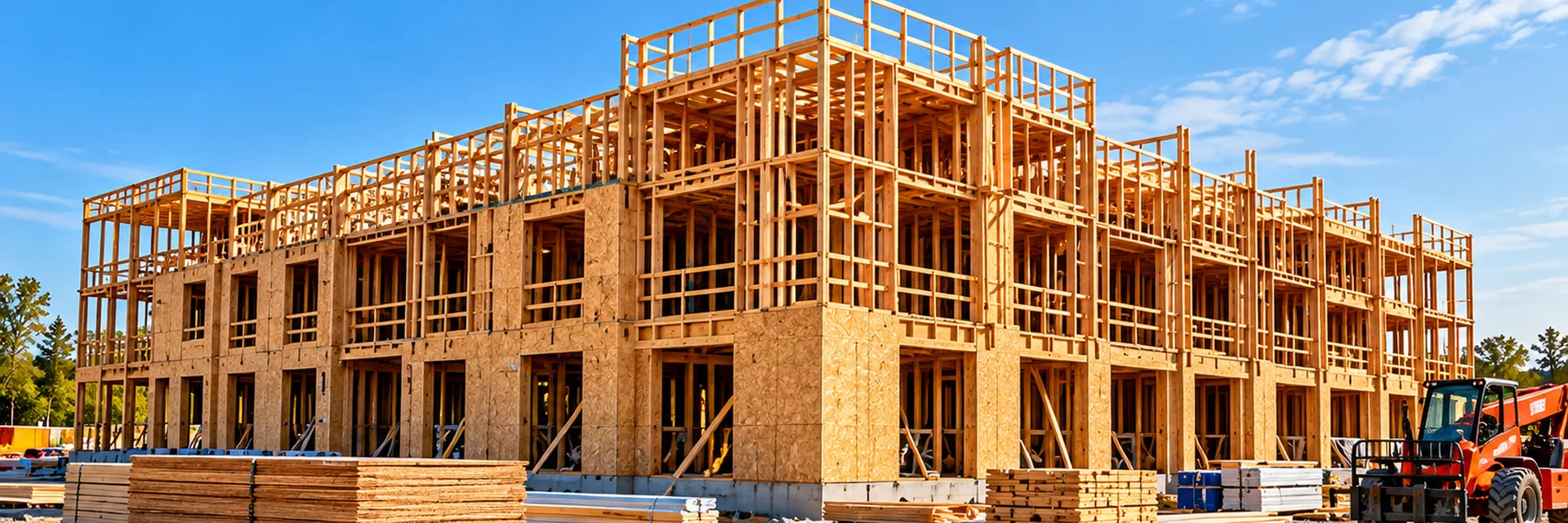
Yes, builders risk is commonly used for qualifying ground-up construction projects. Availability depends on location, project type, construction value, duration and other underwriting factors.
Can builders risk cover additional buildings being constructed on the same property?
Potentially — multiple structures may sometimes be insured under one project or policy depending on the carrier and circumstances.
Does a wrap-up (OCIP/CCIP) program automatically include builders risk coverage?
Not automatically — wrap-up programs typically address liability lines, and builders risk is frequently placed separately by the project owner or developer. Confirming who's responsible for builders risk on a wrapped project, and that there's no gap between the wrap-up's scope and the builders risk policy, is a coordination step worth settling before the project starts.
What builders risk considerations apply to a phased, multi-lot development project?
A phased or multi-lot project often needs builders risk structured around the actual construction timeline and financing rather than a single fixed policy period, and may need soft costs and delay-in-completion coverage that a single-structure project doesn't require — this should be scheduled and reviewed as each phase starts, not set once at the beginning of the whole development.
Are there affordable builders risk insurance options through a nearby, local broker in California?
Gleason Insurance Brokers is a California-licensed broker, not a single-carrier agent, so builders risk insurance in California can be shopped across multiple markets rather than one company's terms. Actual turnaround and pricing depend on submission completeness, the scope of your construction projects, and carrier appetite — share your timeline and budget when requesting a quote so a local broker can prioritize accordingly.
Is builders risk insurance the same as a builder's risk insurance policy or builder insurance?
Yes — builders risk insurance, a builder's risk policy, and builder risk insurance are the same coverage referred to with slightly different phrasing; "builder insurance" is sometimes used as a shorthand for the same thing, though that broader phrase can also refer to a contractor's full insurance program rather than this one specific line. This is also the coverage that typically responds to dwelling under construction insurance needs — protecting a structure, materials and equipment during the construction period itself, before a homeowner's policy would take over at completion.
What's the difference between builders risk and an installation floater?
Builders risk covers the structure under construction itself — the whole project, and can include an existing structure on a renovation. An installation floater instead covers specific materials and equipment a trade contractor is responsible for, typically from the shop through final installation — it doesn't cover the building at all. The two often work together: the floater covers materials before they're incorporated into the structure, and builders risk takes over once they become part of it.
Does builders risk in California automatically include earthquake or flood?
Not usually. Earthquake and flood are commonly excluded or sublimited on a standard builders risk form and typically need to be added specifically — worth confirming directly given how relevant both perils are to California construction generally. The same goes for soft costs (lost financing costs, extra loan interest, additional design fees following a covered delay), which is usually an add-on rather than automatically included.
Does builders risk cover an existing structure during a California renovation?
It can, but not automatically — builders risk existing structure coverage has to be specifically requested and confirmed, since a standard new-construction builders risk form is written around ground-up work, not a structure that's already standing. Builders risk renovation coverage in California should be confirmed to include the existing structure by name in the policy, not assumed from the fact that a builders risk policy is in place at all.
What are typical construction loan lender insurance requirements?
Most construction lenders want to be named lender's loss payee (or mortgagee) on the builders risk policy, with the limit sized to the full loan or project value rather than the current construction stage, plus specified general liability limits and additional insured status. The exact requirement is set by the loan documents themselves — review that section before binding coverage, not after.
Does a standard builders risk policy automatically satisfy a construction loan's requirements?
Not necessarily — a lender's insurance requirements are often more specific than a generic builders risk quote, particularly around who's named on the policy and how the limit is sized. Confirming the policy actually matches the loan documents' insurance section is worth doing before the loan closes, not discovered at the first draw request.
Where can I get builders risk insurance in California?
Gleason Insurance Brokers writes builders risk insurance California lenders and general contractors require for new construction, renovations and phased developments, reviewed against the actual construction loan requirements. Call 844-978-7283.
What do lenders check during a construction loan inspection?
Most construction lenders schedule periodic inspections tied to each draw request, confirming the percentage of work claimed actually matches what's been completed on site before releasing funds. These inspections can also confirm required insurance is still in force, which is part of why keeping the lender's certificate current throughout the project matters, not just at closing.
What is a replacement cost report and why do lenders ask for it?
A replacement cost report is a third-party valuation estimating what it would actually cost to rebuild the structure, used to confirm builders risk — and eventually permanent property — limits are set to the real rebuild cost rather than a rough estimate. Larger or more complex projects are more likely to see a lender require one, either at policy inception or renewal.
What's the industry-standard minimum insurance a lender typically wants on a construction loan?
As a general baseline, most construction lenders want to see a builders risk policy and a general liability policy both in force for the full duration of the project, not just at closing, with the lender named as loss payee on the builders risk policy. The exact requirement is always set by the specific loan documents, so treat this as a starting point to confirm against, not a substitute for reading the loan's actual insurance section.