Gleason Insurance Brokers

General Liability · Workers' Comp · Commercial Auto · Pollution Insurance · Surety Bonds Start a Business Insurance Quote Today

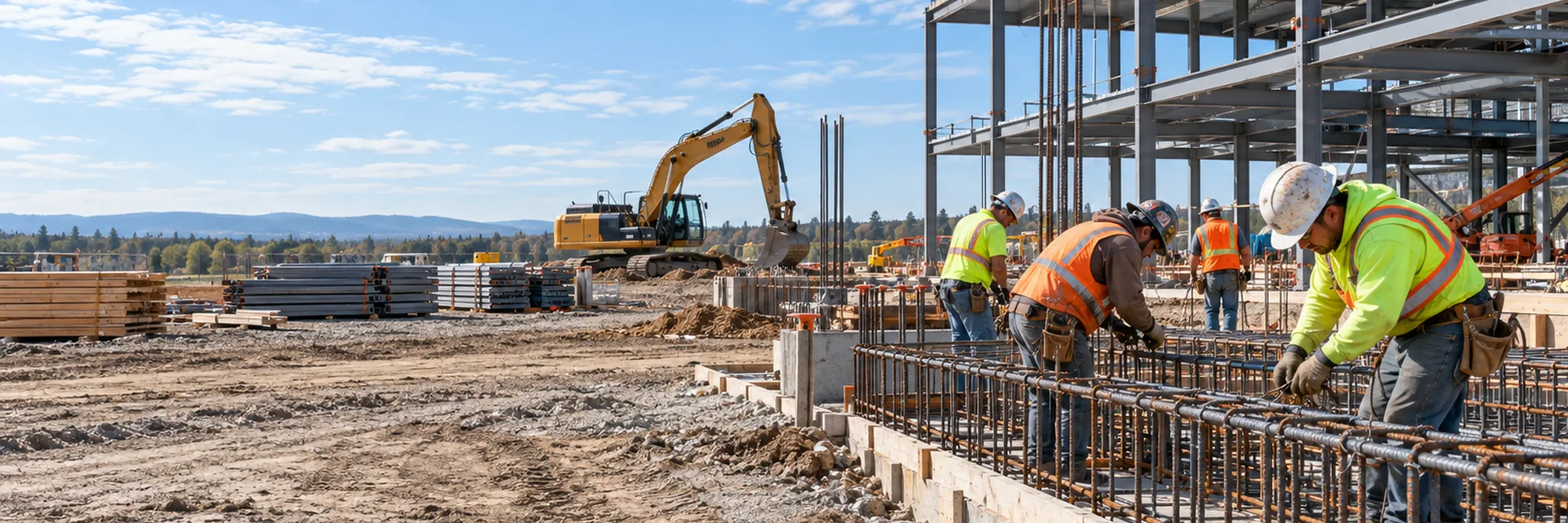
A construction crew working together on an active job site — workers compensation insurance for Utah contractors

Utah commercial insurance

Utah — Workers Compensation Insurance

844-97-USAVE

Utah requires workers compensation once a contracting business has a single employee — no exceptions by business size — with classification accuracy against your DOPL license driving both premium and audit outcomes. Working with an independent agency licensed across Utah instead of a single-carrier agent means faster comparisons and more affordable options for your construction projects.

  • Single-Employee Requirement
  • DOPL Classifications
  • Audits

Reviewed by David Gleason, Principal — October 12, 2026

Next Level Experience. Insurance Done Right.

UtahGeneral information only, not legal advice — illustrative scenarios and coverage, subject to change without notice. Content may be out of date or contain errors, and requirements vary by city, county, state, agency, project, contract, carrier and policy, among other factors; verifying what applies to your own situation is your responsibility. Full disclaimer

Interactive coverage guide

Build a coverage stack around how the business actually operates.

Start with the preselected industry or trade, then adjust the operational questions. The commonly considered stack updates live. Keep the coverages you want GIB to evaluate, remove ones you do not want included in your quote request, and add other available lines before continuing.

Common Starting Coverages

General LiabilityThird-party injury and property damage

What it is

General Liability commonly addresses covered third-party bodily injury, property damage and certain personal or advertising injury claims, subject to the policy.

Why businesses like yours commonly carry it

Businesses commonly use it as a starting liability policy and to satisfy customer, landlord or contract requirements.

Possible coverage gap

General Liability is not intended to replace policies for employee injuries, business vehicles, owned property, cyber events or professional errors.

Learn more about General Liability

Commonly Added Based on Operations

Cyber Liability & Data BreachCyber events, data and system interruption

What it is

Cyber insurance may address certain first-party and third-party losses from covered data breaches, cyberattacks, ransomware and system interruption, depending on the policy.

Why businesses like yours commonly carry it

Modern businesses commonly rely on email, banking, accounting systems, websites, cloud services and electronic records.

Possible coverage gap

General Liability generally should not be assumed to address data breach response, ransomware or network interruption.

Learn more about small business cyber insurance in California

Exposure-Dependent Coverages

Business Owners Policy / Commercial PackageLiability and property components evaluated together

What it is

A Business Owners Policy commonly combines liability and property coverages for eligible businesses. A Commercial Package Policy may combine multiple commercial coverage parts depending on the account and carrier.

Why businesses like yours commonly carry it

Businesses with premises, contents, inventory or other property exposures may ask GIB to evaluate whether liability and property components can be packaged where appropriate.

Possible coverage gap

Eligibility, included coverages and package structure vary by carrier. Commercial Property may also be written separately rather than as part of a package.

Learn more about Business Owners Policy / Commercial Package
Umbrella / Excess LiabilityAdditional limits above scheduled liability policies

What it is

Umbrella or Excess Liability may provide additional limits above identified underlying liability policies, subject to its own terms and exclusions.

Why businesses like yours commonly carry it

Businesses with larger contracts, vehicles, public exposure or higher severity potential commonly consider additional limits.

Possible coverage gap

An umbrella does not automatically broaden every exclusion or sit over every policy unless the issued terms say it does.

Learn more about Umbrella / Excess Liability

Loading quote and requirements options…

Educational guidance only. Results are not a coverage recommendation, quote, binder, policy interpretation, or guarantee of coverage. Actual needs, availability, forms, limits, exclusions and requirements vary. A licensed insurance professional should review the complete risk and issued policy terms.

Verified Google reviews

What California business owners say about us

5.0 / 5from 7 Google reviews

Reviews reflect individual client experiences and are not a guarantee of coverage, pricing or results.

91 Enterprise LLC

91 Enterprise LLC

March 24, 2026

We are using Gleason insurance for our commercial auto policy and GL policy. David is the best insurance broker I've worked with — very honest, responsive, and knowledgeable. Highly recommend.

Fito Plumbers

Fito Plumbers

February 20, 2026

We have been working with David at Gleason Insurance Brokers for 8+ years. David always goes above and beyond to make sure we have the appropriate coverages. He explains everything in detail and makes sure we feel confident and understand all of our policies. He is always available and responds right away!

Barry Stay

Barry Stay

February 17, 2026

David provides great service and I highly recommend him for your insurance needs.

Who needs workers compensation in Utah

Any Utah employer with employees needs workers compensation coverage — there's no small-business or part-time exemption, applying the same way regardless of DOPL classification.

Owner-only businesses without employees generally aren't required to carry it, but coverage becomes required the moment the first employee — even part-time or seasonal — is hired.

The actual statutory framework is the Workers' Compensation Act, Utah Code Title 34A, Chapter 2, administered by the Utah Labor Commission's Industrial Accidents Division. An employer that fails to maintain coverage faces a real, verified set of consequences: a penalty of at least $1,000, an injunction that can prohibit continued business operations until coverage is obtained, and loss of the workers' compensation system's "exclusive remedy" protection — meaning the employer can be sued directly in court by an injured worker instead of the claim being handled through the workers' comp system. Utah workers compensation responds to your employees' job injuries; bodily injury to anyone else on or near the project is the job of Utah general liability coverage.

Required once there's a single employee, no exceptions by size
Applies the same way across DOPL classifications
Owner-only businesses without employees generally aren't required
Coverage becomes required the moment the first employee is hired

What drives Utah workers comp premium

Payroll by classification is the primary rating basis — the same worker rated differently depending on whether actual duties match a general labor classification or a higher-hazard one.

The Experience Modification Rate (X-Mod) reflects loss experience relative to similar businesses and can move premium meaningfully over time.

Payroll classification accuracy is the primary premium driver
Misclassification tends to surface as additional premium at audit
X-Mod reflects loss experience relative to similar businesses
GCs increasingly request X-Mod directly as prequalification

Audits and what to expect

Utah workers comp premium is typically estimated up front and trued up against actual payroll at audit — respond to audit requests promptly to avoid a less favorable estimate.

Maintain accurate payroll and classification documentation throughout the policy period.

Premium is trued up against actual payroll at audit
Respond to audit requests promptly
A missed audit can default to a less favorable estimate
Maintain accurate records year-round, not just at audit time

Contract-driven requirements in Utah

Utah general contractors and public agencies often require a workers compensation waiver of subrogation — a specific, requestable endorsement, not automatic.

Rather than assuming standard coverage already satisfies a contract, confirm the exact wording that specific contract actually requires.

Waiver of subrogation often required, especially by larger GCs
It's a specific endorsement, not automatic
Confirm exact wording required by the contract
Public agencies may have specific requirements

A realistic scenario: a misclassified crew

A Utah contractor running both field crews and office staff frequently reports everyone under one blended classification code instead of separating field and clerical work the way the policy actually prices it.

A concrete version of this: a Wasatch Front concrete and flatwork crew of 9 plus 1 estimator working partly from a home office gets reported entirely under the concrete labor code. The estimator's payroll should be rated under a much lower clerical/outside-sales code — folding it into the concrete code overstates premium, and if the estimator is later involved in a jobsite incident, the mismatched code becomes a real complication in the claim rather than a clean one.

Illustrative only — this describes a typical pattern, not an actual case or guaranteed outcome. Combining classification codes usually means overpaying on the clerical portion of payroll and can also complicate a claim if the injured worker's actual duties don't match the code reported. Report payroll by the classification each employee actually works, not one blended code.

Combining classification codes often means overpaying on clerical payroll
A mismatched code can complicate a claim after an injury
Report payroll by actual duties, not one blended code
Confirm the classification with the carrier and rating bureau before binding

Getting workers compensation coverage in place

Share your DOPL classification, current payroll and employee count so the quote reflects real operations.

Gleason Insurance Brokers places workers compensation for Utah contractors — call 844-978-7283 or request a quote to get started.

Share DOPL classification, payroll and employee count
Include your X-Mod if established
We place coverage across CA, AZ, NV, TX and UT
Call 844-978-7283 or request a quote to get started

Exclusions and exposures that matter in Utah workers comp

Utah's mountain winters bring real snow and ice fall-hazard claims on framing, roofing and exterior work each construction season — a distinct seasonal exposure the desert Southwest states in this comparison don't carry to the same degree.

DOPL classification scope (B100 for any building, R100 limited to homes, small multifamily and small commercial buildings) ties directly into workers comp classification accuracy too — a contractor whose real payroll and project mix has outgrown their DOPL classification is very often also misclassifying payroll on the workers comp side, since both problems come from the same root cause: reporting what the license used to cover, not what the business actually does now.

Snow/ice fall-hazard claims are a real, distinct seasonal exposure in Utah
DOPL classification drift and payroll misclassification usually happen together
B100/R100 scope limits are a useful check on whether your classification still fits
Confirm both your DOPL classification and payroll codes at the same time, not separately

Utah workers comp submission checklist

Have the following ready for a Utah workers comp submission:

DOPL license number and classification (B100, R100 or specialty)
Current payroll by classification code, not a single blended figure
Established X-Mod if available, or years in business if not yet established
Three-year loss history, plus a short account of each claim
Confirmation your DOPL classification still matches your actual project size and scope

Frequently asked questions

10 questions — start typing to filter

At what point does a Utah contractor need workers compensation?

The moment the business hires its first employee — Utah has no small-business or part-time exemption.

What determines my Utah workers comp premium?

Payroll by classification is the primary driver, along with your Experience Modification Rate once established.

How does a workers comp audit work in Utah?

Premium is typically estimated up front and trued up against actual payroll at audit — additional premium usually reflects real payroll or classification differences.

What happens if a Utah employer doesn't carry workers compensation at all?

The Utah Labor Commission can impose a penalty of at least $1,000, issue an injunction prohibiting continued business operations until coverage is obtained, and the employer loses the workers' comp system's "exclusive remedy" protection — meaning an injured worker can sue directly in court instead.

What happens if I don't have an established X-Mod as a new Utah business?

New businesses generally don't have their own experience modification immediately — eligibility depends on sufficient qualifying payroll and claims experience over time.

Are owner-only Utah contracting businesses required to carry workers comp?

Generally not, if there are genuinely no employees — but the requirement applies the moment even one employee is hired.

Does Gleason Insurance Brokers place workers compensation coverage in Utah?

Yes — alongside California, Arizona, Nevada and Texas.

What's the real difference between an agent and a broker for Utah workers comp coverage?

An agent sells one carrier's products; a broker like Gleason Insurance Brokers represents you, not a carrier, and goes out to multiple Utah workers comp markets to find the best fit for your classifications and payroll. That distinction tends to matter most on workers comp, where carrier appetite and pricing vary more than on most other lines.

Do Utah workers comp carriers expect a documented safety program?

Yes. Carriers generally expect a written program addressing the trade's real hazards with documented incident and near-miss reporting, and in Utah the seasonal half of that is specific: snow and ice fall hazards on framing, roofing and exterior work recur every construction season in a way the desert Southwest states do not share. Coverage itself runs under Utah Code Title 34A, Chapter 2, administered by the Labor Commission's Industrial Accidents Division. A program that matches the DOPL classification scope the work actually falls under reads better than one written for a broader license than the payroll supports.

Does my DOPL classification cap affect my workers comp classification too?

Indirectly, yes — a contractor whose real project size has outgrown their DOPL classification (for example, commercial buildings beyond R100's three-story, 20,000-square-foot limit) is often also reporting payroll under an outdated classification code. Review both together, not separately.

Additional official resources

Verify current licensing, regulatory and program requirements directly with the responsible agency — this is general information, not legal advice, requirements change without notice, and what is summarized here may be out of date or contain errors. Confirming what applies to your own city, project, contract and policy is your responsibility.

Updated October 12, 2026