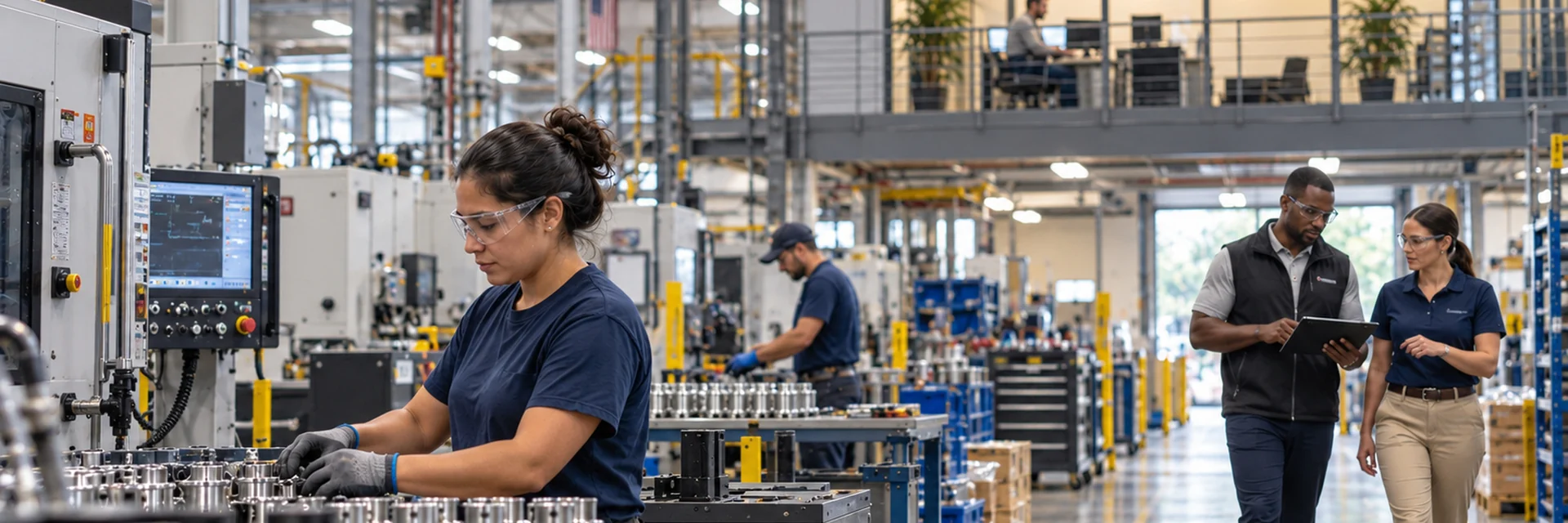
Group captives are not just for contractors. Manufacturers, trucking fleets, material suppliers, distributors and facility operators use them to take more control of their general liability, workers' compensation and commercial auto costs. The bar is higher for these businesses: captives typically look for a strong safety culture, at least 5 years in business and $200,000 or more a year in combined premium across those three lines.
CaliforniaGeneral information only, not legal advice — illustrative scenarios and coverage, subject to change without notice. Content may be out of date or contain errors, and requirements vary by city, county, state, agency, project, contract, carrier and policy, among other factors; verifying what applies to your own situation is your responsibility. Full disclaimer
Prefer to send everything at once? Complete a streamlined submission — just needs your review. Especially worth it if your business does $2M+ in annual sales — it can meaningfully speed up carrier turnaround.
Interactive coverage guide
Build a coverage stack around how the business actually operates.
Start with the preselected industry or trade, then adjust the operational questions. The commonly considered stack updates live. Keep the coverages you want GIB to evaluate, remove ones you do not want included in your quote request, and add other available lines before continuing.
Common Starting Coverages
General LiabilityThird-party injury and property damage
What it is
General Liability commonly addresses covered third-party bodily injury, property damage and certain personal or advertising injury claims, subject to the policy.
Why businesses like yours commonly carry it
Businesses commonly use it as a starting liability policy and to satisfy customer, landlord or contract requirements.
Possible coverage gap
General Liability is not intended to replace policies for employee injuries, business vehicles, owned property, cyber events or professional errors.
Cyber Liability & Data BreachCyber events, data and system interruption
What it is
Cyber insurance may address certain first-party and third-party losses from covered data breaches, cyberattacks, ransomware and system interruption, depending on the policy.
Why businesses like yours commonly carry it
Modern businesses commonly rely on email, banking, accounting systems, websites, cloud services and electronic records.
Possible coverage gap
General Liability generally should not be assumed to address data breach response, ransomware or network interruption.
Business Owners Policy / Commercial PackageLiability and property components evaluated together
What it is
A Business Owners Policy commonly combines liability and property coverages for eligible businesses. A Commercial Package Policy may combine multiple commercial coverage parts depending on the account and carrier.
Why businesses like yours commonly carry it
Businesses with premises, contents, inventory or other property exposures may ask GIB to evaluate whether liability and property components can be packaged where appropriate.
Possible coverage gap
Eligibility, included coverages and package structure vary by carrier. Commercial Property may also be written separately rather than as part of a package.
Educational guidance only. Results are not a coverage recommendation, quote, binder, policy interpretation, or guarantee of coverage. Actual needs, availability, forms, limits, exclusions and requirements vary. A licensed insurance professional should review the complete risk and issued policy terms.
Verified Google reviews
What California business owners say about us
5.0 / 5from 7 Google reviews
Reviews reflect individual client experiences and are not a guarantee of coverage, pricing or results.
91 Enterprise LLC
March 24, 2026
We are using Gleason insurance for our commercial auto policy and GL policy. David is the best insurance broker I've worked with — very honest, responsive, and knowledgeable. Highly recommend.
Fito Plumbers
February 20, 2026
We have been working with David at Gleason Insurance Brokers for 8+ years. David always goes above and beyond to make sure we have the appropriate coverages. He explains everything in detail and makes sure we feel confident and understand all of our policies. He is always available and responds right away!
Barry Stay
February 17, 2026
David provides great service and I highly recommend him for your insurance needs.
Business captive programs at a glance
The industries business captives commonly serve and the thresholds they typically look for, each linked to the page that explains it.
Many of the largest group captives in the country were built by manufacturers, distributors and transportation companies, not builders. The model is the same: similar businesses pool part of their casualty risk in an insurance company they own together, buy reinsurance for large claims and share in the results. What changes from industry to industry is the risk that drives the losses, and that is where a captive earns or loses its keep.
Some captives take members from a single industry, such as trucking or food processing, so every member faces similar claims and follows similar loss control. Others mix industries and rely on each member's own record. Either way, the policies are commonly written by a licensed fronting carrier, so customers, lenders and shippers still see an admitted insurer on the certificate of insurance. If you run a construction company, our captive insurance programs for contractors page covers the construction side.
Single-industry captives group similar businesses, such as fleets or manufacturers
Mixed-industry captives rely on each member's own loss record
Members own the captive and share its underwriting results
Policies are commonly issued through a licensed fronting carrier
Who qualifies: a higher bar for larger businesses
Business captives generally insure larger, more varied risks than a construction group, and they price for it. That is why the typical entry point is higher. Captive managers usually want to see the following before an application goes any further:
These are common expectations, not a promise of acceptance, and each captive sets its own terms. A company with $150,000 in premium and an excellent record may still be worth a conversation, while a $500,000 account with a recent large loss may be asked to wait. Request your quote and we can tell you where you stand.
A strong, established safety culture with written programs and training records
At least 5 years in business
Typically $200,000 or more a year in combined general liability, workers' compensation and commercial auto premium
Clean, well-documented loss runs and an experience modification rate at or below 1.0
Manufacturers and material handlers
For a manufacturer, workers' compensation usually drives the account: machine guarding, lockout and tagout, forklift operation and repetitive-motion injuries. General liability adds products and completed-operations exposure for what leaves the plant. A plant with a mature safety program and steady loss history is often a natural fit for a captive.
Underwriters typically look closely at how the floor is run: powered industrial truck training, guarding audits, ergonomics, near-miss reporting and how quickly injured workers return to modified duty. Manufacturers with connected equipment should also review their manufacturing cyber insurance, which sits outside the captive.
Workers' compensation is usually the largest line
Products liability travels with the goods that leave the plant
Forklift, guarding and lockout programs are reviewed closely
Cyber and property are commonly placed outside the captive
Trucking and transportation fleets
In trucking, commercial auto liability is the line that moves the premium, and it has been the hardest line in the market for years. That is why trucking group captives are among the most established captives there are: fleets with disciplined safety programs want their premium to reflect their own record rather than the industry's.
Captive managers look at driver qualification files, hiring standards, telematics and camera programs, hours-of-service compliance and FMCSA safety scores. A fleet in its first years usually starts in the traditional market; our new trucking business insurance page covers that stage, and the Fleet & Transportation Operations Center covers the safety practices that later support a captive application.
Auto liability is the dominant line for fleets
Driver files, telematics and FMCSA scores are reviewed
New ventures usually start in the traditional market
Cargo and physical damage are often placed alongside
Material suppliers and distributors
Construction material suppliers and distributors combine the exposures of a warehouse, a delivery fleet and a product seller. Yard and warehouse injuries feed workers' compensation, delivery trucks feed commercial auto, and the products themselves carry liability. Suppliers with all three under control and enough combined premium are strong captive candidates.
Warehouse and yard injuries drive workers' compensation
Delivery fleets drive commercial auto
Products liability follows what is sold
All three lines together are what a captive is built around
Data centers and facility operators
A data center operator carries premises liability for a site full of tenants, contractors and visitors, workers' compensation for technicians and engineers, and often a service fleet. Operators with several sites and a documented safety and maintenance program can reach the premium level a captive looks for.
Property, equipment breakdown and cyber are usually placed in the traditional market beside the captive, because those values and exposures are large and specialized. The captive handles the casualty lines where the operator's own discipline makes the difference.
Premises liability for tenants, vendors and visitors
Workers' compensation for technical staff
Property and cyber commonly stay outside the captive
Multi-site operators reach the threshold most often
Equipment rental companies
Heavy equipment rental and construction equipment rental companies combine delivery and haul fleets, yard and shop injuries, and liability for equipment in customers' hands. The rental agreement and how well it transfers risk to the renter matter as much as the safety program.
A rental company with tight contracts, a trained delivery crew and a clean record across all three lines can be a good fit. The Construction Equipment Rental Risk Transfer Guide covers the contract side.
Haul and delivery fleets feed commercial auto
Shop and yard work feeds workers' compensation
Rental agreements shape the liability exposure
Well-run rental houses can meet captive standards
Weighing a captive for your business: a realistic example
Consider a fictional example: a Fresno food-packaging manufacturer, 22 years in business, with 140 employees, a small delivery fleet and about $380,000 a year in combined general liability, workers' compensation and commercial auto premium. Its experience modification rate is 0.78, and it has a full-time safety coordinator. That profile fits what a business group captive typically looks for, and the decision comes down to a five-year comparison of captive cost, collateral and possible distributions against traditional renewals.
A three-year-old distributor paying $120,000 a year would not meet those thresholds yet. The better path is usually to build the safety record and the documentation now and look again as the business grows. When you are ready, send your declarations, five years of loss runs and a summary of your safety program. Call 844-97-USAVE or request your business insurance quote.
Strong fit: established, safety-led, typically $200,000+ in combined casualty premium
Not yet: under 5 years in business or well under the threshold
Compare five years of captive cost against traditional renewals
Send declarations, five years of loss runs and your safety program
How a Business Can Find Out Whether a Group Captive Fits
The steps an established manufacturer, fleet, distributor or facility operator typically takes to test whether a group captive is worth pursuing.
1
Total your casualty premium
Add up a year of general liability, workers' compensation and commercial auto premium; business captives typically look for $200,000 or more.
2
Document the safety program
Gather written safety programs, training records, driver or forklift standards and your return-to-work process.
3
Pull five years of loss runs
Request loss runs from every carrier for the last five years, along with your current experience modification rate worksheet.
4
Find the right kind of captive
A broker compares single-industry and mixed-industry captives that write businesses like yours and tells you which, if any, are a realistic fit.
5
Compare over five years
Set the captive's projected cost, collateral, capital contribution, possible distributions and exit terms beside five years of traditional renewals before deciding.
Frequently asked questions
8 questions — start typing to filter
Can a manufacturer join a group captive?
Yes. Manufacturers are common captive members, because workers' compensation and products liability can be controlled by a strong safety and quality program. Captives typically look for at least 5 years in business, a documented safety culture and $200,000 or more a year in combined general liability, workers' compensation and commercial auto premium.
Are there captives just for trucking companies?
Yes. Trucking group captives are among the most established captives, because commercial auto liability has been a difficult line for years and disciplined fleets want their cost tied to their own record. They review driver qualification, telematics, hours-of-service compliance and FMCSA safety scores.
Is $200,000 in premium a hard minimum?
No. It is a typical entry point for business captives, not a rule. Each captive sets its own threshold, and a business slightly under it with an excellent record may still be considered, while a larger account with a recent large loss may be asked to wait.
What is the difference between a single-industry and a mixed-industry captive?
A single-industry captive takes members from one line of business, such as trucking or food processing, so members share similar claims and loss control. A mixed-industry captive takes several kinds of business and leans more on each member's individual loss record.
Does property or cyber go into the captive?
Usually not. Group captives are typically built around general liability, workers' compensation and commercial auto. Property, equipment breakdown, cyber, umbrella and professional lines are commonly placed in the traditional market alongside the captive.
Can a new trucking or distribution company join a captive?
Usually not at first. Captives generally look for at least 5 years of operating history and loss runs. A newer business is better served building its safety record in the traditional market and revisiting a captive as it grows.
How is products liability handled for a manufacturer in a captive?
Products and completed-operations liability is normally part of the general liability the captive covers. Underwriters look at quality control, recalls, labeling, contracts with customers and the kinds of products sold when they price that exposure.
How do we find out if our business is a candidate?
Send your current declarations pages, five years of loss runs and a summary of your safety program. A broker can compare them with the captives that write businesses like yours and tell you plainly whether a captive is worth pursuing. Call 844-97-USAVE or 844-978-7283.
Reviewed by David Gleason, Principal — October 25, 2026
Official resources
Verify current licensing, regulatory and program requirements directly with the responsible agency — this is general information, not legal advice, requirements change without notice, and what is summarized here may be out of date or contain errors. Confirming what applies to your own city, project, contract and policy is your responsibility.