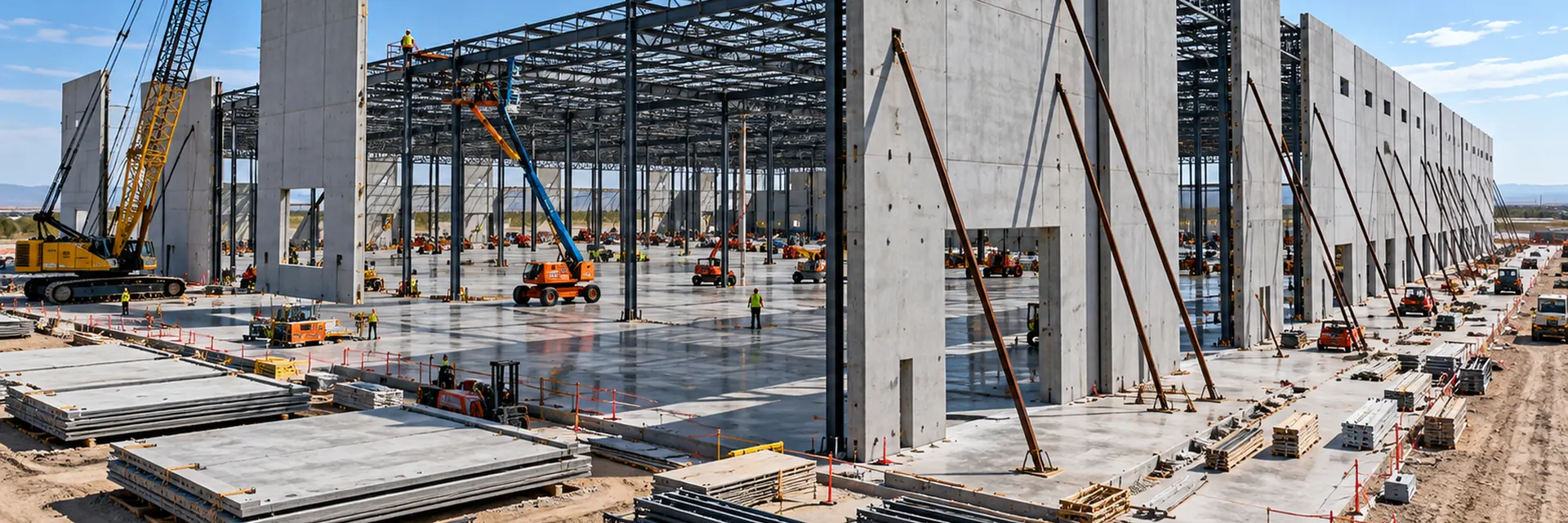
A data-center construction loss can happen months before a single server arrives — a dropped transformer, a chilled-water leak during commissioning, a long-lead component that moves the Ready-for-Service date by six months. For a data center, the schedule can be worth more than the damaged property itself.
✓Builders Risk
✓Delay in Startup
✓Long-Lead Equipment
Reviewed by David Gleason, Principal — October 8, 2026
CaliforniaGeneral information only, not legal advice — illustrative scenarios and coverage, subject to change without notice. Content may be out of date or contain errors, and requirements vary by city, county, state, agency, project, contract, carrier and policy, among other factors; verifying what applies to your own situation is your responsibility. Full disclaimer
Interactive coverage guide
Build a coverage stack around how the business actually operates.
Start with the preselected industry or trade, then adjust the operational questions. The commonly considered stack updates live. Keep the coverages you want GIB to evaluate, remove ones you do not want included in your quote request, and add other available lines before continuing.
Common Starting Coverages
General LiabilityThird-party injury and property damage
What it is
General Liability commonly addresses covered third-party bodily injury, property damage and certain personal or advertising injury claims, subject to the policy.
Why businesses like yours commonly carry it
Businesses commonly use it as a starting liability policy and to satisfy customer, landlord or contract requirements.
Possible coverage gap
General Liability is not intended to replace policies for employee injuries, business vehicles, owned property, cyber events or professional errors.
Cyber Liability & Data BreachCyber events, data and system interruption
What it is
Cyber insurance may address certain first-party and third-party losses from covered data breaches, cyberattacks, ransomware and system interruption, depending on the policy.
Why businesses like yours commonly carry it
Developers move deposits, lender draws and investor funds electronically, often across several project entities.
Possible coverage gap
General Liability generally should not be assumed to address data breach response, ransomware or network interruption.
Educational guidance only. Results are not a coverage recommendation, quote, binder, policy interpretation, or guarantee of coverage. Actual needs, availability, forms, limits, exclusions and requirements vary. A licensed insurance professional should review the complete risk and issued policy terms.
Verified Google reviews
What contractors say about us
5.0 / 5from 7 Google reviews
Reviews reflect individual client experiences and are not a guarantee of coverage, pricing or results.
91 Enterprise LLC
March 24, 2026
We are using Gleason insurance for our commercial auto policy and GL policy. David is the best insurance broker I've worked with — very honest, responsive, and knowledgeable. Highly recommend.
Fito Plumbers
February 20, 2026
We have been working with David at Gleason Insurance Brokers for 8+ years. David always goes above and beyond to make sure we have the appropriate coverages. He explains everything in detail and makes sure we feel confident and understand all of our policies. He is always available and responds right away!
Barry Stay
February 17, 2026
David provides great service and I highly recommend him for your insurance needs.
Why Data Center Builders Risk Is Different From a Standard Commercial Project
California already has more than 200 operating data centers, and the California Energy Commission is forecasting substantial demand growth as AI, cloud and digital-infrastructure investment accelerates — and project values are moving with it. Large campuses can involve phased energization, huge equipment orders and customer commitments made well before completion.
That changes what an underwriter needs to understand: how the project gets power, which equipment has long lead times, how testing will be controlled, how early operational phases interact with ongoing construction, and how much revenue or financing exposure depends on the completion date — not just the square footage and construction type.
Project values and complexity have grown sharply as AI and cloud demand accelerates
The completion date can carry more financial weight than the physical structure
Underwriting needs to understand power sequencing and long-lead equipment, not just square footage
Site selection and contract terms can create insurance consequences before groundbreaking
Builders Risk Has to Be Built Around the Actual Project Value
A data-center builders-risk limit can include far more than vertical construction — site work, electrical infrastructure, transformers, switchgear, UPS, batteries, generators, chillers, cooling towers, controls, security systems and owner-furnished equipment being installed. Those values can change monthly as equipment arrives, so a static limit set at groundbreaking can become obsolete long before commissioning.
Long-lead equipment is a schedule risk before it's a property risk — a damaged transformer may be replaceable, but not quickly. The project team should identify critical-path equipment and, for each item, know the normal and expedited replacement time, available spares, and the effect on Ready-for-Service if it's damaged.
Insured values can shift monthly as owner-furnished equipment arrives on site
A limit set at groundbreaking can be badly outdated by commissioning
Transformers, switchgear, generators and chillers each carry their own lead-time risk
Know the expedited replacement time for critical-path equipment before you need it
Delay in Startup Is the Coverage Built Around the Schedule
Delay in Startup (DSU) isn't merely "business income during construction" — it responds, subject to the policy, when covered project damage delays the date the insured would otherwise have begun earning revenue. That can include delayed lease or capacity revenue, additional interest, continuing project overhead and lost contractual income.
The indemnity period has to match the equipment reality: if a critical transformer could take 14 months to replace, a 6-month DSU indemnity period is inadequate. Model procurement, demolition, design review, permits, delivery, installation, testing, re-commissioning and customer move-in as one realistic timeline.
DSU protects the completion date, not just the physical property
The indemnity period should be modeled against the slowest realistic replacement, not the average
Testing and commissioning is the highest-intensity phase — small configuration errors can cascade
Water is one of the most frequent data-center loss drivers during construction
A Full Program Reaches Well Beyond Builders Risk
Design and professional liability deserves its own strategy, since data centers coordinate architects, electrical/mechanical/structural engineers, controls engineers and commissioning agents — builders risk is not professional liability. Contractor pollution exposure can come from diesel, transformer oil, batteries, refrigerants and dewatering, and should be evaluated for the contractors creating the exposure.
A wrap-up (OCIP/CCIP) can be valuable on a large, long-duration, multi-contractor campus, but it's a casualty program, not a substitute for builders risk — professional liability, pollution, cyber and builders risk generally require separate analysis. Construction equipment, inland marine, surety and bonding, and utility/interconnection work round out a complete program.
Builders risk, professional liability, pollution and OCIP each answer a different question
A wrap-up doesn't replace builders risk — the two are complementary, not interchangeable
Contractor tools and rented equipment need their own inland marine program
Performance and payment bonds are commonly required from major contractors on these projects
A Realistic Data Center Construction Loss Scenario
An owner-furnished transformer is dropped during inland transit — the physical damage is repairable, but the replacement delay threatens the energization date, putting transit coverage, offsite property, DSU and expediting expense all in play at once.
In a separate pattern, a connection fails during system testing and water reaches installed electrical equipment during commissioning — a loss that touches builders risk, water-damage wording, faulty-workmanship exclusions and DSU together, not any single coverage line in isolation.
This example is illustrative, not a report of an actual case or a promise of how any real claim would resolve — real outcomes depend on the specific policy, the facts involved, and the carrier's own review. For a situation that's actually happened or is happening, talk to your broker, a licensed attorney, or the relevant regulatory authority directly.
A transit loss on long-lead equipment can threaten the schedule more than the repair cost
Commissioning-stage water damage tests builders risk, water wording and DSU together
Phased handover — one hall live while another is still under construction — needs its own plan
This is illustrative — real claims depend on the actual policy and facts
Building the Right Program for Your Project
A strong submission includes project basics (location, cost, schedule, delivery method, key subs), a full statement of values including owner-furnished equipment and DSU, an engineering narrative covering power, cooling and seismic design, and the actual customer and lender contract requirements driving the schedule.
Gleason Insurance Brokers maintains carrier relationships built for data-center construction risk and works with California developers, general contractors and owners to structure builders risk, DSU, professional liability, pollution and casualty coverage for these projects — call 844-978-7283 or request a quote to start the conversation.
Document project basics, full statement of values, and the engineering narrative
Bring lender requirements and customer Ready-for-Service dates into the insurance conversation early
Coordinate construction and operating coverage before the first phased handover
Request a quote online, or call 844-978-7283
Frequently asked questions
10 questions — start typing to filter
What is the most important insurance for a data-center construction project?
Builders risk is usually central because it protects the project property during construction, but a complete program can also require DSU, liability, workers compensation, professional liability, pollution and inland marine.
Why is data-center builders risk different from normal commercial builders risk?
Data centers have exceptionally high equipment values, long-lead electrical and cooling systems, intensive testing, phased handovers and large financial exposure to delay.
What is DSU coverage?
Delay in startup can insure specified financial loss when covered physical damage to the project delays commercial operations, subject to the policy.
Does builders risk cover transformers while they are being shipped?
It may, but transit sublimits, territory and ownership must be reviewed — large or international shipments may require project cargo or separate marine coverage.
Should a large data-center project use an OCIP?
Possibly. Large, long-duration projects with many contractors can benefit from centralized GL, workers compensation and excess coverage, but the economics and administration need to be modeled.
Does an OCIP replace builders risk?
No. A wrap-up is primarily a casualty program. Builders risk protects project property and delay exposures.
Does a data-center project need professional liability?
Design-intensive projects should evaluate architect/engineer E&O, contractor professional liability and owner-protective or project-specific options based on delivery method.
How should earthquake be handled on a California project?
Earthquake should be evaluated explicitly because it may be excluded from standard builders risk or subject to separate limits and deductibles.
What happens when one data hall opens while another is still being built?
The construction and operational policies need a phased-handover plan so values, liability, shared systems and coverage responsibility are clear.
How does this relate to the operating-phase insurance program?
Once a facility is live, the exposure shifts to property, business interruption and liability. See Data Center Insurance California for the operating-phase program.
Official resources
Verify current licensing, regulatory and program requirements directly with the responsible agency — this is general information, not legal advice, requirements change without notice, and what is summarized here may be out of date or contain errors. Confirming what applies to your own city, project, contract and policy is your responsibility.