Gleason Insurance Brokers

General Liability · Workers' Comp · Commercial Auto · Pollution Insurance · Surety Bonds Start a Business Insurance Quote Today

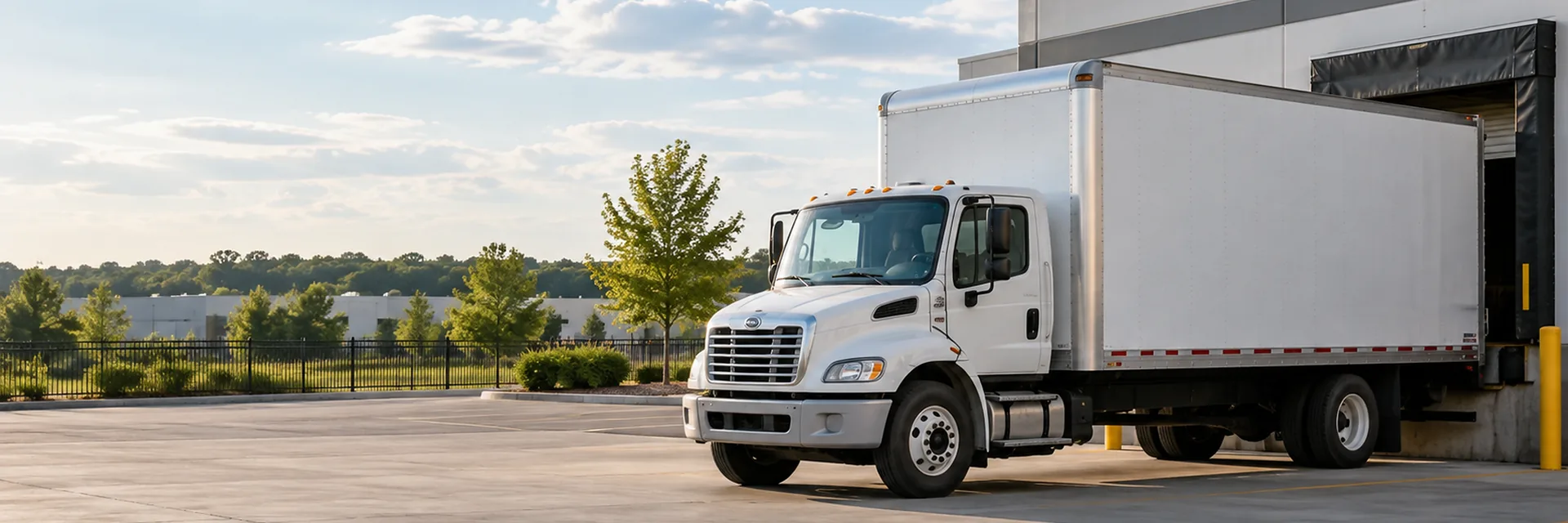
A commercial box truck parked for loading — motor truck cargo insurance

California commercial insurance

Motor Truck Cargo Insurance California

844-97-USAVE

A commercial auto policy covers the truck, the driver and third-party injury or property damage — it doesn't cover the freight riding in the trailer or dump body. Motor truck cargo insurance is the specific policy that does, and confirming it's actually in place (and at the right limit for what's actually being hauled) is easy to assume rather than verify.

  • Freight Loss & Damage
  • In-Transit Coverage
  • Shipper & Broker Contracts

Reviewed by David Gleason, Principal — October 8, 2026

Next Level Experience. Insurance Done Right.

CaliforniaGeneral information only, not legal advice — illustrative scenarios and coverage, subject to change without notice. Content may be out of date or contain errors, and requirements vary by city, county, state, agency, project, contract, carrier and policy, among other factors; verifying what applies to your own situation is your responsibility. Full disclaimer

Interactive coverage guide

Build a coverage stack around how the business actually operates.

Start with the preselected industry or trade, then adjust the operational questions. The commonly considered stack updates live. Keep the coverages you want GIB to evaluate, remove ones you do not want included in your quote request, and add other available lines before continuing.

Common Starting Coverages

General LiabilityThird-party injury and property damage

What it is

General Liability commonly addresses covered third-party bodily injury, property damage and certain personal or advertising injury claims, subject to the policy.

Why businesses like yours commonly carry it

Businesses commonly use it as a starting liability policy and to satisfy customer, landlord or contract requirements.

Possible coverage gap

General Liability is not intended to replace policies for employee injuries, business vehicles, owned property, cyber events or professional errors.

Learn more about General Liability
Commercial AutoBusiness vehicles, drivers and physical damage

What it is

Commercial Auto may address liability arising from covered business vehicles and, when selected, physical damage and other vehicle-related coverages.

Why businesses like yours commonly carry it

Businesses that own or regularly use vehicles may need a policy structured around business use, drivers and vehicle schedules.

Possible coverage gap

Personal auto policies may restrict or exclude business use, and General Liability is generally not a substitute for auto liability.

Learn more about Commercial Auto

Commonly Added Based on Operations

Motor Truck CargoCustomers' freight while in transit

What it is

Motor Truck Cargo may address covered loss or damage to property transported for others, subject to commodities, limits and exclusions.

Why businesses like yours commonly carry it

Motor carriers may be contractually responsible for customers' cargo while it is in their care, custody or control.

Possible coverage gap

Commercial Auto liability does not automatically insure customers' cargo against physical loss.

Learn more about Motor Truck Cargo
Cyber Liability & Data BreachCyber events, data and system interruption

What it is

Cyber insurance may address certain first-party and third-party losses from covered data breaches, cyberattacks, ransomware and system interruption, depending on the policy.

Why businesses like yours commonly carry it

Motor carriers increasingly rely on dispatch, ELD, telematics, payment, customer and driver systems.

Possible coverage gap

General Liability generally should not be assumed to address data breach response, ransomware or network interruption.

Learn more about cyber insurance for trucking companies

Exposure-Dependent Coverages

Umbrella / Excess LiabilityAdditional limits above scheduled liability policies

What it is

Umbrella or Excess Liability may provide additional limits above identified underlying liability policies, subject to its own terms and exclusions.

Why businesses like yours commonly carry it

Businesses with larger contracts, vehicles, public exposure or higher severity potential commonly consider additional limits.

Possible coverage gap

An umbrella does not automatically broaden every exclusion or sit over every policy unless the issued terms say it does.

Learn more about Umbrella / Excess Liability

Loading quote and requirements options…

Educational guidance only. Results are not a coverage recommendation, quote, binder, policy interpretation, or guarantee of coverage. Actual needs, availability, forms, limits, exclusions and requirements vary. A licensed insurance professional should review the complete risk and issued policy terms.

Verified Google reviews

What trucking and transportation businesses say about us

5.0 / 5from 7 Google reviews

Reviews reflect individual client experiences and are not a guarantee of coverage, pricing or results.

91 Enterprise LLC

91 Enterprise LLC

March 24, 2026

We are using Gleason insurance for our commercial auto policy and GL policy. David is the best insurance broker I've worked with — very honest, responsive, and knowledgeable. Highly recommend.

Fito Plumbers

Fito Plumbers

February 20, 2026

We have been working with David at Gleason Insurance Brokers for 8+ years. David always goes above and beyond to make sure we have the appropriate coverages. He explains everything in detail and makes sure we feel confident and understand all of our policies. He is always available and responds right away!

Barry Stay

Barry Stay

February 17, 2026

David provides great service and I highly recommend him for your insurance needs.

What motor truck cargo insurance actually covers

Cargo insurance covers physical loss or damage to freight while it's in transit — a load shifting and striking the trailer wall, a tarp failure exposing material to weather, a rollover damaging everything on board. It responds to the value of the freight itself, not the vehicle carrying it.

For-hire carriers — hauling freight that belongs to a customer or shipper — typically need this coverage to satisfy broker and shipper contracts before a load is even dispatched. A contractor hauling only its own materials between its own jobsites has a different, usually smaller, exposure, but confirming which situation actually applies is worth doing explicitly rather than assuming.

Covers physical loss or damage to freight while in transit
Responds to the value of the cargo, not the vehicle
For-hire carriers usually need it to satisfy shipper/broker contracts
Hauling only your own materials is a different, typically smaller exposure

How cargo coverage differs from commercial auto and inland marine

It's a common assumption that a commercial auto liability policy already extends to whatever is being hauled — it doesn't. Auto liability responds to third-party bodily injury and property damage the truck causes; it was never designed to reimburse the value of the freight itself.

Cargo coverage is also a distinct policy from a contractor's inland marine coverage for tools and equipment. Inland marine protects the contractor's own tools, attachments and equipment moving between jobsites — cargo insurance protects freight being hauled, whether that's a customer's goods or the contractor's own material in transit. A fleet that carries both tools and freight may genuinely need both policies, not one standing in for the other.

Commercial auto liability does not extend to the freight being hauled
Cargo insurance is a separate, distinct policy from auto liability
Inland marine covers a contractor's own tools/equipment, not hauled freight
A fleet moving both tools and freight may need both policies

Coverage limits, commodities and common exclusions

Cargo policies are typically written with a per-occurrence limit, and that limit needs to reflect the real value of a full load — not an average or a rough estimate. A single high-value load exceeding the policy limit leaves the difference uninsured regardless of what caused the loss.

Commodity matters as much as the limit. Many cargo policies exclude or restrict certain commodities outright — cash, jewelry, livestock and specific hazardous materials are common examples — and some materials this site's own clients haul regularly (wet concrete, aggregate, debris) may need to be confirmed as covered rather than assumed included under a generic policy form. Temperature-controlled freight typically needs a separate reefer breakdown endorsement, since standard cargo coverage does not automatically include mechanical failure of refrigeration equipment.

Per-occurrence limits should reflect a full load's real value
Many policies exclude or restrict specific commodities
Confirm your specific hauled material is actually covered, not assumed
Reefer/temperature-controlled freight usually needs a separate endorsement

Cargo coverage across different hauling operations

The right cargo program looks different depending on what's actually being hauled and how. Tractor-trailer operations running long-haul freight typically carry the highest cargo values and the most commodity variation load to load. Dump truck and dirt, sand and gravel hauling operations carry aggregate and bulk material, where overweight loads and spillage are the more common claim pattern than theft or catastrophic loss. Ready-mix concrete hauling has its own distinct product-liability angle tied to concrete quality and curing, layered on top of standard cargo exposure. Box truck and contractor truck operations moving tools, fixtures or smaller freight loads carry real but typically lower per-load cargo values than long-haul freight.

A new trucking authority building a program from scratch should confirm cargo limits and commodity coverage as part of the initial submission, not add it later once a broker or shipper contract requires proof of it.

Tractor-trailer/long-haul freight usually carries the highest cargo values
Dump truck and aggregate hauling see more spillage/overweight claims
Ready-mix concrete carries a distinct product-liability angle alongside cargo
Confirm cargo coverage at submission — not after a shipper contract requires it

Filing a motor truck cargo claim

Documentation matters more for a cargo claim than for most other commercial auto claims, since the loss is about the value of goods rather than a vehicle repair estimate. A bill of lading, weight tickets, photos of the load and the damage, and a written description of what happened all support a faster, cleaner claim.

Report a cargo loss to the carrier promptly — most policies require prompt notice, and some shipper or broker contracts carry their own separate reporting deadlines independent of the insurance policy's own requirements. Confirm both timelines rather than assuming they match.

A bill of lading, weight tickets and photos all support a cleaner claim
Report a cargo loss to the carrier promptly, per the policy's own terms
Shipper/broker contracts may carry separate reporting deadlines
Confirm both the policy's and the contract's timelines — don't assume they match

A realistic scenario: a disputed load value after transit damage

A load shifts during a hard stop and a portion of the freight is damaged on arrival. The shipper disputes the carrier's stated cargo value, valuing the loss well above what the carrier's policy limit anticipated for that load, and the carrier is left absorbing the difference between the claim payment and the shipper's demand.

Illustrative only — this describes a typical pattern, not an actual claim or a guaranteed outcome. Coverage determinations depend on the specific policy and facts involved; for a real, case-specific question, consult a licensed attorney or the appropriate authority having jurisdiction.

A shifted load led to a cargo claim with a disputed value
The carrier's policy limit hadn't been sized to this specific load's value
Confirming limits before dispatch, not after a loss, avoids this gap

Getting motor truck cargo coverage in place

Confirm what your current commercial auto policy actually covers, whether a separate cargo policy is already in place, and whether its limit and commodity coverage genuinely match what you haul — not what a generic policy form assumes.

Gleason Insurance Brokers places motor truck cargo coverage alongside commercial auto and inland marine programs for California trucking, hauling and contractor-fleet operations — call 844-978-7283 or request a quote with your typical load value and commodity detail.

Confirm whether cargo coverage is already in place, separate from auto liability
Match the limit and commodity coverage to what you actually haul
We coordinate cargo, commercial auto and inland marine together
Begin with a quote request, or call 844-978-7283

Frequently asked questions

10 questions — start typing to filter

What is motor truck cargo insurance?

It's the policy that covers physical loss or damage to freight while it's being transported — separate from commercial auto insurance, which covers the vehicle, the driver and third-party injury or property damage the truck causes.

Do I need cargo insurance if I already have commercial auto insurance?

Generally yes, if you're hauling freight that has real value — commercial auto liability does not extend to the cargo itself. Most for-hire carrier contracts with shippers or brokers require proof of cargo coverage as a separate line.

Is cargo insurance the same as inland marine coverage for my tools and equipment?

No. Inland marine covers a contractor's own tools, attachments and equipment moving between jobsites. Cargo insurance covers freight being hauled, whether that's a customer's goods or your own material in transit. A fleet carrying both may need both policies.

Do I need cargo insurance if I only haul my own company's materials, not for-hire freight?

Possibly, though the exposure is usually smaller than a for-hire carrier's. Confirm with your broker whether your own-material hauling is already addressed under your existing program or needs its own cargo coverage.

What commodities are typically excluded from a cargo policy?

Cash, jewelry, livestock and specific hazardous materials are common exclusions, and coverage details vary by carrier and policy form. Confirm your specific hauled commodities are actually covered rather than assuming a generic policy includes them.

Does cargo insurance automatically include reefer breakdown coverage for temperature-controlled freight?

Not automatically. Mechanical failure of refrigeration equipment on a temperature-controlled load typically needs a separate reefer breakdown endorsement rather than being included under standard cargo coverage.

How much cargo coverage do I actually need?

Size the limit to your highest realistic single-load value, not an average load — a limit that comfortably covers most loads can still leave a real gap on the one load that exceeds it.

What documentation do I need to file a cargo claim?

A bill of lading, weight tickets, photos of the load and any damage, and a written description of what happened all support a faster, cleaner claim than a bare notice of loss.

Does a shipper or broker require proof of cargo insurance before dispatching a load?

Often, yes — many shipper and broker contracts require a certificate showing current cargo coverage, at a specified minimum limit, before a load is dispatched. Confirm the required limit matches what your policy actually carries.

Does dump truck, tractor-trailer, ready-mix or dirt/sand/gravel hauling insurance already include cargo coverage?

It can, but the limit and commodity terms should be confirmed for your specific operation rather than assumed. See our dedicated pages for dump truck, tractor-trailer, ready-mix truck and dirt, sand and gravel hauling insurance for the operation-specific detail, or request a quote reflecting your actual freight and load values.

Official resources

Verify current licensing, regulatory and program requirements directly with the responsible agency — this is general information, not legal advice, requirements change without notice, and what is summarized here may be out of date or contain errors. Confirming what applies to your own city, project, contract and policy is your responsibility.

Updated October 8, 2026