
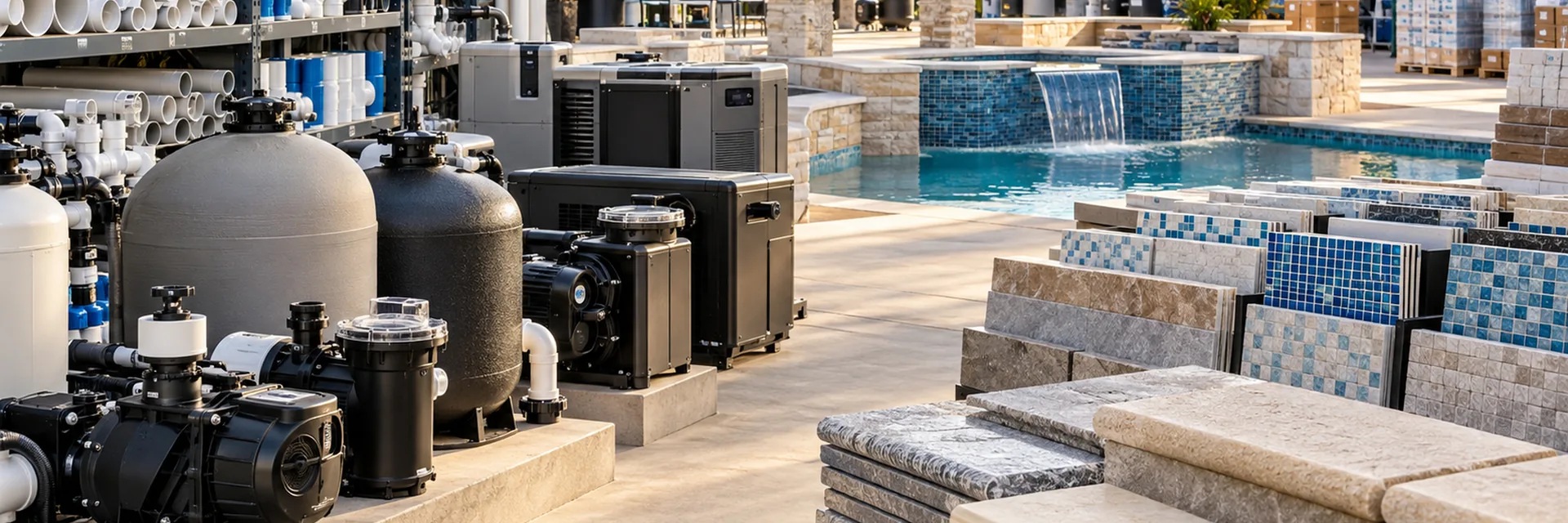


Product Severity
A failed fitting, heater, pump or control can cause water or fire damage.
Chemical Inventory
Treatment chemicals can change fire, property and pollution underwriting.
Showing 1 of 5
Delivery
Bulky equipment, chemicals and fragile finishes create mixed cargo exposure.
Technical Advice
Sizing or compatibility recommendations can create allegations beyond simple distribution.
Middle-market account profile
Pool and spa suppliers should separate chemicals, pumps, heaters, filters, automation, lighting, covers and finish materials. Underwriters typically want chemical quantities, sprinkler/fire protection, technical-sales services, imported/private-label products and delivery practices. Suppliers that sell pavers, coping and decking for pool surrounds overlap with insurance for landscape and hardscape suppliers.
Coverage priorities for this niche
Property and pollution need to reflect chemical storage; products liability should address pumps, heaters and controls; cargo and auto cover bulky deliveries; cyber/crime protect ordering and payment systems. Technical design or sizing advice may require a professional/E&O discussion for larger distributors.
Underwriting questions before marketing the account
Questions worth reviewing before marketing or binding this account:
Coverage gaps worth checking
Chemical storage can change fire, pollution and property terms, while pumps, heaters and controls create product severity. Technical sales staff who size systems or recommend compatibility can create a service/E&O issue distinct from product liability. Imported or private-label components deserve separate scrutiny.
What a strong submission looks like
Provide chemical quantities, storage/separation methods, product mix, technical-advice procedures, largest inventory values, imported-product percentage, delivery fleet and claims. For larger distributors, show how staff documents sizing recommendations and manufacturer warranty/indemnity rights.
Chemical and technical services should be separated
A pool supplier that only sells packaged products is a different risk from one that stores bulk chemicals, mixes treatment products, designs equipment packages or sends technicians to jobsites. Those activities should be shown separately in the submission. Larger accounts should also review pollution response, product recall options and cyber/business interruption because POS, inventory and contractor-ordering systems can be critical to daily revenue during peak season.
Frequently asked questions
8 questions — start typing to filter
Does a pool supplier need pollution liability?
Chemical storage can justify review — pool chemicals stored or distributed by the business create real pollution and fire exposure that a standard general liability policy may not fully address.
Can a supplier be liable for a pump failure?
Yes — a failed pump or heater the supplier sold can be blamed for property damage or a service interruption well after installation, creating a products liability claim.
Are chemicals harder to insure?
They can change property and environmental underwriting.
Can sizing advice create E&O exposure?
Potentially — a supplier who recommends equipment sizing or specifications beyond simply selling a product takes on a professional-advice element that pure retail sales does not carry.
Are heaters inventory property?
They should be included in values specifically — pool heaters and equipment can represent significant per-unit value that a generic inventory estimate can understate.
Does cargo matter?
Yes — pool equipment and chemicals in transit need their own cargo or inland marine limit reflecting real delivery values.
Show 2 more questions
Should commercial pool projects be underwritten differently than residential?
Yes — commercial pools carry higher usage volume, stricter code requirements and generally higher claim severity than a typical residential installation.
Do suction outlet covers and entrapment safety products carry their own products exposure?
They tend to be looked at separately, because the consequence of a failure is bodily injury to a swimmer rather than property damage. Drain covers and safety vacuum release systems are sold against a federal standard with listed ratings and a service life, and a cover that is the wrong rating for the plumbing, or that has aged past its marked replacement date, is a recognized hazard. Suppliers are commonly asked what they sell into commercial pools as opposed to residential, whether they give any guidance on sizing or flow, and how they handle expired stock. Giving that guidance can pull a professional dimension into what is otherwise a products question, and how it falls depends on the policy.
California · General information only, not legal advice. Requirements vary by city, county, state, agency, project, contract, carrier and policy, among other factors; verifying what applies to your own situation is your responsibility. Full disclaimer
Reviewed by David Gleason, Principal — November 2, 2026