Gleason Insurance Brokers

General Liability · Workers' Comp · Commercial Auto · Pollution Insurance · Surety Bonds Start a Business Insurance Quote Today

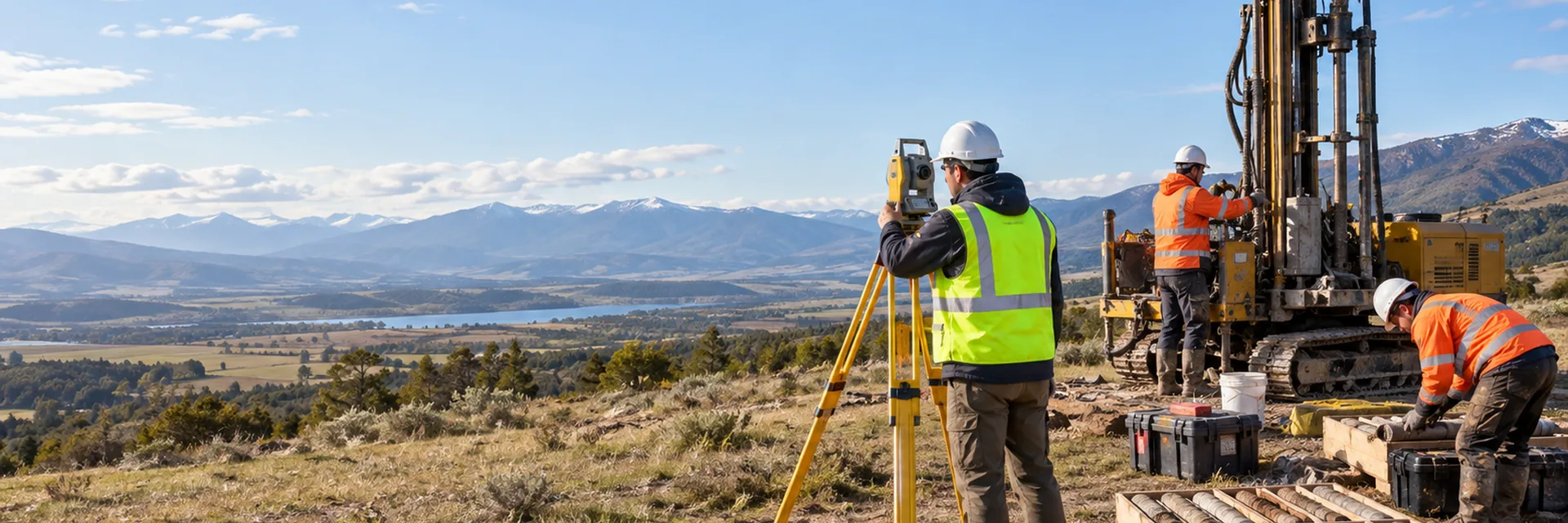
A technician carrying out soils testing on a construction site — civil engineering firm insurance california

California commercial insurance

Civil Engineering Firm Insurance California

844-97-USAVE

Civil firms shape grading, roads, utilities, stormwater, access and land development. Claims often arise where design assumptions meet imperfect site records and changing field conditions.

  • Professional Liability (E&O)
  • Public Works Contracts
  • Utility Coordination

Reviewed by David Gleason, Principal — October 11, 2026

Next Level Experience. Insurance Done Right.

CaliforniaGeneral information only, not legal advice — illustrative scenarios and coverage, subject to change without notice. Content may be out of date or contain errors, and requirements vary by city, county, state, agency, project, contract, carrier and policy, among other factors; verifying what applies to your own situation is your responsibility. Full disclaimer

Interactive coverage guide

Build a coverage stack around how the business actually operates.

Start with the preselected industry or trade, then adjust the operational questions. The commonly considered stack updates live. Keep the coverages you want GIB to evaluate, remove ones you do not want included in your quote request, and add other available lines before continuing.

Common Starting Coverages

General LiabilityThird-party injury and property damage

What it is

General Liability commonly addresses covered third-party bodily injury, property damage and certain personal or advertising injury claims, subject to the policy.

Why businesses like yours commonly carry it

Businesses commonly use it as a starting liability policy and to satisfy customer, landlord or contract requirements.

Possible coverage gap

General Liability is not intended to replace policies for employee injuries, business vehicles, owned property, cyber events or professional errors.

Learn more about General Liability
Professional Liability / E&OErrors in professional services or advice

What it is

Professional Liability may address covered claims alleging errors, omissions or failures in professional services.

Why businesses like yours commonly carry it

Architecture and engineering firms may face claims involving plans, calculations, specifications, coordination or professional judgment.

Possible coverage gap

General Liability is generally not intended to replace coverage for economic loss arising from professional errors.

Learn more about Professional Liability / E&O

Commonly Added Based on Operations

Cyber Liability & Data BreachCyber events, data and system interruption

What it is

Cyber insurance may address certain first-party and third-party losses from covered data breaches, cyberattacks, ransomware and system interruption, depending on the policy.

Why businesses like yours commonly carry it

Design firms commonly store client plans, project records and professional work product in connected systems.

Possible coverage gap

General Liability generally should not be assumed to address data breach response, ransomware or network interruption.

Learn more about cyber insurance for engineers and architects

Exposure-Dependent Coverages

Business Owners Policy / Commercial PackageLiability and property components evaluated together

What it is

A Business Owners Policy commonly combines liability and property coverages for eligible businesses. A Commercial Package Policy may combine multiple commercial coverage parts depending on the account and carrier.

Why businesses like yours commonly carry it

Businesses with premises, contents, inventory or other property exposures may ask GIB to evaluate whether liability and property components can be packaged where appropriate.

Possible coverage gap

Eligibility, included coverages and package structure vary by carrier. Commercial Property may also be written separately rather than as part of a package.

Learn more about Business Owners Policy / Commercial Package
Umbrella / Excess LiabilityAdditional limits above scheduled liability policies

What it is

Umbrella or Excess Liability may provide additional limits above identified underlying liability policies, subject to its own terms and exclusions.

Why businesses like yours commonly carry it

Businesses with larger contracts, vehicles, public exposure or higher severity potential commonly consider additional limits.

Possible coverage gap

An umbrella does not automatically broaden every exclusion or sit over every policy unless the issued terms say it does.

Learn more about Umbrella / Excess Liability

Loading quote and requirements options…

Educational guidance only. Results are not a coverage recommendation, quote, binder, policy interpretation, or guarantee of coverage. Actual needs, availability, forms, limits, exclusions and requirements vary. A licensed insurance professional should review the complete risk and issued policy terms.

Verified Google reviews

What contractors say about us

5.0 / 5from 7 Google reviews

Reviews reflect individual client experiences and are not a guarantee of coverage, pricing or results.

91 Enterprise LLC

91 Enterprise LLC

March 24, 2026

We are using Gleason insurance for our commercial auto policy and GL policy. David is the best insurance broker I've worked with — very honest, responsive, and knowledgeable. Highly recommend.

Fito Plumbers

Fito Plumbers

February 20, 2026

We have been working with David at Gleason Insurance Brokers for 8+ years. David always goes above and beyond to make sure we have the appropriate coverages. He explains everything in detail and makes sure we feel confident and understand all of our policies. He is always available and responds right away!

Barry Stay

Barry Stay

February 17, 2026

David provides great service and I highly recommend him for your insurance needs.

Site and Land Development

Grading, drainage, utility layout and roadway geometry can create costly redesign.

Grading, drainage, utility layout and roadway geometry can create costly redesign

Public Works

Municipal contracts can contain aggressive indemnity, schedule and insurance terms.

Municipal contracts can contain aggressive indemnity, schedule and insurance terms

Utility Coordination

Unknown or inaccurate utility records can generate major change orders.

Unknown or inaccurate utility records can generate major change orders

Drainage

Flooding and runoff allegations can develop long after project completion.

Flooding and runoff allegations can develop long after project completion

Middle-Market Risk Profile

Commercial civil firms should be presented by the type of site and infrastructure they design: subdivisions, industrial campuses, roads, utilities, public works, grading, stormwater and land-development entitlements. A firm designing simple pads is not the same exposure as one designing complex municipal infrastructure.

A firm designing simple pads is not the same exposure as one designing complex municipal infrastructure

Contract and Scope Review

Risk increases when the agreement shifts responsibility for unknown utilities, owner-supplied surveys, hydrology assumptions, permitting outcomes or contractor means and methods. Public contracts may also contain broad indemnity and strict notice requirements. Public agency and developer contracts often include duty-to-defend, warranty or uncapped indemnity language, discussed in contract clauses that raise professional liability risk.

Public contracts may also contain broad indemnity and strict notice requirements

What Underwriters Should Receive

Show revenue by land development/public works/transportation, largest project, public-agency percentage, design-build, drainage work, survey/subconsultant use, field observation, claims and quality-control procedures for plans and calculations.

revenue by land development/public works/transportation
largest project
public-agency percentage
design-build
drainage work
survey/subconsultant use
field observation
claims

Three Claim Scenarios to Model

Scenarios worth modeling before marketing or binding this account:

Scenario 1: grading plan results in expensive export/import of soil
Scenario 2: utility conflict generates change order and delay
Scenario 3: stormwater design is blamed for downstream flooding

Program Structure Beyond E&O

Professional liability should be paired with cyber, GL, workers compensation, auto/HNOA and umbrella. Civil firms performing environmental, geotechnical or survey services should confirm those disciplines are included rather than assumed. Soils investigations and foundation recommendations carry their own professional exposure, outlined on geotechnical and soils engineering insurance.

Professional liability should be paired with cyber, GL, workers compensation, auto/HNOA and umbrella
Civil firms performing environmental, geotechnical or survey services should confirm those disciplines are included rather than assumed

Large-Firm Underwriting Questions

For a larger civil firm, these answers identify public-works, drainage, utility and land-development exposures that can materially change professional severity and excess-limit needs.

What percent is public works?
How much drainage/stormwater design is performed?
Does the firm provide land surveying or subcontract it?
What is the largest land-development project?
How are utility records validated?

Renewal Issues That Can Change the Risk

Civil firms should revisit insurance when they move into larger public works, expand drainage or utility design, acquire a survey practice, begin design-build work, or assume more construction-phase responsibility. Mergers can also create prior-acts and entity-continuity questions. At renewal, the broker should compare current contracts with the professional policy's definition of services and check whether the firm's largest projects are growing faster than its limits. A firm whose average job is modest can still have one subdivision, roadway or utility project that drives the probable maximum professional claim. Hydrology, drainage and stormwater design work has its own page: water resources and drainage engineer insurance.

Mergers can also create prior-acts and entity-continuity questions
A firm whose average job is modest can still have one subdivision, roadway or utility project that drives the probable maximum professional claim

Frequently asked questions

8 questions — start typing to filter

Is a grading error a professional liability claim or a general liability claim?

It depends on what is alleged, and both policies can be in play on one claim. Where the allegation is that the grading design or the calculation was negligent, that is professional liability territory. Where water then runs onto a neighboring property and damages it, the resulting physical damage may fall to general liability. Carriers often disagree about where the line sits, which is why a civil firm is usually better served carrying both than arguing the point after a loss.

Are public works harder to insure?

They can be due to contract and project severity.

Do drainage claims have a long tail?

Yes — a drainage design's real-world performance often isn't tested until years of storm events have passed, so a professional liability claim can surface long after the project, and the statute of repose should be checked when placing coverage.

Can utility conflicts become PL claims?

Yes if coordination is alleged negligent.

Does field work affect auto and WC?

Yes. Engineers who visit active jobsites for surveying, staking or inspection carry real auto and workers compensation exposure that an office-only E&O program can overlook.

What happens to coverage for our past projects if the firm merges or is acquired?

Most civil engineering E&O policies are claims-made, meaning an allegation about a project finished years ago falls to whichever policy is active on the day the claim arrives, and only if its retroactive date is early enough to include the date of the original design. Before a merger or acquisition closes, confirm whether the surviving firm's policy will pick up the acquired firm's prior acts, or whether the acquired firm should buy an extended reporting period (tail). Getting this wrong can leave a drainage or grading claim from an older project with no policy to respond.

Should civil firms track subconsultant limits?

Yes — if a subconsultant's own professional liability limit is inadequate for the scope they're handling, the prime civil firm can end up absorbing more of a claim than its own fee share would suggest.

What is a retroactive date, and why does it matter if a civil firm changes carriers?

Professional liability is usually written on a claims-made basis, which means the policy that responds is generally the one in force when the claim is made rather than the one in force when the work was done. The retroactive date is the line that decides how far back the policy will look: work performed before it is commonly outside the cover entirely. A drainage or grading claim can surface years after a project closes, so moving to a new carrier and accepting a later retroactive date can quietly leave a firm's older projects without a policy behind them. Where the dates and prior-acts wording actually land is set by the policy as issued, and it is worth reading on the quote rather than on renewal.

Official resources

Verify current licensing, regulatory and program requirements directly with the responsible agency — this is general information, not legal advice, requirements change without notice, and what is summarized here may be out of date or contain errors. Confirming what applies to your own city, project, contract and policy is your responsibility.

Updated October 11, 2026