Gleason Insurance Brokers

General Liability · Workers' Comp · Commercial Auto · Pollution Insurance · Surety Bonds Start a Business Insurance Quote Today

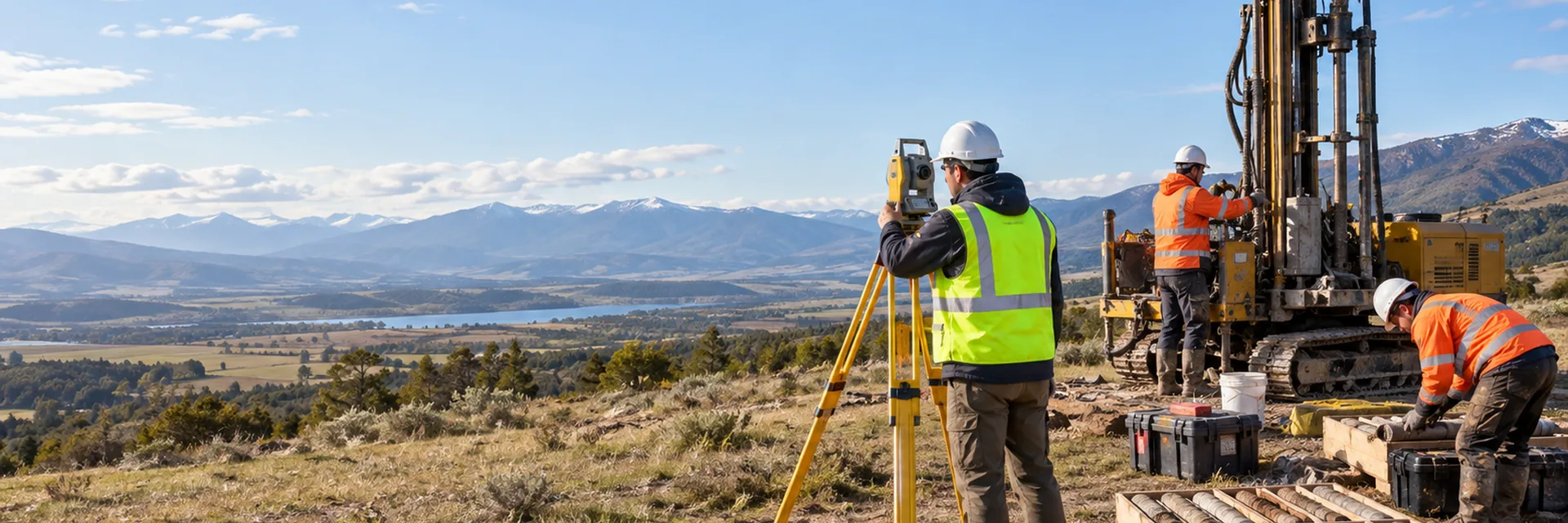
A technician carrying out soils testing on a construction site — construction testing inspection engineering insurance california

California commercial insurance

Construction Testing & Inspection Insurance CA

844-97-USAVE

Testing and special-inspection firms can be named when concrete, welding, compaction, fireproofing or structural work later fails. Their reports may be only one part of quality control, but claimants often argue the problem should have been identified.

  • Professional Liability (E&O)
  • Materials Testing
  • Special Inspection

Reviewed by David Gleason, Principal — October 11, 2026

Next Level Experience. Insurance Done Right.

CaliforniaGeneral information only, not legal advice — illustrative scenarios and coverage, subject to change without notice. Content may be out of date or contain errors, and requirements vary by city, county, state, agency, project, contract, carrier and policy, among other factors; verifying what applies to your own situation is your responsibility. Full disclaimer

Interactive coverage guide

Build a coverage stack around how the business actually operates.

Start with the preselected industry or trade, then adjust the operational questions. The commonly considered stack updates live. Keep the coverages you want GIB to evaluate, remove ones you do not want included in your quote request, and add other available lines before continuing.

Common Starting Coverages

General LiabilityThird-party injury and property damage

What it is

General Liability commonly addresses covered third-party bodily injury, property damage and certain personal or advertising injury claims, subject to the policy.

Why businesses like yours commonly carry it

Businesses commonly use it as a starting liability policy and to satisfy customer, landlord or contract requirements.

Possible coverage gap

General Liability is not intended to replace policies for employee injuries, business vehicles, owned property, cyber events or professional errors.

Learn more about General Liability
Professional Liability / E&OErrors in professional services or advice

What it is

Professional Liability may address covered claims alleging errors, omissions or failures in professional services.

Why businesses like yours commonly carry it

Architecture and engineering firms may face claims involving plans, calculations, specifications, coordination or professional judgment.

Possible coverage gap

General Liability is generally not intended to replace coverage for economic loss arising from professional errors.

Learn more about Professional Liability / E&O

Commonly Added Based on Operations

Cyber Liability & Data BreachCyber events, data and system interruption

What it is

Cyber insurance may address certain first-party and third-party losses from covered data breaches, cyberattacks, ransomware and system interruption, depending on the policy.

Why businesses like yours commonly carry it

Design firms commonly store client plans, project records and professional work product in connected systems.

Possible coverage gap

General Liability generally should not be assumed to address data breach response, ransomware or network interruption.

Learn more about cyber insurance for engineers and architects

Exposure-Dependent Coverages

Business Owners Policy / Commercial PackageLiability and property components evaluated together

What it is

A Business Owners Policy commonly combines liability and property coverages for eligible businesses. A Commercial Package Policy may combine multiple commercial coverage parts depending on the account and carrier.

Why businesses like yours commonly carry it

Businesses with premises, contents, inventory or other property exposures may ask GIB to evaluate whether liability and property components can be packaged where appropriate.

Possible coverage gap

Eligibility, included coverages and package structure vary by carrier. Commercial Property may also be written separately rather than as part of a package.

Learn more about Business Owners Policy / Commercial Package
Umbrella / Excess LiabilityAdditional limits above scheduled liability policies

What it is

Umbrella or Excess Liability may provide additional limits above identified underlying liability policies, subject to its own terms and exclusions.

Why businesses like yours commonly carry it

Businesses with larger contracts, vehicles, public exposure or higher severity potential commonly consider additional limits.

Possible coverage gap

An umbrella does not automatically broaden every exclusion or sit over every policy unless the issued terms say it does.

Learn more about Umbrella / Excess Liability

Loading quote and requirements options…

Educational guidance only. Results are not a coverage recommendation, quote, binder, policy interpretation, or guarantee of coverage. Actual needs, availability, forms, limits, exclusions and requirements vary. A licensed insurance professional should review the complete risk and issued policy terms.

Verified Google reviews

What contractors say about us

5.0 / 5from 7 Google reviews

Reviews reflect individual client experiences and are not a guarantee of coverage, pricing or results.

91 Enterprise LLC

91 Enterprise LLC

March 24, 2026

We are using Gleason insurance for our commercial auto policy and GL policy. David is the best insurance broker I've worked with — very honest, responsive, and knowledgeable. Highly recommend.

Fito Plumbers

Fito Plumbers

February 20, 2026

We have been working with David at Gleason Insurance Brokers for 8+ years. David always goes above and beyond to make sure we have the appropriate coverages. He explains everything in detail and makes sure we feel confident and understand all of our policies. He is always available and responds right away!

Barry Stay

Barry Stay

February 17, 2026

David provides great service and I highly recommend him for your insurance needs.

Scope Precision

The contract should distinguish observation/testing from guaranteeing contractor workmanship.

The contract should distinguish observation/testing from guaranteeing contractor workmanship

Concrete and Materials Testing

Sampling, curing, lab procedures and reporting can all become disputed.

Sampling, curing, lab procedures and reporting can all become disputed

Special Inspection

Steel, welding, bolts, masonry and code-required inspections can create substantial severity.

Steel, welding, bolts, masonry and code-required inspections can create substantial severity

Field Operations

Technicians drive constantly and work in active construction environments, adding auto and WC exposure.

Technicians drive constantly and work in active construction environments, adding auto and WC exposure

Middle-Market Risk Profile

Testing and special-inspection firms should be underwritten by what they observe and certify: concrete, soils, welding, structural steel, fireproofing, masonry, asphalt or other materials. Large commercial firms can be involved in hundreds of projects simultaneously, which makes documentation and technician quality critical.

Large commercial firms can be involved in hundreds of projects simultaneously, which makes documentation and technician quality critical

Contract and Scope Review

Scope language should make clear that observation and testing do not guarantee contractor workmanship or continuous compliance. The agreement should also define sampling frequency, reliance on contractor access and who is responsible for corrective work.

Scope language should make clear that observation and testing do not guarantee contractor workmanship or continuous compliance
The agreement should also define sampling frequency, reliance on contractor access and who is responsible for corrective work

What Underwriters Should Receive

Show revenue by test/inspection type, lab versus field, employee technicians, special inspectors, geotechnical overlap, accreditation, vehicle count, largest projects, claims, report controls and calibration procedures.

revenue by test/inspection type
lab versus field
employee technicians
special inspectors
geotechnical overlap
accreditation
vehicle count
largest projects

Three Claim Scenarios to Model

Scenarios worth modeling before marketing or binding this account:

Scenario 1: concrete strength issue leads to allegation that testing was inadequate
Scenario 2: weld failure prompts claim against special inspector
Scenario 3: compaction dispute alleges field reports were inaccurate

Program Structure Beyond E&O

Professional liability must be paired with commercial auto and workers compensation because field technicians spend significant time on active sites. Property/equipment coverage should include labs, testing machines and mobile instruments.

Professional liability must be paired with commercial auto and workers compensation because field technicians spend significant time on active sites
Property/equipment coverage should include labs, testing machines and mobile instruments

Large-Firm Underwriting Questions

For a larger testing and inspection firm, these answers show the scale of field operations, certification work and laboratory exposure and help determine professional, auto, WC and excess limits.

Which tests/inspections make up most revenue?
What accreditations are maintained?
How are instruments calibrated?
How many field technicians drive daily?
What is the largest single project involvement?

Documentation Is Part of the Defense

Testing firms should treat chain of custody, calibration records, technician qualifications, report revisions and exception reporting as insurance controls. When a concrete, weld or compaction dispute appears years later, the defense often turns on whether the firm can show exactly what was sampled, observed and reported. A middle-market account should also track the limits carried by subcontracted labs and specialty inspectors so the prime firm is not relying on an uninsured vendor for a critical portion of the work.

Testing firms should treat chain of custody, calibration records, technician qualifications, report revisions and exception reporting as insurance controls

Frequently asked questions

8 questions — start typing to filter

Does testing insurance cover a failed concrete pour?

PL may respond if negligent testing or reporting is alleged.

Is special inspection a guarantee?

It should not be. Scope wording matters.

Do labs need property coverage?

Yes — testing equipment, samples and lab facilities represent real insurable property separate from the firm's professional liability exposure.

Are field techs pure office WC?

No. Their duties should be classified accurately.

Should testing firms carry auto?

Usually — inspectors and testing technicians traveling between jobsites and labs create real commercial auto exposure beyond routine business use.

Are subcontracted labs a risk?

Yes. A firm that subcontracts specialty testing can still be named in a claim over the subcontracted work, so vicarious liability and the sub's own insurance should be confirmed.

Should a testing firm disclose destructive testing separately?

Yes — destructive testing on an occupied or active structure carries different property-damage exposure than routine non-destructive inspection and should be described specifically in the submission.

Does a lapse in laboratory accreditation affect insurance, or only the contract?

Both, in different ways. Accreditation through a program such as AASHTO re:source or A2LA, and the Caltrans or local agency qualifications that sit alongside it, are usually contract conditions first: work performed outside them can be rejected, and on a public job that can mean retesting at the firm's cost. On the insurance side, professional liability underwriters commonly ask about accreditation and about how lapses are tracked, because a report issued outside the accredited scope is a predictable route to a claim that the firm has little to stand behind. Carriers weigh it as one factor among several rather than as a condition of cover, unless a particular policy says otherwise.

Official resources

Verify current licensing, regulatory and program requirements directly with the responsible agency — this is general information, not legal advice, requirements change without notice, and what is summarized here may be out of date or contain errors. Confirming what applies to your own city, project, contract and policy is your responsibility.

Updated October 11, 2026