Gleason Insurance Brokers

General Liability · Workers' Comp · Commercial Auto · Pollution Insurance · Surety Bonds Start a Business Insurance Quote Today

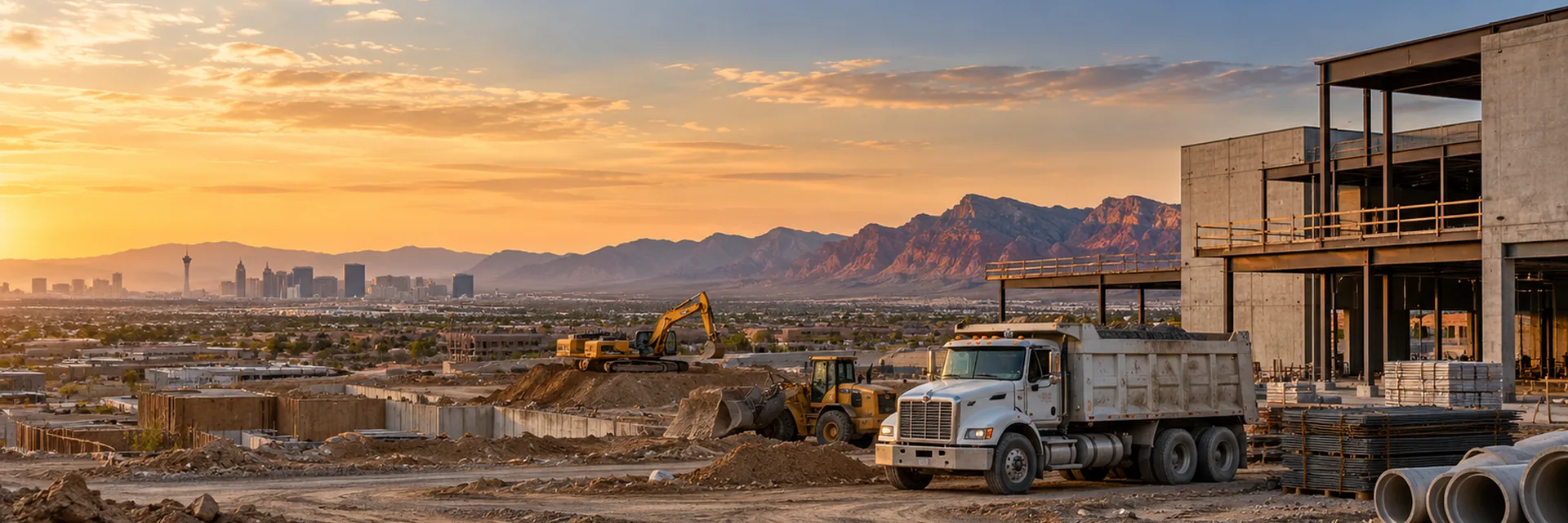
A Las Vegas valley construction site at sunrise, foundation walls and an excavator with the Strip skyline and the Spring Mountains behind — Nevada contractor insurance

Nevada commercial insurance

Nevada — Contractors Insurance

844-97-USAVE

Nevada's NSCB licensing system sets bond amounts by classification and monetary limit at approval — not a flat number — and its narrow small-job exemption comes with enough caveats that most contractors shouldn't rely on it without confirming directly with the board first. Licensed to place coverage across Nevada, Gleason Insurance Brokers can move quickly on affordable coverage across multiple carriers for construction projects.

  • General Liability & Workers Comp
  • Commercial Auto
  • Small-Job Exemption

Reviewed by David Gleason, Principal — October 12, 2026

NevadaGeneral information only, not legal advice — illustrative scenarios and coverage, subject to change without notice. Content may be out of date or contain errors, and requirements vary by city, county, state, agency, project, contract, carrier and policy, among other factors; verifying what applies to your own situation is your responsibility. Full disclaimer

Interactive coverage guide

Build a coverage stack around how the business actually operates.

Start with the preselected industry or trade, then adjust the operational questions. The commonly considered stack updates live. Keep the coverages you want GIB to evaluate, remove ones you do not want included in your quote request, and add other available lines before continuing.

Common Starting Coverages

General LiabilityThird-party injury and property damage

What it is

General Liability commonly addresses covered third-party bodily injury, property damage and certain personal or advertising injury claims, subject to the policy.

Why businesses like yours commonly carry it

Businesses commonly use it as a starting liability policy and to satisfy customer, landlord or contract requirements.

Possible coverage gap

General Liability is not intended to replace policies for employee injuries, business vehicles, owned property, cyber events or professional errors.

Learn more about General Liability

Commonly Added Based on Operations

Contractor Equipment / Inland MarineMobile tools, equipment and property away from premises

What it is

Inland Marine is commonly used for tools, equipment and certain mobile property that moves between locations or jobsites.

Why businesses like yours commonly carry it

Contractors frequently move tools, testing equipment and mobile machinery among jobsites.

Possible coverage gap

General Liability should not be assumed to insure the business's own tools and equipment against theft or physical damage.

Learn more about Contractor Equipment / Inland Marine
Cyber Liability & Data BreachCyber events, data and system interruption

What it is

Cyber insurance may address certain first-party and third-party losses from covered data breaches, cyberattacks, ransomware and system interruption, depending on the policy.

Why businesses like yours commonly carry it

Contractors commonly use email, electronic banking, project platforms, payroll systems and cloud document storage.

Possible coverage gap

General Liability generally should not be assumed to address data breach response, ransomware or network interruption.

Learn more about cyber insurance for contractors

Exposure-Dependent Coverages

Installation FloaterMaterials awaiting or undergoing installation

What it is

An Installation Floater may cover certain materials and equipment in transit, temporary storage and during installation, subject to the policy.

Why businesses like yours commonly carry it

Businesses responsible for materials before final installation commonly consider this coverage.

Possible coverage gap

A basic liability policy generally should not be assumed to cover the insured's materials against physical loss before installation is complete.

Learn more about Installation Floater
Builder's RiskProject property during construction

What it is

Builder's Risk may insure covered buildings, materials and certain project property while construction is underway.

Why businesses like yours commonly carry it

Owners, developers and contractors commonly consider it when a structure or major renovation is exposed during construction.

Possible coverage gap

Commercial Property and General Liability are not automatic substitutes for course-of-construction property coverage.

Learn more about Builder's Risk
Contractors Pollution LiabilityPollution conditions and cleanup liability

What it is

Pollution Liability may address covered cleanup costs and third-party injury or property damage arising from pollution conditions.

Why businesses like yours commonly carry it

Businesses working with fuels, chemicals, soil, water, demolition or environmental conditions may have pollution exposures.

Possible coverage gap

Standard General Liability commonly contains pollution exclusions or limitations.

Learn more about Contractors Pollution Liability
Umbrella / Excess LiabilityAdditional limits above scheduled liability policies

What it is

Umbrella or Excess Liability may provide additional limits above identified underlying liability policies, subject to its own terms and exclusions.

Why businesses like yours commonly carry it

Businesses with larger contracts, vehicles, public exposure or higher severity potential commonly consider additional limits.

Possible coverage gap

An umbrella does not automatically broaden every exclusion or sit over every policy unless the issued terms say it does.

Learn more about Umbrella / Excess Liability

Loading quote and requirements options…

Educational guidance only. Results are not a coverage recommendation, quote, binder, policy interpretation, or guarantee of coverage. Actual needs, availability, forms, limits, exclusions and requirements vary. A licensed insurance professional should review the complete risk and issued policy terms.

Verified Google reviews

What contractors say about us

5.0 / 5from 7 Google reviews

Reviews reflect individual client experiences and are not a guarantee of coverage, pricing or results.

91 Enterprise LLC

91 Enterprise LLC

March 24, 2026

We are using Gleason insurance for our commercial auto policy and GL policy. David is the best insurance broker I've worked with — very honest, responsive, and knowledgeable. Highly recommend.

Fito Plumbers

Fito Plumbers

February 20, 2026

We have been working with David at Gleason Insurance Brokers for 8+ years. David always goes above and beyond to make sure we have the appropriate coverages. He explains everything in detail and makes sure we feel confident and understand all of our policies. He is always available and responds right away!

Barry Stay

Barry Stay

February 17, 2026

David provides great service and I highly recommend him for your insurance needs.

Why Nevada contractors need Nevada-specific underwriting

The Nevada State Contractors Board licenses Class A, B and C contractors, with bond amounts set individually by classification and the monetary limit approved for that license — a range of $1,000 to $500,000 under NRS 624.270, depending on the specific license. That range alone shows why a generic multi-state bond figure doesn't work for Nevada.

Nevada's narrow exemption for very small jobs — repair or maintenance work under $1,000 in labor and materials (NRS 624.031) — carries enough caveats around permits, regulated trades and public-safety work that it should be treated as "verify with NSCB," not assumed as a blanket carve-out.

NSCB licenses Class A, B and C, with bond amounts set individually
Bond range runs roughly $1,000 to $500,000 by classification
The small-job exemption has real caveats — verify, don't assume
Nevada's structure differs meaningfully from neighboring states

Core coverage most Nevada contractors carry

General liability covers third-party bodily injury and property damage. Nevada's term for workers compensation is "industrial insurance," required unless a signed exemption affidavit is on file — the requirement functions similarly to workers comp elsewhere, but the terminology and exemption process are Nevada-specific.

The NSCB bond, commercial auto for anything driven for the business, and umbrella liability for larger project exposure round out what most established Nevada contractors carry beyond the baseline.

General liability — where a third-party claim is answered first
Industrial insurance (Nevada's workers comp) — required unless exempted
NSCB bond — set individually by classification and monetary limit
Commercial auto and umbrella as operations warrant

Nevada contractor licensing and bonding — Nevada State Contractors Board (NSCB)

All contractors performing licensed work in Nevada need an NSCB license (Class A, B or C). Bond amount ranges roughly $1,000 to $500,000, set by NSCB per classification and monetary limit at approval, not a flat fee. These figures are general information, not legal advice. They change without notice and may be out of date or contain errors, and requirements also vary by city, county, project and contract, among other factors — verify what applies to your own work with the regulator named above, the permitting agency and your own contract documents before relying on it.

A narrow exemption exists for very small jobs (repair or maintenance work under $1,000 in labor and materials (NRS 624.031)), but it carries enough caveats — permits, regulated trades, public-safety work — that it should be treated as "verify with NSCB before assuming you're exempt," not a blanket carve-out. Industrial insurance (Nevada's term for workers' compensation) is required unless a signed exemption affidavit is on file.

NSCB Class A/B/C license required for licensed work
Bond set by classification and monetary limit at approval
Small-job exemption is narrow — confirm with NSCB, don't assume
Industrial insurance required unless an exemption affidavit is on file

Contracts and project requirements in Nevada

Nevada general contractors, developers and public agencies set their own insurance requirements through the contract — additional insured status, waiver of subrogation and specific limits are contract-driven in Nevada the same way they are everywhere else, even though the underlying licensing framework is state-specific.

Reading the actual contract's insurance requirements before binding coverage avoids a rejected certificate mid-project — this discipline matters regardless of which state the project is in.

Additional insured and waiver of subrogation are contract-driven
Requirements vary by GC, developer and public agency
Read the actual contract requirements before binding
Confirm requirements before, not after, a certificate is rejected

A realistic scenario: the small-job exemption trap

A handyman-scale contractor takes a job just under Nevada's roughly $1,000 combined labor-and-materials threshold, assumes that means no license or insurance is needed, and doesn't confirm whether the specific trade or the job itself falls under one of the exemption's real carve-outs — permitted work and certain regulated trades don't qualify for the exemption regardless of job size.

Illustrative only — this describes a typical pattern, not an actual case or guaranteed outcome. NSCB's exemption is narrower than its dollar figure suggests; verify applicability with NSCB directly before assuming a job is exempt, rather than after a complaint or inspection. For a case-specific question, consult a licensed attorney or NSCB directly.

Nevada's small-job exemption is narrower than the dollar figure alone suggests
Permitted work and certain regulated trades don't qualify regardless of size
Verify applicability with NSCB before assuming a job is exempt
See our dedicated post on this exact risk for more detail

Working across California and Nevada together

Contractors working the Reno-Tahoe corridor or Las Vegas market alongside California operations need a program that recognizes both a CSLB license and an NSCB license without treating them as two unrelated businesses.

We place and coordinate coverage across both states directly, so certificate requirements on either side of the state line are handled by one broker with full visibility into your actual operations.

One coordinated program across CA and NV operations
Reno-Tahoe and Las Vegas markets covered under the same broker relationship
Certificates issued consistently across both states' jobs
See our Arizona, Texas and Utah coverage below if you work further afield

Working with Gleason Insurance Brokers as a Nevada contractor

We're licensed to place coverage in Nevada (Lic. 4013740) alongside California, Arizona, Texas and Utah, with the same construction and transportation focus across every state we serve.

Share your NSCB classification, monetary limit and current operations — call 844-978-7283 or request a quote to start the review.

Nevada developers and subdividers should see our Las Vegas Developer & Subdivider Insurance and Reno Developer & Subdivider Insurance pages, and Nevada restaurant and brewery operators should see Las Vegas Restaurant & Brewery Insurance and Reno Restaurant & Brewery Insurance — each covers exposures distinct from general contracting.

Licensed in Nevada (Lic. 4013740) and four other states
Same construction and transportation focus statewide to statewide
Share NSCB classification and operations to start the review
Call 844-978-7283, or submit a quote request to begin

Nevada coverage pages and metro areas

Each core line has its own Nevada page, and the larger metro areas have pages covering local permits, projects and contract requirements.

Frequently asked questions

8 questions — start typing to filter

What license classes does the Nevada State Contractors Board issue?

Class A, B and C, covering different scopes of contracting work — bond amounts and requirements are set individually based on classification and the monetary limit approved for that license.

How is my Nevada NSCB bond amount determined?

It's set by NSCB per classification and monetary limit at approval, ranging roughly $1,000 to $500,000 — not a flat statewide figure. Confirm the current amount directly with NSCB.

Is there a small-job exemption from Nevada contractor licensing?

NRS 624.031(6) puts repair or maintenance work worth less than $1,000, labor and materials together, outside the licensing chapter — but not if the job needs a building permit, not for plumbing, electrical, refrigeration, heating or air-conditioning work, not for classifications the Board treats as significantly affecting public health and safety, and not where the work belongs to a larger project worth $500 or more. Verify with NSCB before assuming a specific job qualifies.

What is industrial insurance in Nevada?

It's Nevada's term for workers compensation — required unless a signed exemption affidavit is on file. The requirement functions similarly to workers comp in other states, with Nevada-specific terminology and process.

Is Nevada's contractor licensing structure similar to California's?

The underlying insurance concepts are similar, but NSCB's classification and bond-setting mechanics are genuinely different from CSLB — don't assume a California program transfers directly to Nevada.

Do I need a separate Nevada license if I'm already licensed elsewhere?

Yes — Nevada licensing through NSCB is separate from other states' licensing boards. Operating in Nevada requires Nevada-specific licensing and bonding.

Does Gleason Insurance Brokers handle coverage for contractors working in both Nevada and other states?

Yes — we're licensed in California, Arizona, Nevada, Texas and Utah, and coordinate coverage for contractors operating across state lines.

Is contractors insurance available from an independent agency serving Nevada?

Gleason Insurance Brokers is a Nevada-licensed broker, not a single-carrier agent, so contractors insurance in Nevada can be shopped across multiple markets rather than one company's terms. Actual turnaround and pricing depend on submission completeness, the scope of your construction projects, and carrier appetite — share your timeline and budget when requesting a quote so we can prioritize accordingly.

Official resources

Verify current licensing, regulatory and program requirements directly with the responsible agency — this is general information, not legal advice, requirements change without notice, and what is summarized here may be out of date or contain errors. Confirming what applies to your own city, project, contract and policy is your responsibility.

Updated October 12, 2026