


What "business insurance" actually means
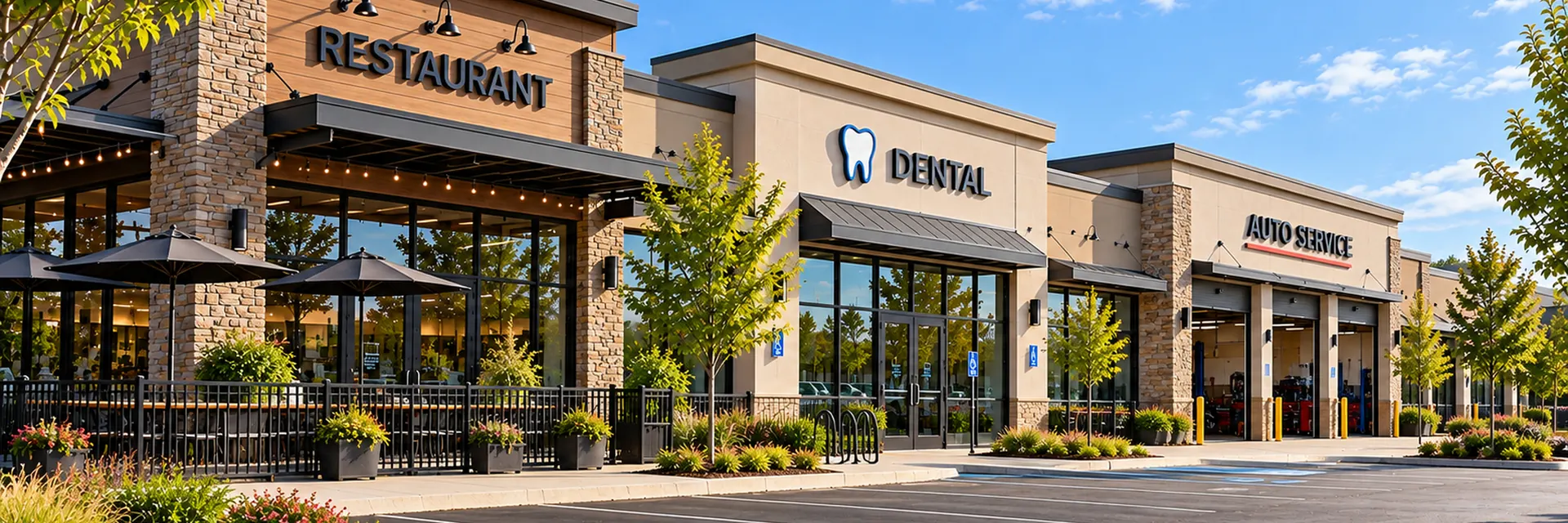
There's no single "business insurance" policy — it's shorthand for the combination of coverage lines a specific business needs, which varies enormously based on industry, revenue, employee count, property owned or leased, and vehicles used. A retail shop, a professional office, and a contracting business all need genuinely different programs under this same general label.
Starting with the actual operations — what the business does, where, with how many employees and what property or vehicles are involved — is more useful than starting with a product name, since the right combination of lines follows from the operations, not the other way around.
The core lines most California businesses carry
General liability is close to universal — third-party bodily injury and property damage exposure exists for almost any business with a physical presence or client interaction. Workers compensation follows once there's an employee, with no small-business exemption in California.
Commercial property coverage, if the business owns or leases a physical location with equipment or inventory, and commercial auto, if any vehicles are used for business purposes, round out what most established businesses carry beyond the liability baseline.
Business owners policies as a starting structure
A Business Owners Policy (BOP) packages general liability and commercial property together at a typically lower combined cost than purchasing them separately, and is available for eligible small and mid-sized businesses that meet a carrier's eligibility criteria for the package.
Not every business qualifies for a BOP, and not every business's exposure fits neatly into the package — higher-hazard operations, specialized equipment, or larger revenue may need the lines written separately or with additional coverage layered on.
Additional coverage as the business grows or diversifies
Umbrella liability, professional liability (for businesses offering advice or professional services), cyber liability, and industry-specific coverage — liquor liability for hospitality, contractors pollution liability for construction — layer on as a business's operations expand beyond the initial baseline.
Revisiting the insurance program when the business changes materially — new location, new employees, new equipment, a new line of business — is what keeps coverage aligned with actual operations instead of the program the business started with years earlier.
How the pieces fit together for a growing business
A contracting business that starts with a BOP and workers compensation often outgrows that baseline as it adds vehicles, larger contracts, and employees — at some point, standalone commercial auto, a higher liability limit than a BOP provides, and an umbrella become necessary rather than optional.
The right moment to add each piece isn't governed by a fixed revenue number — it's governed by actual operational change: the first company vehicle, the first contract with a limit requirement above the BOP's liability, the first year payroll crosses into a size where the EMR starts meaningfully affecting workers comp pricing.
Getting the right combination for your business
Describe the actual operations — industry, location, employees, equipment, vehicles — and Gleason Insurance Brokers can identify which lines actually apply and how they should work together.
We're construction and transportation focused, with the same disciplined process extending to developers, restaurants and breweries — call 844-978-7283 or request a quote to start the conversation.
Operating in San Diego specifically, especially a restaurant, brewery or bar? See our dedicated San Diego Business Insurance page for how liquor liability fits into the broader business insurance picture in that market.
Which combination actually fits depends on the operation, the contracts in front of it and what carriers are willing to write at the time. The index of commercial coverage lines sets out each line and links to the page written for it. The eight industries we write, and how they connect, are summarized on commercial insurance by industry.
Frequently asked questions
10 questions — start typing to filter
What's the difference between business insurance and a Business Owners Policy (BOP)?
"Business insurance" is a general term for the combination of coverage a business needs. A BOP is a specific package combining general liability and commercial property, available to eligible small/mid-sized businesses.
Do I need workers compensation if I only have one employee?
Yes — California requires workers compensation coverage once a business has any employees, with no small-business exemption.
What determines which coverage lines my business actually needs?
The business's actual operations — industry, location, employee count, equipment, vehicles used, and any client or contract requirements — not a generic checklist.
Can my business qualify for a BOP if it's higher-hazard or larger revenue?
Not always — BOPs have eligibility criteria, and higher-hazard operations or larger businesses sometimes need coverage lines written separately rather than packaged together.
When should I revisit my business insurance program?
Whenever operations change materially — a new location, new employees, new equipment, or a new line of business — rather than waiting for it to become an obvious problem.
Does general business insurance cover industry-specific risks like liquor liability or pollution liability?
Generally no — these require specific, separate coverage lines layered onto the core program based on the actual industry and operations involved.
How do I get started figuring out what my business actually needs?
Call 844-978-7283 or submit a quote request describing your actual operations — a broker can identify which lines apply and how they should work together.
Does a general business insurance policy already include business auto insurance?
No — business auto insurance is written as its own separate policy; a general liability or business owners policy doesn't extend to vehicles, so it has to be added alongside rather than assumed included.
Is there small business contractor insurance for a one- or two-person operation?
Yes — a small business contractor still needs the same core lines (general liability, workers compensation once there's an employee, and often bonding), just sized to actual revenue and payroll rather than a large-operation template. Describe your real size and the quote reflects that.
What affects contractor insurance cost for a smaller California business?
The same fundamentals that affect any size business — revenue, payroll, classification accuracy and loss history — just at a smaller scale. A clean submission with accurate numbers usually gets a smaller operation a faster, more accurate quote than a generic small-business template would.