
Gleason Insurance Brokers

General Liability · Workers' Comp · Commercial Auto · Pollution Insurance · Surety Bonds Start a Business Insurance Quote Today

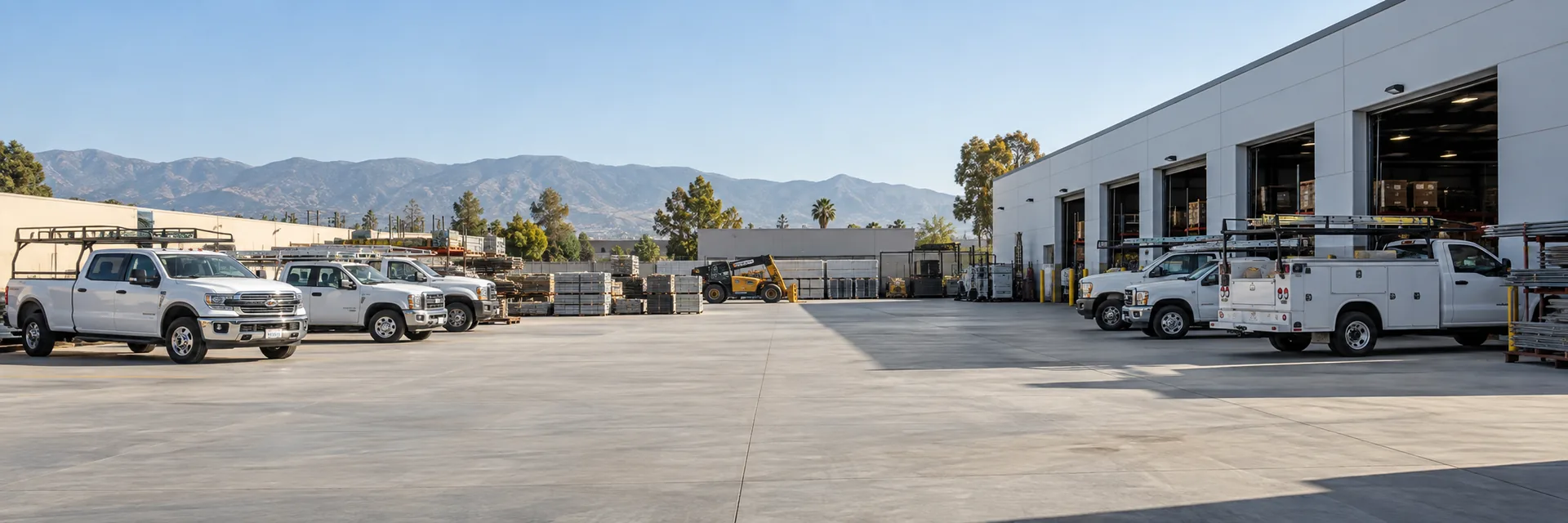
A contractor’s yard and shop with work trucks and stored materials — Los Angeles contractor insurance — general liability, workers comp and commercial auto

California commercial insurance

Los Angeles Metro — Contractors Insurance CA

844-97-USAVE

From dense infill construction in the urban core to ground-up work stretching from the coast to the San Fernando Valley, Los Angeles contractors work under some of the most varied permitting and jurisdictional requirements in the state. Coverage should match that variety, not a single generic "LA contractor" assumption.

  • General Liability, Workers Comp
  • Fleet and Equipment Coverage
  • City Registration Requirements
CaliforniaGeneral information only, not legal advice — illustrative scenarios and coverage, subject to change without notice. Content may be out of date or contain errors, and requirements vary by city, county, state, agency, project, contract, carrier and policy, among other factors; verifying what applies to your own situation is your responsibility. Full disclaimer

The Los Angeles construction landscape

The LA metro spans dozens of individual cities and unincorporated county areas — each with its own permitting process, some with their own contractor registration on top of CSLB licensing — alongside the City and County of Los Angeles' own building and safety departments.

Read more

A contractor working across Long Beach, Glendale, Pasadena and the city core needs coverage that doesn't assume a single jurisdiction's rules apply everywhere.

Entertainment and hospitality-adjacent construction, high-density residential infill, seismic retrofit work, and large commercial and mixed-use development all coexist in this market — the right program depends heavily on which of these an individual contractor actually works in.

Public works activity here spans new construction (transit and highway expansion tied to regional growth) and renovation of existing public facilities alike, and highway-adjacent work specifically carries elevated umbrella/excess liability requirements given the traffic-severity exposure — confirm the specific limit a Caltrans or Metro-adjacent contract requires before bidding. For commercial work around Inglewood's stadium district, see Inglewood commercial contractor insurance.

Dozens of individual cities plus county unincorporated areas
Some cities layer their own registration on top of CSLB licensing
Entertainment, hospitality, infill and seismic retrofit work all present
Coverage should match your actual jurisdictional and project mix

Sources for this section

Core coverage for LA-area contractors

General liability, workers compensation and a CSLB bond form the baseline for any Los Angeles contractor — the details that matter most are classification accuracy against real operations and completed operations coverage given the density of multi-unit and mixed-use work in this market.

Read more

Commercial auto matters more here than in many metros given LA's size and traffic patterns — crews and materials often travel significant distances between job sites within the same metro area, which factors into how a fleet program should be built.

General liability, workers comp and CSLB bond form the baseline
Completed operations coverage matters given multi-unit/mixed-use density
Commercial auto exposure reflects LA's real travel distances
Getting the classification right against real operations is what drives the price

Utility locating and jobsite compliance in LA County

Southern California utility locating runs through DigAlert — required before any excavation, and a real risk-management step given the density of underground infrastructure across the LA basin.

Read more

Encroachment permits for work in a public right-of-way are issued by the specific city or LA County, not a single countywide authority — confirm the correct issuing agency for the specific jobsite before starting right-of-way work.

DigAlert is the required utility locate service for LA County
Dense underground infrastructure makes locate compliance especially important
Encroachment permits are issued by the specific city or county, not one authority
Confirm the correct issuing agency before starting right-of-way work

Sources for this section

Beyond contractors: developers, restaurants and breweries in Los Angeles

Construction and transportation are our strongest focus in Los Angeles, but the same disciplined submission and coverage-review process extends to two more industries with real presence here: real estate developers and subdividers managing project-specific risk through entitlement and construction, and restaurants and breweries carrying liquor liability, property and hospitality workers compensation exposure.

Read more

Tenant improvement and restaurant build-out work is common in Los Angeles; the operator's own coverage is described on Los Angeles restaurant and brewery insurance.

This isn't a separate business — it's the same broker, the same process, applied to a different exposure. A general contractor who also owns a restaurant, or a developer coordinating a subdivision's bonding alongside a contractor's builders risk, can work with one point of contact instead of three separate relationships. Contractors working for a land developer in Los Angeles usually build to the developer's insurance requirements; the owner's side of those projects is covered on Los Angeles developer and subdivider insurance.

Developer & Subdivider Insurance — Los Angeles
Restaurant & Brewery Insurance — Los Angeles
Same broker, same process, different exposure
One point of contact across multiple lines of business

One Stop · We Shop · Real Results

844-978-7283
  • General contractors
  • Electrical contractors
  • Plumbing contractors
  • HVAC contractors
  • Excavation and grading
  • Utility contractors
  • Fleet operators
  • Trucking companies
  • Operating territory
  • Garaging address
  • Driver exposure
  • Traffic density
  • Claim frequency
  • Underwriting territory
  • Coverage eligibility
  • Fleet rating factors
  • Commercial auto
  • General liability
  • Workers compensation
  • Builders risk
  • Inland marine
  • Commercial umbrella
  • Contractor pollution

Radius, territory, vehicle use, jobsite locations and garaging ZIP code can all influence commercial insurance pricing and underwriting eligibility. The zones shown describe how far this agency places coverage; they are not a statement of what any policy covers.

Local permitting and compliance

The figures below are the minimums a city commonly requires before it issues a permit.

Read more

They are not a recommendation and not a coverage benchmark — several are decades old, and none of them reflect what a general contractor's subcontract, a lender or an owner will require on the same job. Treat $1,000,000 per occurrence as the practical floor for commercial general liability and confirm the current municipal requirement with the department named before you rely on any figure here. What is published here may also be out of date or contain errors, and requirements vary by city, county, state, agency, project and contract, among other things — verifying what applies to your own job, with the permitting agency and your own contract documents, is your responsibility.

Los Angeles runs two separate permit systems, depending on which side of the city limit a job falls. Inside the City of Los Angeles, excavation in a street, alley or sidewalk — and excavation on private property that could undermine an adjacent street — generally needs an Excavation "E" Permit from the Bureau of Engineering; utility companies regulated by the Public Utilities Commission use a separate "U" Permit. An E-Permit is valid for six months and lapses if construction has not started, and the Bureau states it grants no extension for a late start, so a delayed job needs a new application. Liability insurance and a waiver of damages in the City's favor are required, and a performance or cash bond can be added depending on the scope. For commercial applicants, the Bureau's insurance procedure sets the general liability floor at $1,000,000 for each occurrence with a $2,000,000 aggregate, with the City as both certificate holder and additional insured and the permit reference, site address and reason for the encroachment shown on the certificate; proof is uploaded through the City's KwikComply system. That proof generally has to stay on file for as long as the encroachment exists, not just while the crew is on site. In unincorporated Los Angeles County, road excavation and encroachment permits come from County Public Works. Its road permit application calls for $1,000,000 per occurrence with $2,000,000 general and completed-operations aggregates, $1,000,000 auto liability covering owned, hired and leased vehicles, and $1,000,000 employers liability, with the County named as additional insured on the contractor's policy — and the workers compensation carrier must be rated at least as well as the State Compensation Insurance Fund. Under the County's standard provisions a permit expires if work does not begin within 60 days, work is stopped if a renewed certificate is not on file before the old one expires, the indemnity survives the permit indefinitely, and newly paved roads generally cannot be cut for two years. Work on a state highway anywhere in the region needs a Caltrans encroachment permit through District 7.

The permit and the inspection both sit with the local jurisdiction
The CSLB license itself isn't tied to any one city or county
Check the current local process before the project begins
A separate encroachment permit may apply for right-of-way work

Getting LA-area coverage in place

Describe your actual operating cities within the metro, typical project type, and any specific contract requirements so the quote reflects real Los Angeles operations.

Read more

Gleason Insurance Brokers places coverage for contractors throughout the Los Angeles metro — call 844-978-7283 or request a quote to get started.

Describe your actual operating cities within the LA metro
Note typical project type and any contract requirements
We serve the full LA metro and its submarkets
Begin with a quote request, or call 844-978-7283

Excavation contractor insurance in Los Angeles: what's driving demand

Los Angeles' excavation and grading contractor demand is tied directly to active rail infrastructure right now, not a general growth trend.

Read more

LA Metro's East San Fernando Valley Light Rail — a 6.7-mile, 11-station street-level line along Van Nuys Boulevard — moved into construction in July 2026 under a $2.43 billion contract awarded to a Skanska–Stacy Witbeck joint venture, with completion expected in December 2031. On the D Line Subway Extension, tunneling finished in April 2024 and Section 1 opened on May 8, 2026, while station and street work continues on Sections 2 and 3 (Beverly Hills/Century City and Westwood), which Metro forecasts to open in 2027.

Excavation contractor insurance in Los Angeles needs to account for exactly this kind of work — deep tunneling and station excavation under active city streets, adjacent to existing utilities and occupied buildings, on projects with public-agency insurance requirements layered on top of standard coverage. See our full Excavation & Grading Insurance guide for XCU coverage, utility-locate documentation and the underwriting considerations specific to this trade.

Contractors working specific communities across the LA metro can find pages built for their own local exposures and permitting relationships, including Compton Contractors Insurance, Palmdale Contractors Insurance, West Covina Contractors Insurance and Whittier Contractors Insurance. For every metro and submarket across the state in one place, see the California Contractor Insurance Coverage Map.

East San Fernando Valley Light Rail: $2.43B construction contract, work began July 2026
D Line Extension: Section 1 open May 2026; Sections 2 and 3 forecast for 2027
Both tied to 2028 Olympics infrastructure timelines
Deep excavation near active streets and utilities raises real XCU and utility-strike exposure

Frequently asked questions

11 questions — start typing to filter

Do I need different coverage for different Los Angeles cities I work in?

Insurance requirements typically come from your contracts, not the city itself, but registration and permitting requirements do vary by city — confirm the specific rules for each jurisdiction you operate in.

Which utility locate service applies in Los Angeles County?

DigAlert serves Southern California including Los Angeles County — required before any excavation work.

Does Gleason Insurance Brokers cover contractors throughout the LA metro, including submarkets like Long Beach and Glendale?

Yes — we place coverage across the full Los Angeles metro and its submarket cities.

Does LA's entertainment and hospitality construction market need different coverage?

It can carry different considerations than standard residential or commercial work — describe your actual project types so the quote reflects real operations.

Do you also place coverage for developers and restaurants in the LA area?

Yes — alongside contractor insurance, we place Developer & Subdivider and Restaurant & Brewery coverage throughout the Los Angeles metro.

How quickly can contractor coverage actually be put in place in Los Angeles?

There's no fixed timeline — it depends on the carrier, the coverage lines involved, and how complete the initial submission is — but simpler accounts often move quickly. Sharing prior loss runs and current operations details upfront avoids the back-and-forth that slows most submissions down.

Does Gleason Insurance Brokers need to visit my Los Angeles location in person?

No — service happens by phone and email in almost every case; a site visit isn't the standard process. Real construction insurance expertise travels by phone and email just as well as in person.

Does commercial auto insurance near me in Los Angeles cost more than elsewhere in California?

Often yes — commercial auto insurance near me in a dense metro like Los Angeles typically reflects higher claim frequency and vehicle theft/vandalism rates than less congested parts of the state, which carriers factor into pricing.

Do you place coverage for contractors in smaller LA-area cities, not just the major hubs?

Yes — in addition to the larger LA Metro communities, we place coverage for contractors in Compton and Whittier, among other smaller local markets across the region.

Is there contractor insurance near me if I work across multiple cities in the LA Metro?

Yes — coverage is placed for your actual operating territory, not limited to one city. If you regularly work across Los Angeles, Long Beach, Glendale and other LA Metro communities, that mix should be described on the submission rather than assumed from a single city listing.

Does commercial construction insurance cost more in Los Angeles than elsewhere in California?

Not simply because of the city name — classification, project type, payroll and loss history drive pricing more than location alone, though a genuinely denser urban market can carry different liability and auto exposure than a rural one. Describe your actual LA Metro operations for an accurate picture.

Areas we serve near Los Angeles Metro

Coverage placed for contractors and businesses operating in Los Angeles Metro and these surrounding communities.

View ZIP codes we serve (33)

Los Angeles, CA: 90001, 90002, 90003, 90004, 90005, 90006, 90007, 90008

Long Beach, CA: 90801, 90802, 90803, 90804, 90805

Glendale, CA: 91201, 91202, 91203, 91204, 91205

Pasadena, CA: 91101, 91102, 91103, 91104, 91105

Santa Clarita, CA: 91350, 91380, 91382, 91383, 91390

Burbank, CA: 91501, 91502, 91503, 91504, 91505

Additional official resources

Verify current licensing, regulatory and program requirements directly with the responsible agency — this is general information, not legal advice, requirements change without notice, and what is summarized here may be out of date or contain errors. Confirming what applies to your own city, project, contract and policy is your responsibility.

Explore Related Coverage and Contractor Resources

Related coverage
Guides, trades and resources

Updated October 12, 2026