Gleason Insurance Brokers

Trucking & Transportation Insurance · Commercial Auto · Cargo · Trailer Interchange Start a Business Insurance Quote Today

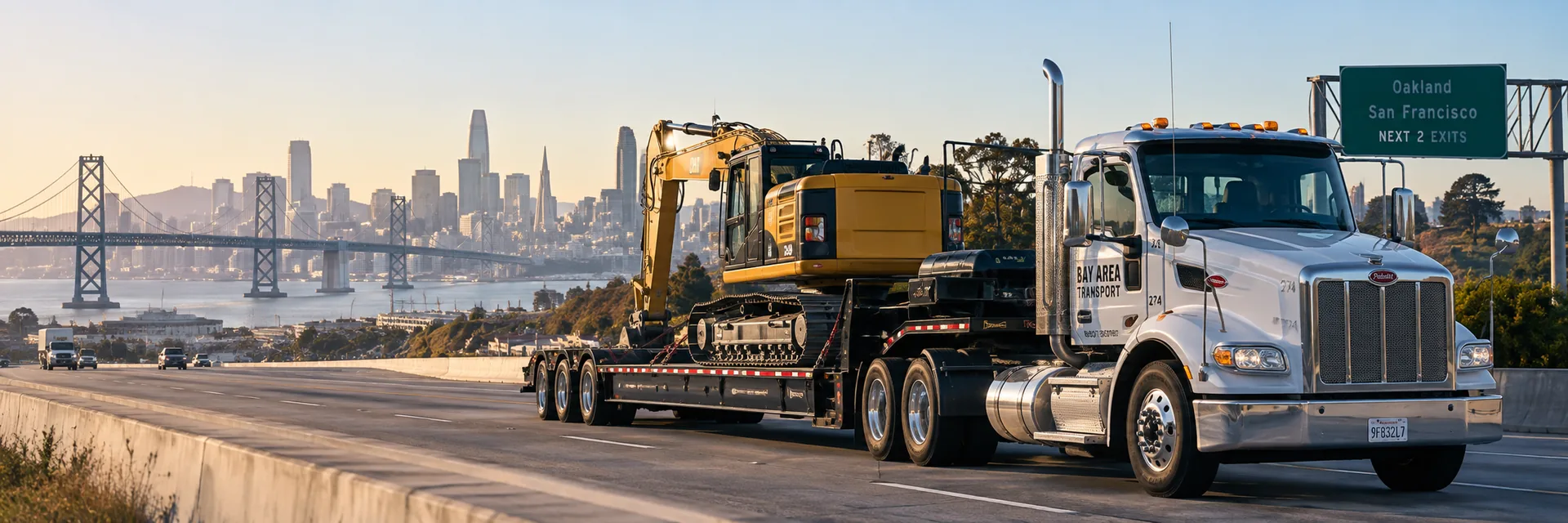
A lowbed trailer hauling heavy construction equipment — tractor-trailer insurance

California commercial insurance

Tractor Trailer Insurance Quote

844-97-USAVE

Tractor-trailer insurance covers the specific exposures of over-the-road combination-vehicle operations — high-value tractors and trailers, cargo liability, and the trailer-interchange exposure that comes with swapping trailers between carriers. It's a more specialized program than standard commercial auto.

  • Tractor & Trailer Damage
  • Trailer Interchange
  • Cargo Liability

Reviewed by David Gleason, Principal — October 12, 2026

Next Level Experience. Insurance Done Right.

CaliforniaGeneral information only, not legal advice — illustrative scenarios and coverage, subject to change without notice. Content may be out of date or contain errors, and requirements vary by city, county, state, agency, project, contract, carrier and policy, among other factors; verifying what applies to your own situation is your responsibility. Full disclaimer

Interactive coverage guide

Build a coverage stack around how the business actually operates.

Start with the preselected industry or trade, then adjust the operational questions. The commonly considered stack updates live. Keep the coverages you want GIB to evaluate, remove ones you do not want included in your quote request, and add other available lines before continuing.

Common Starting Coverages

General LiabilityThird-party injury and property damage

What it is

General Liability commonly addresses covered third-party bodily injury, property damage and certain personal or advertising injury claims, subject to the policy.

Why businesses like yours commonly carry it

Businesses commonly use it as a starting liability policy and to satisfy customer, landlord or contract requirements.

Possible coverage gap

General Liability is not intended to replace policies for employee injuries, business vehicles, owned property, cyber events or professional errors.

Learn more about General Liability
Commercial AutoBusiness vehicles, drivers and physical damage

What it is

Commercial Auto may address liability arising from covered business vehicles and, when selected, physical damage and other vehicle-related coverages.

Why businesses like yours commonly carry it

Businesses that own or regularly use vehicles may need a policy structured around business use, drivers and vehicle schedules.

Possible coverage gap

Personal auto policies may restrict or exclude business use, and General Liability is generally not a substitute for auto liability.

Learn more about Commercial Auto

Commonly Added Based on Operations

Motor Truck CargoCustomers' freight while in transit

What it is

Motor Truck Cargo may address covered loss or damage to property transported for others, subject to commodities, limits and exclusions.

Why businesses like yours commonly carry it

Motor carriers may be contractually responsible for customers' cargo while it is in their care, custody or control.

Possible coverage gap

Commercial Auto liability does not automatically insure customers' cargo against physical loss.

Learn more about Motor Truck Cargo
Cyber Liability & Data BreachCyber events, data and system interruption

What it is

Cyber insurance may address certain first-party and third-party losses from covered data breaches, cyberattacks, ransomware and system interruption, depending on the policy.

Why businesses like yours commonly carry it

Motor carriers increasingly rely on dispatch, ELD, telematics, payment, customer and driver systems.

Possible coverage gap

General Liability generally should not be assumed to address data breach response, ransomware or network interruption.

Learn more about cyber insurance for trucking companies

Exposure-Dependent Coverages

Umbrella / Excess LiabilityAdditional limits above scheduled liability policies

What it is

Umbrella or Excess Liability may provide additional limits above identified underlying liability policies, subject to its own terms and exclusions.

Why businesses like yours commonly carry it

Businesses with larger contracts, vehicles, public exposure or higher severity potential commonly consider additional limits.

Possible coverage gap

An umbrella does not automatically broaden every exclusion or sit over every policy unless the issued terms say it does.

Learn more about Umbrella / Excess Liability

Loading quote and requirements options…

Educational guidance only. Results are not a coverage recommendation, quote, binder, policy interpretation, or guarantee of coverage. Actual needs, availability, forms, limits, exclusions and requirements vary. A licensed insurance professional should review the complete risk and issued policy terms.

Verified Google reviews

What trucking and transportation businesses say about us

5.0 / 5from 7 Google reviews

Reviews reflect individual client experiences and are not a guarantee of coverage, pricing or results.

91 Enterprise LLC

91 Enterprise LLC

March 24, 2026

We are using Gleason insurance for our commercial auto policy and GL policy. David is the best insurance broker I've worked with — very honest, responsive, and knowledgeable. Highly recommend.

Fito Plumbers

Fito Plumbers

February 20, 2026

We have been working with David at Gleason Insurance Brokers for 8+ years. David always goes above and beyond to make sure we have the appropriate coverages. He explains everything in detail and makes sure we feel confident and understand all of our policies. He is always available and responds right away!

Barry Stay

Barry Stay

February 17, 2026

David provides great service and I highly recommend him for your insurance needs.

What makes tractor-trailer coverage different

A tractor and trailer are typically insured together but represent two separate physical damage exposures — and if trailers are swapped with other carriers, trailer-interchange coverage becomes relevant for equipment you don't own but are responsible for while it's connected to your tractor.

Cargo liability limits for tractor-trailer operations are often higher than local delivery work, given the freight values typically involved in long-haul operations.

Tractor and trailer are two separate physical damage exposures
Trailer interchange covers equipment you don't own but are using
Cargo limits are often higher for long-haul freight values
Confirm all pieces are addressed, not assumed bundled

Physical damage on high-value equipment

Tractors and trailers represent significant capital investment, and physical damage coverage should reflect actual replacement cost — not an outdated or assumed value.

Specialized trailers (reefer, flatbed, tanker) carry their own equipment-specific considerations that a generic policy may not fully address.

Physical damage should reflect actual replacement cost
Specialized trailers carry their own considerations
Reefer units add refrigeration-breakdown exposure
Confirm equipment schedules are current and accurate

Cargo liability for long-haul freight

Cargo insurance for tractor-trailer operations should be sized to the actual value and type of freight typically hauled — general commodities, refrigerated goods and specialty freight all carry different risk profiles.

Confirm any per-shipment or aggregate cargo limits actually match your typical load values, not a generic minimum.

Cargo coverage should match typical freight value
General, refrigerated and specialty freight differ in risk
Confirm per-shipment and aggregate limits fit real loads
Don't default to a generic minimum limit

DOT compliance for combination vehicles

Combination vehicles operating interstate need active FMCSA operating authority, and drivers need the appropriate commercial license class and endorsements for the equipment being pulled.

Maintaining current inspection, maintenance and driver-qualification records supports both DOT compliance and underwriting.

Interstate operation requires FMCSA operating authority
Drivers need appropriate CDL class and endorsements
Current inspection and maintenance records matter
Compliance records support both DOT and underwriting

A realistic scenario: cargo value outgrowing the policy limit

A hauler's typical freight shifts over time — taking on higher-value loads than when the policy was first written — while the cargo liability limit stays whatever was set at the original binding, since nothing prompted a review.

Illustrative only — this describes a typical pattern, not an actual case or guaranteed outcome. A cargo limit that was adequate for the original freight mix can leave a real gap once higher-value loads become routine. Review cargo limits against your actual current freight mix, not just at the policy's original binding.

Freight mix and typical cargo value can shift over time
A cargo limit set for the original mix may no longer be adequate
This gap builds gradually, not from one obvious change
Review cargo limits against current freight mix, not just at binding

Getting tractor-trailer coverage in place

Describe your actual tractor and trailer equipment, typical freight type and value, and operating radius so the quote reflects real exposure.

Gleason Insurance Brokers places tractor-trailer coverage throughout California — call 844-978-7283 or request a quote to get started.

Describe your equipment, freight type and operating radius
Note any specialized trailer types
We place coverage for owner-operators and fleets
Start with a call to 844-978-7283, or send a quote request

Frequently asked questions

10 questions — start typing to filter

Is trailer interchange coverage necessary for tractor-trailer operations?

If you ever pull a trailer owned by another carrier, yes — it covers your responsibility for that equipment while it's connected to your tractor, which your own physical damage coverage typically doesn't.

How much cargo coverage does a tractor-trailer operation need?

It should match the actual value and type of freight typically hauled — general commodities, refrigerated goods and specialty freight all warrant different limits.

Does refrigerated (reefer) trailer coverage differ from standard dry van?

Yes — reefer units add refrigeration-breakdown exposure that can spoil an entire load, which is worth confirming as explicit coverage.

What DOT requirements apply to combination vehicles in California?

Interstate operation requires FMCSA authority, and drivers need the appropriate CDL class and endorsements for the specific equipment being pulled.

Does Gleason Insurance Brokers place tractor-trailer coverage?

Yes — we place tractor-trailer coverage for owner-operators and fleets throughout California.

Does tractor-trailer insurance cover downtime after an accident?

Only if you've added motor truck cargo or a specific business-interruption/downtime endorsement — standard physical damage and liability coverage doesn't automatically include lost-revenue protection.

Are leased trailers covered the same as owned trailers?

Not automatically — leased or interchanged trailers typically need trailer interchange coverage rather than standard owned-equipment physical damage.

How do BIT inspections and CARB rules apply to a combination fleet?

A combination unit puts more equipment in front of an inspector. The Biennial Inspection of Terminals covers maintenance records, driver qualification and vehicle condition, and on tractor-trailers the brake, coupling and trailer inspection records are usually where a file is thinnest. None of it is an insurance requirement, but it is the same evidence an underwriter asks for. On the emissions side, CARB's Board voted on September 25, 2025 to repeal the Advanced Clean Fleets high-priority and drayage fleet requirements, and CARB's current guidance says private fleets are not subject to the remaining state and local government fleet rules — other CARB truck rules can still apply to specific vehicles, so confirm the current position with CARB.

Is a commercial vehicle insurance quote for a tractor-trailer priced differently than a pickup truck?

Yes, significantly — a commercial vehicle insurance quote for a tractor-trailer factors in cargo weight, radius of operation and DOT authority in ways a company pickup or service truck quote doesn't need to address.

What happens to premium if I cancel a combination unit's policy mid-term?

If the unit runs under interstate operating authority, the filing behind that authority typically stays in force until the regulator processes its removal, which generally requires advance notice — so premium can remain due after the tractor has stopped moving. Trailers are worth looking at separately: a trailer scheduled for physical damage is not the same thing as the power unit carrying the filing, and dropping one does not automatically drop the other.

Official resources

Verify current licensing, regulatory and program requirements directly with the responsible agency — this is general information, not legal advice, requirements change without notice, and what is summarized here may be out of date or contain errors. Confirming what applies to your own city, project, contract and policy is your responsibility.

Updated October 12, 2026