

Mixed Inventory
Different classes have different theft, fire and catastrophe characteristics.
Demonstration
Customers and employees may operate equipment on or off premises.
Showing 1 of 5
Repair / mobile service
Customer equipment in the dealer's care can create large property-of-others exposure.
Rental / Loaners
Demo, loaner and rental units should be separated from pure sales inventory.
Middle-market account profile
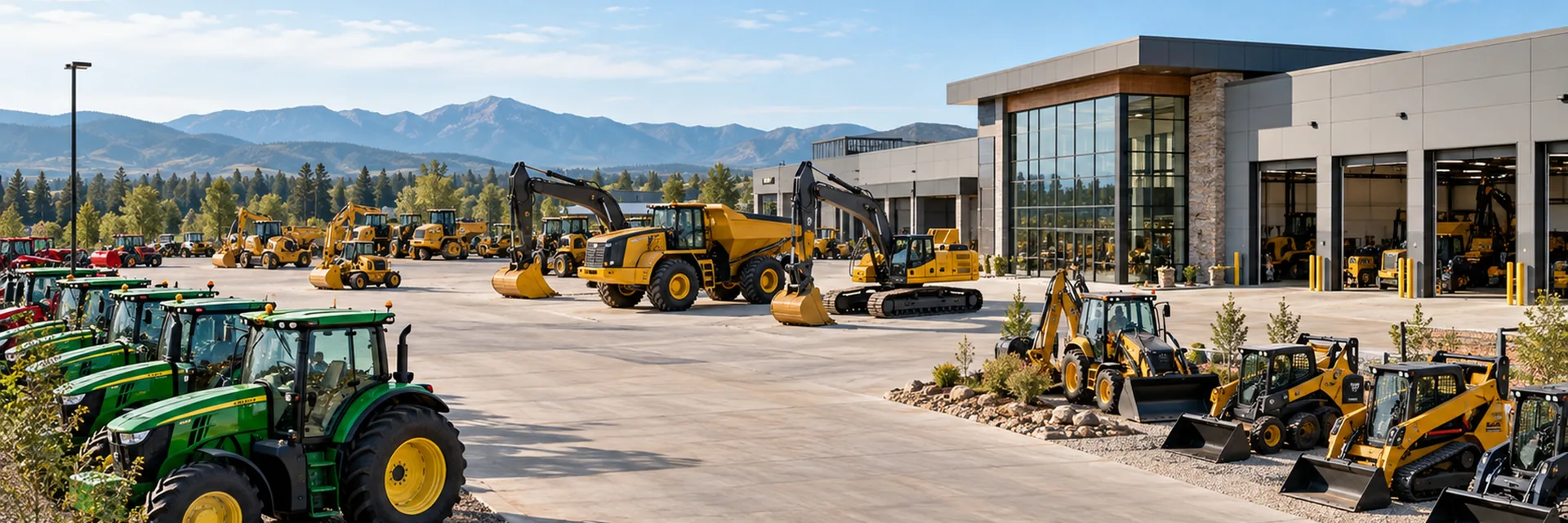
Tractor and industrial dealers should split agricultural tractors, compact construction equipment, forklifts, attachments and other machinery by sales, rental, demo and service use. Outdoor inventory, wildfire, theft, customer test operation and mobile repair can all affect the program. Dealers focused on construction lines, such as excavators, loaders and compact equipment, can compare construction equipment dealer insurance.
Coverage priorities for this niche
The policy structure should separate dealer inventory from loaners, demos, rental units and customer property. Property, dealer/garage liability, auto, service operations, WC and excess are core; cyber and crime become relevant with financing, electronic payments and parts/inventory systems.
Underwriting questions before marketing the account
Questions worth reviewing before marketing or binding this account:
Coverage gaps worth checking
Mixed dealerships can have construction, agricultural and warehouse equipment on the same lot. The dealer form should address demos, customer test use, parts, service, rental, mobile repair and attachments rather than treating every unit as static inventory. Outdoor property and wildfire concentration are especially important in California.
What a strong submission looks like
Show inventory by equipment class, maximum outdoor values, sales/rental/service split, customer equipment in care, demos, loaners, mobile service trucks, driver/operator controls and manufacturer relationships. A clear explanation of where equipment is tested and demonstrated helps avoid ambiguity in the auto/liability structure.
Multi-line operations need clear classification
A tractor dealer that sells, repairs, rents and demonstrates equipment can touch several insurance forms during one transaction. A unit might be inventory on Monday, a demo on Tuesday, a rental on Wednesday and customer-owned property after a trade-in. The broker should map each status to the policy rather than assuming one dealer form follows every use. Larger locations should also review business income and extra expense after fire or wildfire because replacement inventory may not be quickly available.
Frequently asked questions
8 questions — start typing to filter
Are tractors held for sale contractor equipment?
Usually dealer inventory is handled differently.
What about customer equipment being repaired?
Care-custody-control/property-of-others should be reviewed.
Are demo units covered offsite?
They should be specifically included — demo units used at customer sites or trade shows carry the same theft and damage exposure as rental equipment and shouldn't be assumed covered under a standard inventory form.
Does mobile repair change auto exposure?
Yes — a mobile service truck traveling to customer sites adds real commercial auto exposure beyond a dealer's showroom and lot operations.
Can one program cover sales and rentals?
Sometimes, but rental inventory needs appropriate treatment.
Does wildfire affect outdoor dealers?
Yes — dealers with significant outdoor equipment inventory face real wildfire exposure in many California regions, and property limits and mitigation should reflect that.
Show 2 more questions
Should parts inventory be scheduled separately from equipment?
Yes — parts inventory has different valuation and theft characteristics than whole-unit equipment and is often underinsured when it is simply lumped into a general property estimate.
Does providing operator training with a machine create exposure beyond the sale?
It generally does, because training is a service and a sale is not. Where a dealer trains a customer's operator and that operator is later injured or causes injury, the allegation is commonly that the training was inadequate rather than that the machine was defective — a different claim with a different route through the policy. The same applies to familiarization sessions at delivery and to written materials the dealer prepares itself, as opposed to passing on the manufacturer's. Keeping a record of who was trained, on what machine and against which manufacturer materials is ordinary practice. Whether any particular policy reaches the activity depends on how professional services are defined in it.
California · General information only, not legal advice. Requirements vary by city, county, state, agency, project, contract, carrier and policy, among other factors; verifying what applies to your own situation is your responsibility. Full disclaimer
Reviewed by David Gleason, Principal — November 2, 2026