Gleason Insurance Brokers

Restaurant & Brewery Insurance · Liquor Liability · General Liability · Workers' Comp Start a Business Insurance Quote Today

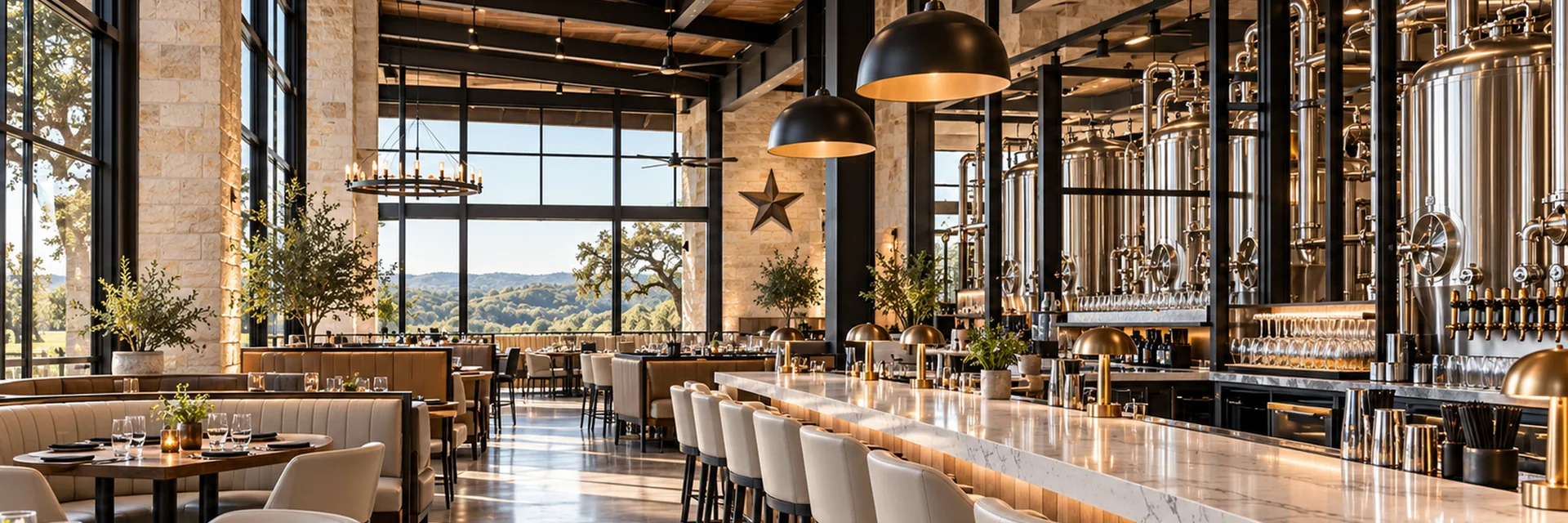
A Texas restaurant and brewery interior, limestone walls and a lone star above the marble bar with brewing tanks, windows onto hill country — restaurant and brewery insurance for Texas

Texas commercial insurance

Texas — Restaurants & Breweries Insurance

844-97-USAVE

Two things make a Texas restaurant or bar account different from the same business anywhere else. The state recognizes dram shop claims, and it also provides a statutory defense for employers whose servers are properly trained and certified — so server training is not only good practice here, it is written into the law. And Texas is the one state where workers compensation is not compulsory, which is a decision rather than a default.

  • Liquor Liability
  • TABC & Trained-Server Defense
  • Workers Comp Is Elective

Reviewed by David Gleason, Principal — October 11, 2026

Next Level Experience. Insurance Done Right.

TexasGeneral information only, not legal advice — illustrative scenarios and coverage, subject to change without notice. Content may be out of date or contain errors, and requirements vary by city, county, state, agency, project, contract, carrier and policy, among other factors; verifying what applies to your own situation is your responsibility. Full disclaimer

Interactive coverage guide

Build a coverage stack around how the business actually operates.

Start with the preselected industry or trade, then adjust the operational questions. The commonly considered stack updates live. Keep the coverages you want GIB to evaluate, remove ones you do not want included in your quote request, and add other available lines before continuing.

Common Starting Coverages

General LiabilityThird-party injury and property damage

What it is

General Liability commonly addresses covered third-party bodily injury, property damage and certain personal or advertising injury claims, subject to the policy.

Why businesses like yours commonly carry it

Businesses commonly use it as a starting liability policy and to satisfy customer, landlord or contract requirements.

Possible coverage gap

General Liability is not intended to replace policies for employee injuries, business vehicles, owned property, cyber events or professional errors.

Learn more about General Liability
Business Owners Policy / Commercial PackageLiability and property components evaluated together

What it is

A Business Owners Policy commonly combines liability and property coverages for eligible businesses. A Commercial Package Policy may combine multiple commercial coverage parts depending on the account and carrier.

Why businesses like yours commonly carry it

Businesses with premises, contents, inventory or other property exposures may ask GIB to evaluate whether liability and property components can be packaged where appropriate.

Possible coverage gap

Eligibility, included coverages and package structure vary by carrier. Commercial Property may also be written separately rather than as part of a package.

Learn more about Business Owners Policy / Commercial Package

Commonly Added Based on Operations

Equipment BreakdownMechanical, electrical and pressure-system breakdown

What it is

Equipment Breakdown may address certain sudden mechanical, electrical or pressure-system breakdown losses, subject to the policy.

Why businesses like yours commonly carry it

Businesses dependent on refrigeration, production, HVAC, electrical or other critical equipment commonly consider it.

Possible coverage gap

Standard property forms may not address every internal mechanical or electrical breakdown.

Learn more about Equipment Breakdown
Cyber Liability & Data BreachCyber events, data and system interruption

What it is

Cyber insurance may address certain first-party and third-party losses from covered data breaches, cyberattacks, ransomware and system interruption, depending on the policy.

Why businesses like yours commonly carry it

Restaurants increasingly rely on POS systems, payment processing, online ordering, employee information and vendor platforms.

Possible coverage gap

General Liability generally should not be assumed to address data breach response, ransomware or network interruption.

Learn more about cyber insurance for restaurants and breweries

Exposure-Dependent Coverages

Liquor LiabilityLiability connected with serving or selling alcohol

What it is

Liquor Liability may address covered claims arising from the sale or service of alcohol, subject to policy terms.

Why businesses like yours commonly carry it

Restaurants, bars, breweries and event operations that sell or serve alcohol commonly consider separate liquor liability coverage.

Possible coverage gap

General Liability commonly limits or excludes liquor liability for businesses in the business of selling or serving alcohol.

Learn more about Liquor Liability
Umbrella / Excess LiabilityAdditional limits above scheduled liability policies

What it is

Umbrella or Excess Liability may provide additional limits above identified underlying liability policies, subject to its own terms and exclusions.

Why businesses like yours commonly carry it

Businesses with larger contracts, vehicles, public exposure or higher severity potential commonly consider additional limits.

Possible coverage gap

An umbrella does not automatically broaden every exclusion or sit over every policy unless the issued terms say it does.

Learn more about Umbrella / Excess Liability

Loading quote and requirements options…

Educational guidance only. Results are not a coverage recommendation, quote, binder, policy interpretation, or guarantee of coverage. Actual needs, availability, forms, limits, exclusions and requirements vary. A licensed insurance professional should review the complete risk and issued policy terms.

Verified Google reviews

What restaurant and brewery owners say about us

5.0 / 5from 7 Google reviews

Reviews reflect individual client experiences and are not a guarantee of coverage, pricing or results.

91 Enterprise LLC

91 Enterprise LLC

March 24, 2026

We are using Gleason insurance for our commercial auto policy and GL policy. David is the best insurance broker I've worked with — very honest, responsive, and knowledgeable. Highly recommend.

Fito Plumbers

Fito Plumbers

February 20, 2026

We have been working with David at Gleason Insurance Brokers for 8+ years. David always goes above and beyond to make sure we have the appropriate coverages. He explains everything in detail and makes sure we feel confident and understand all of our policies. He is always available and responds right away!

Barry Stay

Barry Stay

February 17, 2026

David provides great service and I highly recommend him for your insurance needs.

TABC licensing, and what an underwriter takes from it

Texas licenses alcohol through the Texas Alcoholic Beverage Commission, which regulates more than 70,000 licensed manufacturers, distributors and retailers across the state.

Read more

The permit type a restaurant, bar or brewery holds describes what it may do with alcohol, and as elsewhere that is the first thing a liquor liability underwriter establishes.

What follows from it is the usual list: the share of receipts that is alcohol, hours and closing time, whether there is entertainment, how security is arranged, and whether the venue has a patio or hosts events. Those are what separate a neighborhood restaurant from a late-night bar in the eyes of a carrier, and the market for each is different.

TABC also runs the seller-server certification system and a public inquiry tool for checking whether a certificate is active. Certificates are valid for a limited period and have to be renewed by retaking the training, which matters more in Texas than in most states for the reason set out below.

TABC licenses and regulates alcohol statewide across more than 70,000 businesses
Permit type, receipts split, hours and entertainment set the liquor liability conversation
TABC runs seller-server certification and a public certificate inquiry tool
Certificates expire and must be renewed by retaking the training

Dram shop, and the trained-server defense that sits beside it

Texas recognizes civil claims against licensees arising from alcohol service, which makes alcohol insurance, written as liquor liability, a core line rather than an optional one.

Read more

What is less widely understood is that the Alcoholic Beverage Code also provides a statutory defense, commonly called safe harbor or the trained-server defense, in the section headed Actions of Employee.

As practitioners describe it, the defense generally requires three things together: that the employer required its employees to attend TABC-approved seller training, that the employees who served had actually completed it, and that the employer did not directly or indirectly encourage the violation. It is treated as an affirmative defense, which means the business carries the burden of proving it rather than the claimant carrying the burden of disproving it.

That has a direct operational consequence. A training policy that exists on paper but is not enforced, or certificates that have quietly lapsed, is the common way the defense fails — and the evidence that it was followed is records: the written policy, the certificates on file, and the dates. Whether the defense applies to any particular claim is a question for counsel and for the court, not for an insurance page.

Texas recognizes dram shop claims against licensees
The Alcoholic Beverage Code also provides a statutory defense tied to certified training
Commonly described as three elements: required training, actual certification, no encouragement
Treated as an affirmative defense, so the business has to prove it — with records

Workers compensation is elective in Texas, which makes it a decision

Texas is the outlier: workers compensation is not compulsory for most private employers, and an employer that does not carry it is known as a nonsubscriber.

Read more

For a restaurant with a kitchen, that is a genuine decision rather than a formality, and it is one worth making deliberately rather than by never having bought a policy.

The trade-off is not simply saving a premium. A nonsubscriber generally loses the protections that come with the system, including the exclusive remedy that normally keeps an injured employee's claim inside the workers compensation process, and becomes exposed to suit in a way a subscribing employer is not. Some employers run an alternative occupational injury plan instead, which is a different instrument with different consequences.

Kitchen injuries are frequent rather than catastrophic — burns, cuts, slips, lifting — and frequency is what makes the arithmetic here specific to the business. The Texas Department of Insurance's Division of Workers' Compensation is the authority on how the system operates; what the right answer is for a particular restaurant is a question for the owner and their counsel.

Most private Texas employers may elect not to carry workers compensation
A nonsubscriber generally loses the exclusive-remedy protection the system provides
Alternative occupational injury plans are a different instrument, not a substitute
Kitchen claims are frequent rather than severe, which is what makes the arithmetic specific

The kitchen, the heat and the property losses that follow

The common Texas restaurant property loss is not a fire.

Read more

It is a compressor, a walk-in or an HVAC unit giving out in August, and equipment breakdown is the grant that responds to a machine failing on its own rather than to an external cause.

Spoilage and business interruption are routinely underbought. A failed walk-in is a product loss and a closed dining room at the same time, and both the limit and the waiting period are chosen before anything happens. Storm exposure is real in much of the state as well, and wind and hail deductibles on a commercial property policy are worth reading rather than assuming.

Hood and duct cleaning records and suppression service dates affect price, affect appetite, and are the first documents asked for after a kitchen fire.

Equipment breakdown answers what a property policy generally does not
Spoilage and business interruption limits and waiting periods are chosen in advance
Wind and hail deductibles are worth reading on the issued property form
Hood cleaning and suppression records affect price, appetite and claims

Breweries, taprooms and distribution

Texas has a substantial independent brewing sector, and a producing brewery is a manufacturer with a bar attached.

Read more

Tanks, glycol, CO2 and boilers are property and equipment breakdown exposures. Anything that leaves the building — sold into retail, or delivered in the brewery's own vehicle — adds products liability and commercial auto.

Taproom events are the most commonly understated part of a submission. Live music, food trucks, private hire and anything that changes the size or character of the crowd changes the exposure, and carriers generally want to know before binding.

Recall and contamination generally sit outside a standard general liability policy, and whether that is worth insuring depends on volume and on how far the product travels.

Production equipment, glycol and CO2 are property and breakdown exposures
Retail sales and self-delivery add products liability and commercial auto
Events and live music change the crowd and the exposure
Recall and contamination generally sit outside general liability

Leases, landlords and the certificates that move between you

A restaurant lease is usually the strictest insurance document the business signs.

Read more

The landlord and often a lender are named, limits are specified, and waivers of subrogation are commonly required in both directions. In a shopping center the center's own rules frequently add more, administered by a property manager rather than by the landlord.

Vendors move risk in both directions too. A delivery platform, a contract cleaner, a hood-cleaning service and an equipment lessor each either need your certificate or owe you theirs, and the missing one is generally found at the worst moment. Keeping them in one place with expiry dates is what holds the arrangement together.

Reading the insurance exhibit before signing is the cheap version of all of this. What any agreement requires, and what any policy grants, are questions for the documents and for counsel.

Landlord, lender and property manager are commonly all named
Waivers of subrogation frequently run in both directions
Delivery platforms, cleaners and lessors each sit on one side of a certificate
Read the insurance exhibit before signing, not at renewal

Working with Gleason Insurance Brokers as a Texas restaurant or brewery

We are an independent brokerage licensed in Texas as well as California, placing commercial accounts only.

Read more

For a restaurant, bar or brewery that means one submission describing the whole operation rather than separate conversations about liquor liability, property and workers compensation that never quite align.

What moves a Texas submission is specific: the TABC permit type, whether every server is currently certified and whether you can evidence it, the receipts split between food and alcohol, hours and closing time, entertainment and security, the cooking line's age and service history, and your position on workers compensation.

Coverage remains subject to carrier underwriting and to the policy as issued. A broker can explain the available terms; only the policy and its endorsements establish coverage.

Independent brokerage, licensed in Texas, commercial accounts only
One submission across liquor liability, property, breakdown and workers compensation
Permit type, certification evidence, receipts split and hours are what move a quote
Terms are set by the issued policy, not by the proposal

Restaurant and brewery insurance by Texas metro

Local pages for restaurants, breweries and taprooms in the larger Texas markets.

Frequently asked questions

9 questions — start typing to filter

What is the Texas trained-server defense, and does it actually help?

It is a statutory defense in the Alcoholic Beverage Code, in the section headed Actions of Employee, commonly called safe harbor. As practitioners describe it, three things generally have to be true together: the employer required its staff to attend TABC-approved seller training, the employees who served had actually completed it, and the employer did not directly or indirectly encourage the violation. It is treated as an affirmative defense, so the business carries the burden of proving it. Where it holds it can be decisive; where it fails it is usually because the policy was never enforced or certificates had lapsed. Whether it applies to any particular claim is a question for counsel.

Do we have to carry workers compensation for our Texas restaurant?

Texas is unusual here: workers compensation is not compulsory for most private employers, and one that does not carry it is a nonsubscriber. That makes it a real decision rather than a formality. The trade-off is not just the premium — a nonsubscriber generally loses the exclusive-remedy protection that normally keeps an injured employee's claim inside the workers compensation system, which changes the exposure to suit. Kitchen injuries are frequent rather than catastrophic, so the arithmetic is specific to the business. The Texas Department of Insurance's Division of Workers' Compensation is the authority on how the system works.

What is a nonsubscriber, and what does it mean for our liability?

A nonsubscriber is a Texas employer that has elected not to carry workers compensation. The practical consequence is about remedies rather than about whether injuries happen. An employer inside the system generally has the exclusive remedy protection that channels an injured employee's claim through workers compensation; an employer outside it generally does not, and can face suit directly. Some nonsubscribers put an alternative occupational injury plan in place, which is a different instrument with its own terms and its own consequences rather than a renamed substitute. The choice is worth making with counsel.

How long is a TABC seller-server certificate good for?

Certificates are valid for a limited period and have to be renewed by retaking the training rather than by attesting to it, and TABC publishes a certificate inquiry tool employers can use to check whether a given certificate is active. That matters more in Texas than elsewhere because the statutory defense described above generally depends on the staff who served being certified at the time. A quiet lapse in one server's certificate is the ordinary way a training policy that looks solid turns out not to be.

Is liquor liability separate from general liability in Texas?

Usually it is a separate grant and often a separate policy. A general liability form commonly excludes liability arising from alcohol service where the insured is in the business of serving it, which describes a restaurant or bar precisely. Whether yours is endorsed onto the general liability policy or written standalone, the thing worth confirming is how the limits sit under any umbrella above them — and that is determined by the issued forms rather than by how the two were quoted.

What does the food-to-alcohol receipts split affect?

It is commonly the single figure that moves a liquor liability quote most, because it is the closest available proxy for how much alcohol exposure the business carries. It is also checked — against the permit type, against the hours, and at audit against the books. An estimate given casually at quoting and contradicted later is a routine source of a premium adjustment nobody planned for, so it is worth pulling the real number before the submission goes out.

Our taproom hosts live music and food trucks on weekends. Does that need saying?

Yes, and before binding rather than after an incident. Events change the size and character of the crowd, which is the thing a liability underwriter is pricing. Live music, private hire and food trucks also raise questions about who else is operating on the premises and whose insurance responds to what — a food truck is a separate business with its own policy, or should be. Carriers differ considerably in appetite for event-heavy taprooms, and a submission that leaves it out tends to be re-underwritten later.

Does hail or wind damage to our building affect the restaurant policy?

It can, and in much of Texas the deductible is where it shows up rather than the limit. Commercial property policies in storm-exposed areas frequently carry a separate wind and hail deductible, often expressed as a percentage of the insured value rather than a flat figure, which can be a materially larger number than the all-other-perils deductible. It is worth reading on the issued form. Whether your building is your responsibility or your landlord's is a lease question that sits alongside it.

Do you write personal insurance for Texas restaurant owners?

No. We place commercial accounts only, which is a deliberate focus. For a restaurant, bar or brewery it means the people arranging your liquor liability also arrange the property, the equipment breakdown and whatever you decide about workers compensation, and the operation only has to be explained once. Personal coverage for an owner is better handled by a brokerage that specializes in it.

Official resources

Verify current licensing, regulatory and program requirements directly with the responsible agency — this is general information, not legal advice, requirements change without notice, and what is summarized here may be out of date or contain errors. Confirming what applies to your own city, project, contract and policy is your responsibility.

Updated October 11, 2026