Gleason Insurance Brokers

Developer & Subdivider Insurance · Builders Risk · Subdivision Bonds · General Liability Start a Business Insurance Quote Today

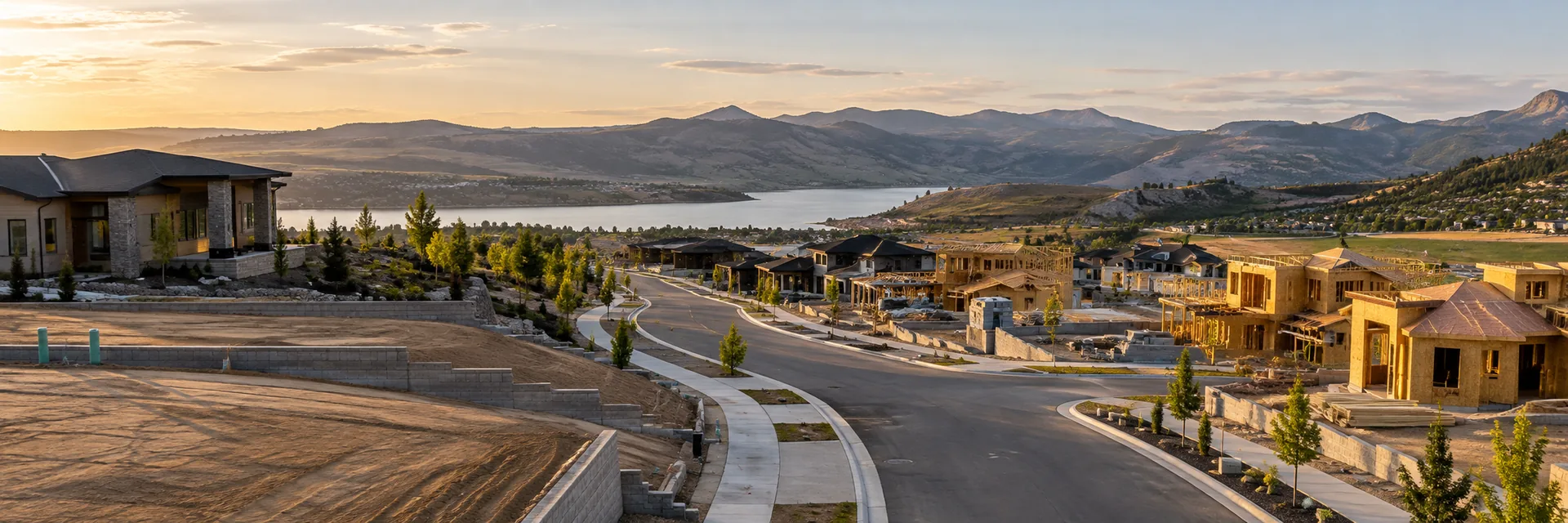
A residential subdivision under construction, framed houses along a new street — developer and subdivider insurance for Nevada

Nevada commercial insurance

Nevada — Developers & Subdividers Insurance

844-97-USAVE

Developers and subdividers active in Nevada carry the same lifecycle risk found anywhere — entitlement, construction, and long-tail exposure after homes or units are sold — layered on top of Nevada's own regulatory structure for the contractors performing the work.

  • Entitlement to Post-Sale
  • BLM Land History
  • NSCB-Licensed Contractors

Reviewed by David Gleason, Principal — October 12, 2026

NevadaGeneral information only, not legal advice — illustrative scenarios and coverage, subject to change without notice. Content may be out of date or contain errors, and requirements vary by city, county, state, agency, project, contract, carrier and policy, among other factors; verifying what applies to your own situation is your responsibility. Full disclaimer

Interactive coverage guide

Build a coverage stack around how the business actually operates.

Start with the preselected industry or trade, then adjust the operational questions. The commonly considered stack updates live. Keep the coverages you want GIB to evaluate, remove ones you do not want included in your quote request, and add other available lines before continuing.

Common Starting Coverages

General LiabilityThird-party injury and property damage

What it is

General Liability commonly addresses covered third-party bodily injury, property damage and certain personal or advertising injury claims, subject to the policy.

Why businesses like yours commonly carry it

Businesses commonly use it as a starting liability policy and to satisfy customer, landlord or contract requirements.

Possible coverage gap

General Liability is not intended to replace policies for employee injuries, business vehicles, owned property, cyber events or professional errors.

Learn more about General Liability
Builder's RiskProject property during construction

What it is

Builder's Risk may insure covered buildings, materials and certain project property while construction is underway.

Why businesses like yours commonly carry it

Owners, developers and contractors commonly consider it when a structure or major renovation is exposed during construction.

Possible coverage gap

Commercial Property and General Liability are not automatic substitutes for course-of-construction property coverage.

Learn more about Builder's Risk

Commonly Added Based on Operations

Cyber Liability & Data BreachCyber events, data and system interruption

What it is

Cyber insurance may address certain first-party and third-party losses from covered data breaches, cyberattacks, ransomware and system interruption, depending on the policy.

Why businesses like yours commonly carry it

Developers move deposits, lender draws and investor funds electronically, often across several project entities.

Possible coverage gap

General Liability generally should not be assumed to address data breach response, ransomware or network interruption.

Learn more about cyber insurance for real estate developers

Exposure-Dependent Coverages

Professional Liability / E&OErrors in professional services or advice

What it is

Professional Liability may address covered claims alleging errors, omissions or failures in professional services.

Why businesses like yours commonly carry it

Businesses providing design, engineering, consulting, specifications or professional advice commonly consider it.

Possible coverage gap

General Liability is generally not intended to replace coverage for economic loss arising from professional errors.

Learn more about Professional Liability / E&O
Contractors Pollution LiabilityPollution conditions and cleanup liability

What it is

Pollution Liability may address covered cleanup costs and third-party injury or property damage arising from pollution conditions.

Why businesses like yours commonly carry it

Businesses working with fuels, chemicals, soil, water, demolition or environmental conditions may have pollution exposures.

Possible coverage gap

Standard General Liability commonly contains pollution exclusions or limitations.

Learn more about Contractors Pollution Liability
Umbrella / Excess LiabilityAdditional limits above scheduled liability policies

What it is

Umbrella or Excess Liability may provide additional limits above identified underlying liability policies, subject to its own terms and exclusions.

Why businesses like yours commonly carry it

Businesses with larger contracts, vehicles, public exposure or higher severity potential commonly consider additional limits.

Possible coverage gap

An umbrella does not automatically broaden every exclusion or sit over every policy unless the issued terms say it does.

Learn more about Umbrella / Excess Liability

Loading quote and requirements options…

Educational guidance only. Results are not a coverage recommendation, quote, binder, policy interpretation, or guarantee of coverage. Actual needs, availability, forms, limits, exclusions and requirements vary. A licensed insurance professional should review the complete risk and issued policy terms.

Verified Google reviews

What developers say about us

5.0 / 5from 7 Google reviews

Reviews reflect individual client experiences and are not a guarantee of coverage, pricing or results.

91 Enterprise LLC

91 Enterprise LLC

March 24, 2026

We are using Gleason insurance for our commercial auto policy and GL policy. David is the best insurance broker I've worked with — very honest, responsive, and knowledgeable. Highly recommend.

Fito Plumbers

Fito Plumbers

February 20, 2026

We have been working with David at Gleason Insurance Brokers for 8+ years. David always goes above and beyond to make sure we have the appropriate coverages. He explains everything in detail and makes sure we feel confident and understand all of our policies. He is always available and responds right away!

Barry Stay

Barry Stay

February 17, 2026

David provides great service and I highly recommend him for your insurance needs.

Development risk in Nevada

Nevada's development pattern, particularly in the Las Vegas Valley, is shaped by a fact most developers from other states don't encounter: the large majority of Nevada is federal land managed by the Bureau of Land Management, and Clark County's available private land for new development has historically been constrained by that federal boundary. Development on or adjacent to former BLM land can carry its own disposal or land-exchange history worth understanding as part of project due diligence, distinct from a standard private-to-private land acquisition.

Reno and the broader northern Nevada corridor has a different growth driver — logistics, manufacturing and technology-sector industrial development (data centers, distribution facilities) alongside residential growth, which brings a different mix of project types and, often, different utility and infrastructure capacity questions than the Las Vegas Valley's primarily residential master-planned communities.

Much of Nevada is federal BLM land — Las Vegas Valley development has historically been shaped by this boundary
Confirm any land-disposal or exchange history on former BLM-adjacent parcels during due diligence
Reno/northern Nevada: industrial and logistics-driven growth alongside residential, a different project mix than Las Vegas
Contractors are licensed through the Nevada State Contractors Board (NSCB), not CSLB

Coordinating with Nevada contractor licensing and bonding

Nevada's Contractors Board (NSCB) licenses the trades performing the actual construction work, with bond amounts set by classification and monetary limit — the developer's own program sits alongside, not instead of, that contractor-level licensing framework.

Whether or not Nevada has a statewide contractor licensing framework, the general contractors, land improvement contractors and subcontractors performing land development work still need their own verified insurance — risk transfer discipline matters the same way it does anywhere.

Coordinate with Nevada's actual regulatory structure, not an assumption
Verify GC and subcontractor insurance as part of managing developer exposure
Risk transfer discipline applies regardless of state licensing framework
Confirm current requirements directly with Nevada State Contractors Board (NSCB)

Entitlement and project-specific requirements

Local jurisdictions in Nevada — cities and counties — set their own conditions for subdivision and development approval, similar in structure to California even where the specific process differs.

Lenders financing construction almost always write their own builders risk and liability requirements into the loan agreement — check that document directly instead of assuming a standard policy already covers it. A real example of this in practice: a lender financing a Las Vegas Valley project on or near former BLM land will often require confirmation of the parcel's land-disposal or exchange history before closing, on top of standard builders risk and liability conditions.

Development agreements are authorized under NRS 278.0201, which lets a governing body contract directly with a landowner over the land's permitted uses, density, building height and size, and any public dedication — for a duration the agreement itself specifies. Subdivision approval generally runs through the rest of NRS Chapter 278, with the local planning commission taking final action on tentative and final maps.

Local jurisdictions set their own approval conditions
Lenders specify requirements through the actual loan agreement
Read the actual documents rather than assuming standard coverage fits
Confirm requirements early in the entitlement process

Bonding for subdivision improvements

Subdivision improvement bonds in Nevada are sized to the engineer's approved infrastructure cost estimate and underwritten against the developer's financial strength and track record, the same mechanics used elsewhere — but flash flooding through desert washes and arroyos is a real, recurring Las Vegas Valley risk that affects how drainage and grading infrastructure gets designed and bonded. A subdivision sited near a natural wash without adequate flood-control infrastructure in place can see real damage from a single intense desert storm, a different failure mode than the gradual erosion risk more common in other regions.

Extreme summer heat carries the same workforce and safety-program implications in Las Vegas and Reno as it does across the broader desert Southwest — worth building into a project's safety program and schedule from the start rather than treating it as an afterthought once construction is underway.

Subdivision improvement bonds sized to the engineer's cost estimate, same underwriting mechanics as any state
Flash flooding through desert washes/arroyos is a real Las Vegas Valley drainage-infrastructure risk
A single intense desert storm can damage inadequately flood-controlled grading before infrastructure is complete
Extreme heat requires the same workforce safety planning common across the desert Southwest

Working with Gleason Insurance Brokers as a Nevada developer

We're licensed to place coverage in Nevada alongside our other four states, with the same construction and transportation focus extended to developer and subdivider risk.

Tell us the project's scope, phasing and any jurisdiction- or lender-specific requirements, and we'll build the review around it — call 844-978-7283 or request a quote.

Licensed in Nevada and four other states
Same coordinated program approach as our California developer clients
Built around your actual project scope and requirements
Request a quote online, or call 844-978-7283

Developer and subdivider insurance by Nevada metro

Local pages for the Nevada markets where development and subdivision work is most active.

Frequently asked questions

9 questions — start typing to filter

How is developer insurance in Nevada different from standard contractor insurance?

It needs to account for the full project lifecycle — entitlement, construction and long after completion — the same as in any state we serve.

Do Nevada developers need subdivision improvement bonds?

Typically yes — local jurisdictions require bonds guaranteeing infrastructure completion, sized to the engineer's approved cost estimate for the specific project.

What should I verify about my general contractor's insurance on a Nevada development project?

Confirm their completed operations coverage specifically — it's directly connected to your own long-term construction defect exposure as the developer.

Does a Nevada construction lender set its own insurance requirements?

Yes — read the actual loan agreement, which typically specifies builders risk, general liability, and sometimes additional coverage as a funding condition.

How long after a Nevada development is complete can a defect claim arise?

It can be years, and in Nevada the tail meets two different markets. Las Vegas Valley residential work sits inside a state where federal land ownership shapes where projects can go at all, while the northern Nevada corridor around Reno is driven by industrial, logistics and data center development that carries a different defect profile from homes. Either way, completed-operations coverage with a realistic claim window belongs in the program at inception rather than added after the last closing.

Does Gleason Insurance Brokers coordinate bonding and insurance together for Nevada developers?

Yes — we coordinate general liability and builders risk as one program and handle the bonding through the same agency, which keeps it in one place without pretending a surety bond is a coverage line.

Does Gleason Insurance Brokers place developer coverage in Nevada alongside other states?

Yes — we're licensed in Nevada alongside California and our other three licensed states.

How does federal BLM land affect development in the Las Vegas Valley?

A large share of Nevada, including land near the Las Vegas Valley, is federal land managed by the Bureau of Land Management — available private land for development has historically been shaped by that boundary, and land near former BLM parcels can carry its own disposal or exchange history worth reviewing during due diligence, distinct from a standard private land acquisition.

Is flash flooding a real infrastructure risk for Nevada subdivisions?

Yes, particularly in the Las Vegas Valley where desert washes and arroyos can flood quickly during an intense storm — grading and drainage infrastructure sited near a natural wash should account for this specifically, and it's worth discussing with your builders risk carrier if your project sits near one.

Official resources

Verify current licensing, regulatory and program requirements directly with the responsible agency — this is general information, not legal advice, requirements change without notice, and what is summarized here may be out of date or contain errors. Confirming what applies to your own city, project, contract and policy is your responsibility.

Updated October 12, 2026